How Many Bags of Concrete per Fence Post?
Calculate concrete for a fence post from the approved hole diameter and depth, minus post displacement, then divide by the selected product's published yield. The tables are dimensional examples, not recommendations for post or footing size; wind, gates, soil, frost and local requirements determine the actual foundation.
Key takeaways
- A 4x4 post in a 10-inch x 24-inch hole needs about 2 bags of 80-lb concrete or 3 bags of 50-lb mix.
- A deeper 10-inch x 30-inch hole for a 6-ft fence needs about 3 bags of 80-lb concrete or 4 bags of 50-lb mix.
- 6x6 corner and gate posts in a 14-inch x 36-inch hole need about 5 bags of 80-lb concrete or 8 bags of 50-lb mix.
- One cubic yard of concrete equals about 45 bags of 80 lb mix, 60 bags of 60 lb, or 72 bags of 50 lb.
- Always add 10% for waste and round up, since a hole running short mid-pour cannot wait for another bag.
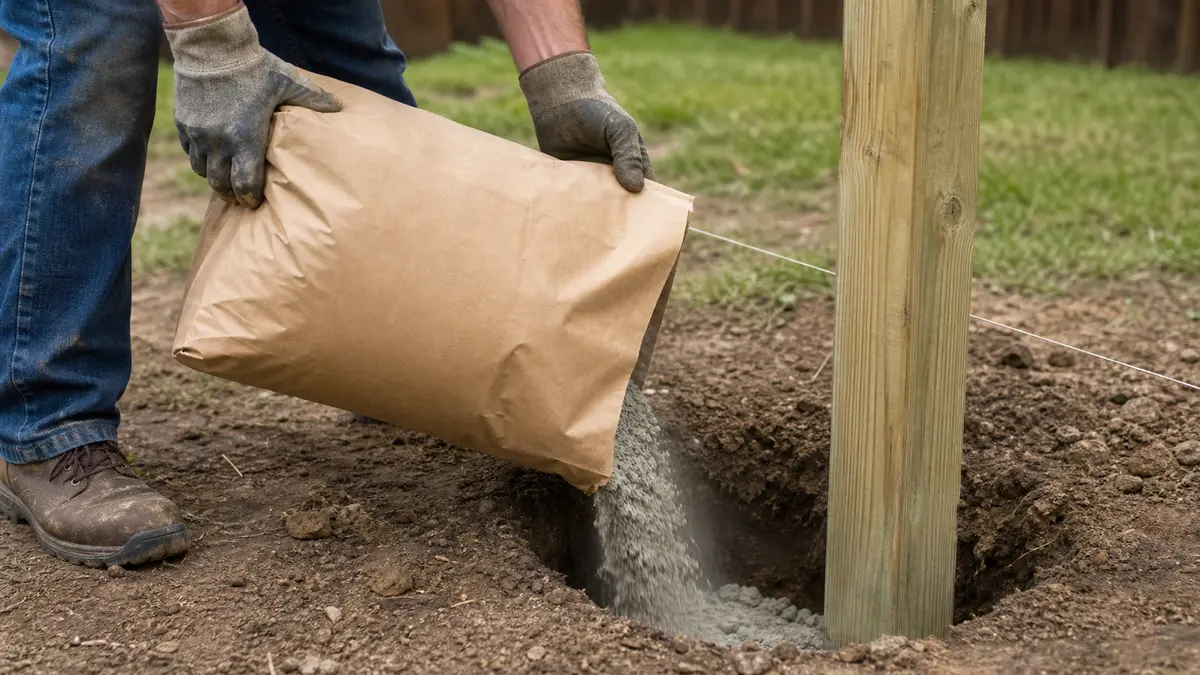
The formula: how much concrete one post hole needs
To find out how many bags of concrete a fence post needs, first find the volume of the hole (a cylinder), then subtract the volume the post itself displaces. What is left over is what the concrete has to fill.
The hole is a cylinder, so its volume is pi times the radius squared times the depth, all in feet. The post eats into that same depth, so its volume comes back out and only the space around it gets filled with concrete.
Hole volume (ft3) = π x radius2 x depthConcrete needed = Hole volume - Post volume, plus 10% wasteFor example, a 10-inch diameter hole 30 inches deep holds about 1.36 cubic feet before the post goes in. A 4x4 post (actual size 3.5 by 3.5 inches) displaces roughly 0.21 cubic feet over that depth, leaving about 1.15 cubic feet of concrete to buy, plus waste. For any hole size, the sonotube calculator runs this math for you and returns the bag count directly.
Bags for a standard 4x4 fence post
The table applies the volume formula to three illustrative holes around a nominal 4x4 post. It does not associate those dimensions with a fence height or local frost condition.
| Example hole | 50 lb bags | 60 lb bags | 80 lb bags |
|---|---|---|---|
| 10 in x 24 in | 3 | 3 | 2 |
| 10 in x 30 in | 4 | 3 | 3 |
| 12 in x 36 in | 7 | 6 | 4 |
Counts include the page's 10% example allowance and whole-bag rounding. Confirm diameter, depth, post displacement and allowance for the project.
6x6 corner, end and gate posts need more
Corner, end and gate assemblies can impose different loads from line posts, but post and foundation dimensions must come from the selected fence system and project conditions.
| Example hole and post | 50 lb bags | 60 lb bags | 80 lb bags |
|---|---|---|---|
| 14 in x 36 in around a 5.5 in square post | 8 | 7 | 5 |
Use the concrete and masonry calculators only after required dimensions are known.
Bags per cubic yard by bag size
Once a project needs more than about 8 to 10 posts, it is worth checking whether ordering by the cubic yard beats buying bags. One cubic yard of concrete is 27 cubic feet, and the number of bags it takes depends on the bag's mixed yield.
| Bag size | Yield per bag | Bags per cubic yard |
|---|---|---|
| 40 lb | 0.30 ft3 | 90 |
| 50 lb | 0.375 ft3 | 72 |
| 60 lb | 0.45 ft3 | 60 |
| 80 lb | 0.60 ft3 | 45 |
For a long fence run with a dozen or more posts, that math starts to favor a delivered mini-mix truck over hauling dozens of bags by hand. For a slab or pad on the same property, the concrete calculator converts the same volume into yards, bags and an estimated cost.
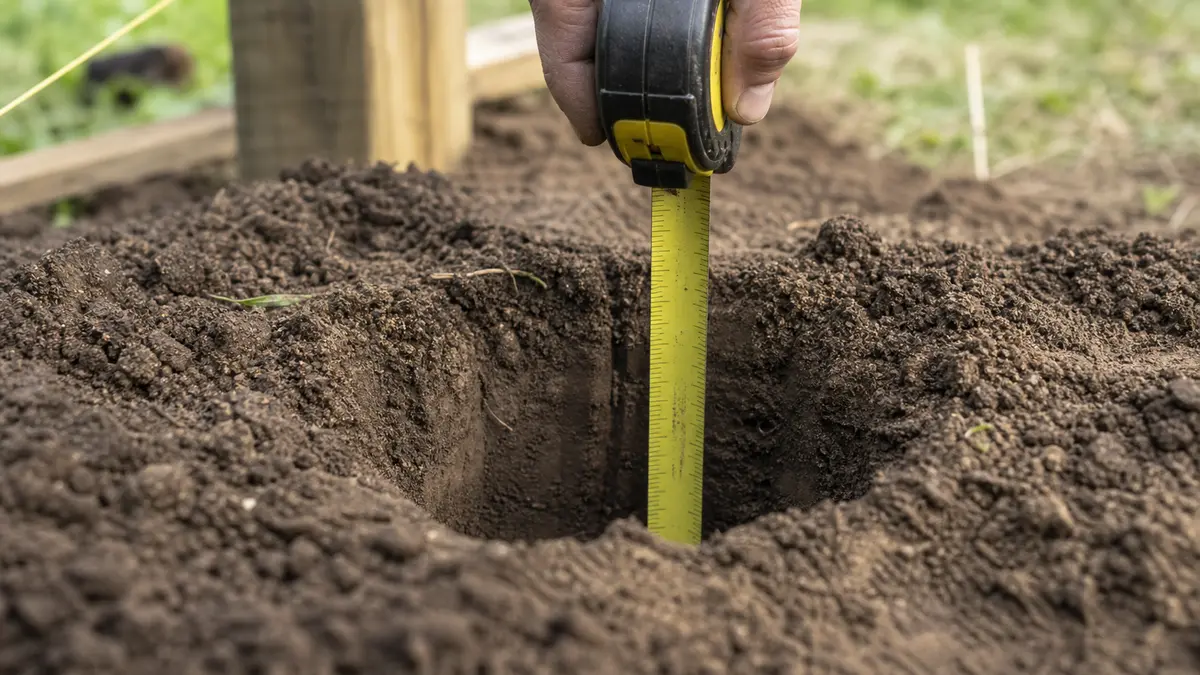
Fast-setting mix vs standard mix for posts
Mixing and placement instructions vary by product. Some fast-setting post products publish a dry-placement and water-addition method for stated applications, while other products require controlled mixing before placement.
Check the current data sheet for water quantity, hole preparation, placement, bracing, setting and loading times. Do not transfer one product's no-mix instruction to another product or to a structural footing specification.
Tips to avoid running short on post day
Dig the hole diameter first, then the depth. A hole cut too narrow forces you to buy more bags than the chart shows, because the post takes up a bigger share of a smaller cylinder. A hole cut too shallow risks frost heave pushing the post out of level after the first hard winter.
Buy one or two extra bags per project regardless of the math. Corner posts, gate posts, and the one hole that hit a buried rock always eat more concrete than the line posts next to them.
Round every bag count up, never down. Running two bags short with wet concrete already curing in the other holes is a worse problem than having a half bag left over at the end.
Frequently asked questions
How many 80 lb bags of concrete do I need per fence post?
How many 50 lb bags of Quikrete per fence post?
How deep should a fence post hole be?
What size hole do I need for a 4x4 fence post?
Do I need to mix concrete for fence posts or can I pour it dry?
Sources and references
These references and structured source records support the method and material data used on this page.
- Concrete (Wikipedia)
- QUIKRETE Fast-Setting Concrete Mix (product data)
- QUIKRETE Concrete Mix (product data)
- American Concrete Institute (institutional site)