Drywall Installation Cost Worksheet
Measure drywall as wall faces plus any ceilings, subtract openings and identify board type, thickness and finish level before pricing. The 12x12 room example uses a replaceable rate to demonstrate arithmetic; it is not a current average or contractor quote.
Key takeaways
- Room floor area is not drywall area; measure wall faces and ceilings separately.
- A 12x12 room with 8-foot walls has 528 square feet before subtracting openings.
- Board type, thickness, finish level, ceiling height and existing-surface work define the quote scope.
- The drywall calculator estimates sheets and accessories from entered dimensions; layout still needs checking.
- The $1.50 to $3.50 example is an illustrative input, not observed pricing data.
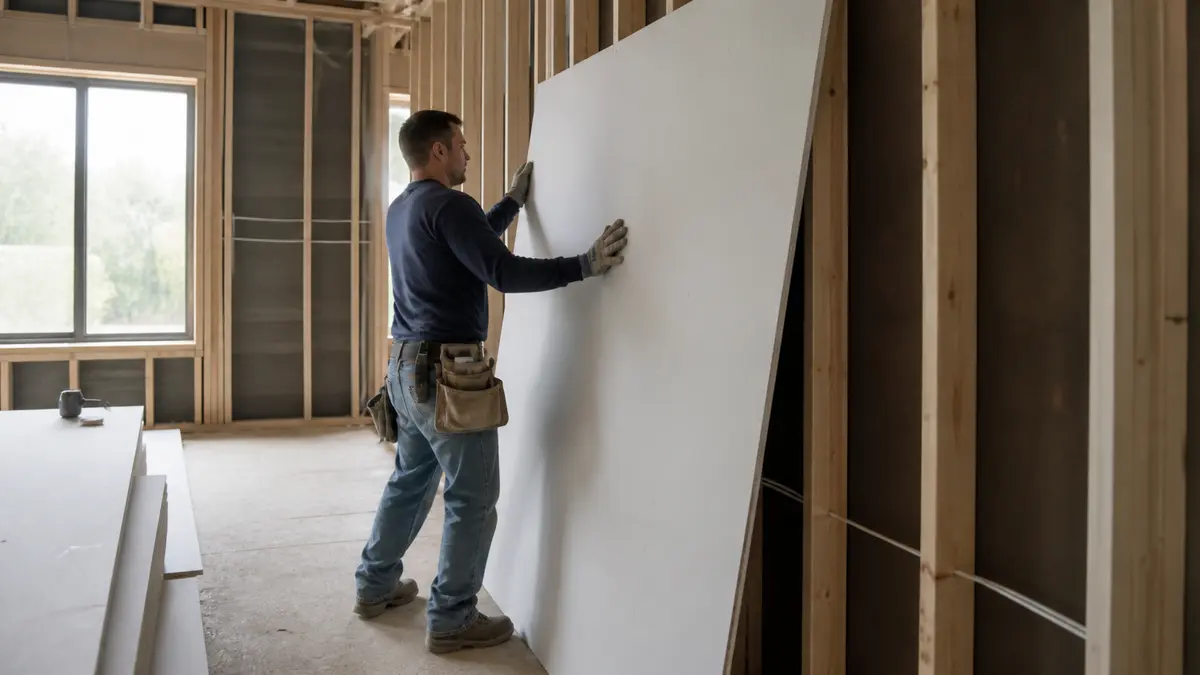
Illustrative drywall installation cost per square foot worksheet
Apply current rates only to the measured board area and specified hanging and finishing scope.
Wall area = 2 × (Length + Width) × HeightTotal area = Wall area + Ceiling area − OpeningsBudget scenario = Total area × Local installed rate| Scope to state | Confirm in the quote |
|---|---|
| Board installation | Board type, thickness, fasteners and access |
| Joint finishing | Specified finish level and corner treatment |
| Ceilings | Height, lifts or scaffolding and board orientation |
| Existing surfaces | Demolition, protection, disposal and cleanup |
A 4 by 8 foot sheet has 32 square feet of gross face area. Sheet count also depends on layout, openings and waste, which the calculator estimates separately.
Cost to drywall a room versus a whole house
A 12 by 12 ft room with 8 ft walls has 2 x (12 + 12) x 8 = 384 square feet of wall. Add the 12 x 12 ceiling, 144 square feet, for 528 square feet before subtracting doors and windows.
At the illustrative $1.50 to $3.50 input, 528 x $1.50 to $3.50 = $792 to $1,848. That is an arithmetic scenario, not a current market quote. Replace the rate and specify the finish level and inclusions.
Run the dimensions through the drywall calculator for sheets, screws and compound. Its quantity output still needs a layout and project-specific waste check.
What pushes the price up: board type, ceilings and demolition
Board type changes material and installation requirements. Confirm moisture, fire, impact, sound and thickness requirements before requesting prices.
High or vaulted ceilings can require lifts, scaffolding and different crew planning. Existing-finish removal adds protection, demolition, disposal and possible substrate repair.
Ask bidders to state these items rather than applying unsupported national percentage uplifts.
Level 4 versus Level 5 finish: is the smooth wall upgrade worth it
Finish level changes the work included, so write the required level into every request for quotation. Do not compare a board-hanging price with a finished, paint-ready scope.
A Level 5 finish adds a skim coat over the surface beyond the joint treatment. Its price effect depends on area, substrate, access and local labor, so obtain it as a separate quoted option.
Coordinate finish level with the specified decoration and lighting conditions.
DIY drywall versus hiring a contractor
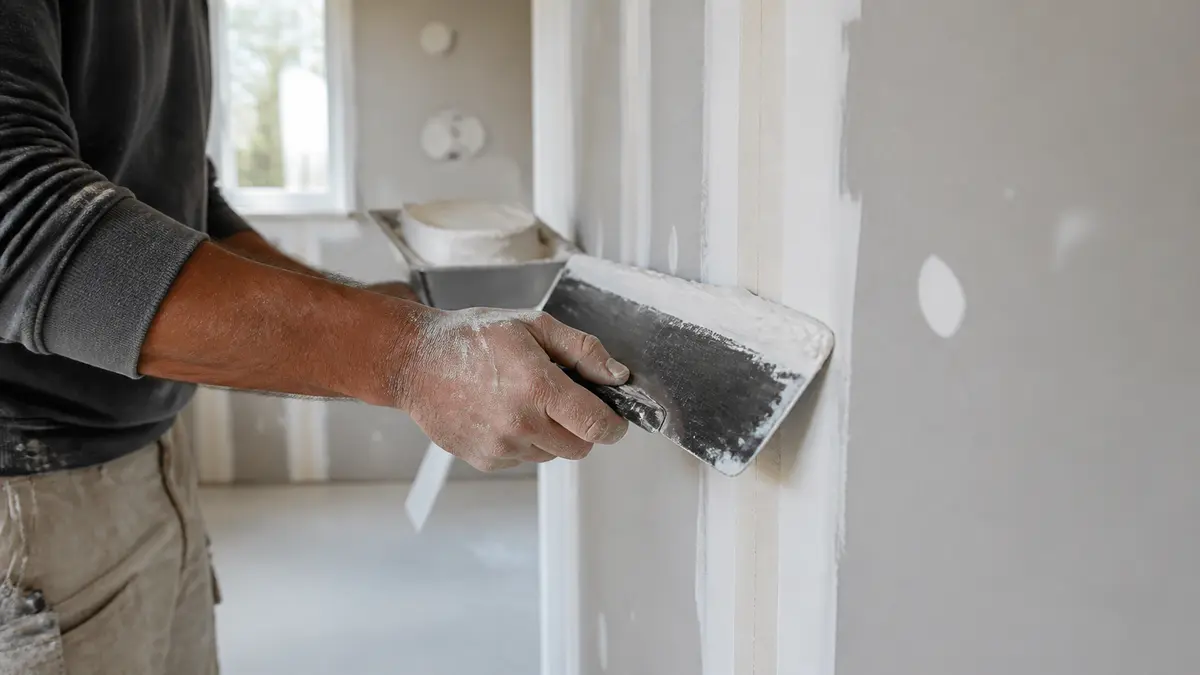
For a DIY comparison, price board, fasteners, compound, bead, tools, lifts or scaffolding, delivery, protection and disposal from current local sources. Compare that total with an itemized contractor quote.
Joint finishing quality depends on technique and the specified finish. If you are also measuring floor finishes, the flooring calculator keeps that quantity separate.
How to estimate your own drywall cost
Measure wall area as perimeter times wall height, add the ceiling if included, then subtract openings. The square footage calculator handles the raw area.
Multiply the resulting surface by a current local rate for a clearly stated finish scope. For sheet, screw and compound quantities, use the drywall calculator.
Frequently asked questions
How much does it cost to drywall a 12x12 room?
How much does drywall cost per sheet installed?
How should I compare contractor and self-installation budgets?
How much does it cost to drywall a whole house?
What is the difference between a Level 4 and Level 5 drywall finish?
Sources and references
These references and structured source records support the method and material data used on this page.
- Drywall (Wikipedia)
- Gypsum Association, GA-216 Application and Finishing of Gypsum Panel Products
- National Association of Home Builders
- U.S. Bureau of Labor Statistics