How Many Bags of Concrete in a Yard?
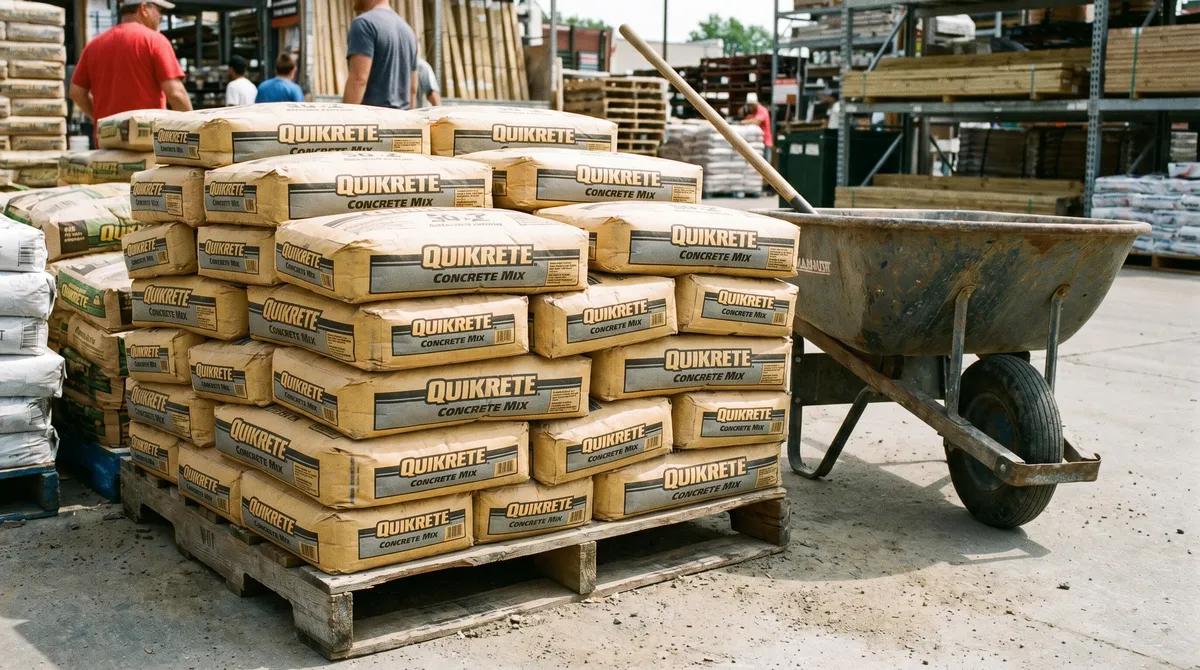
A cubic yard of concrete takes about 45 bags of 80 lb mix, 60 bags of 60 lb, or 90 bags of 40 lb. A cubic yard is 27 cubic feet, and each bag yields a printed fraction of that, so you just divide. Here are the exact yields, the math, a quick table, and the point where buying bags stops making sense.
Key takeaways
- One cubic yard is 27 cubic feet, so bags per yard = 27 divided by the bag's yield.
- It takes 45 bags of 80 lb mix, 60 bags of 60 lb, or 90 bags of 40 lb to make a cubic yard.
- An 80 lb bag yields about 0.60 cu ft, a 60 lb bag 0.45 cu ft, and a 40 lb bag 0.30 cu ft.
- Forty-five 80 lb bags is 3,600 lb of dry mix per yard, which is why pours over a yard usually go ready-mix.
- The concrete calculator converts entered dimensions into bags using the stated bag-yield assumptions; delivery, equipment and placement are outside that material takeoff.
The short answer: bags per cubic yard
One cubic yard of concrete takes 45 bags of 80 lb mix, 60 bags of 60 lb, or 90 bags of 40 lb. The number comes straight from one fact: a yard is 27 cubic feet, and each bag of ready-mix concrete yields a known volume.
Divide 27 by the yield printed on the bag and you have the number of bags. An 80 lb bag yields about 0.60 cubic feet, so 27 divided by 0.60 is 45. A 50 lb bag yields roughly 0.375 cubic feet, which works out to 72 bags per yard.
| Bag size | Yield per bag | Bags per cubic yard |
|---|---|---|
| 80 lb (36 kg) | 0.60 cu ft | 45 |
| 60 lb (27 kg) | 0.45 cu ft | 60 |
| 50 lb (23 kg) | 0.375 cu ft | 72 |
| 40 lb (18 kg) | 0.30 cu ft | 90 |
These yields match the values QUIKRETE and Sakrete print on their standard concrete mix, so the count holds whichever brand you reach for at the store. For a closer look at just the 80 lb figure, the guide to how many 80 lb bags of concrete in a yard breaks it down by common slab sizes.
Why a yard is 27 cubic feet
A cubic yard is a cube three feet on each side, and 3 times 3 times 3 is 27, so one cubic yard equals 27 cubic feet. That single number is the bridge between the volume of your pour and the number of concrete bags you need.
1 yard3 = 3 ft × 3 ft × 3 ft = 27 ft3bags = 27 ft3 ÷ yield per bagReady-mix delivered by truck is sold by the cubic yard, while bagged mix is sold by the bag. To compare the two, or to know how much concrete you need at all, you convert everything to cubic feet first, then divide.
Outside the US, ready-mix is sold by the cubic meter (about 1.31 cubic yards), and bags come in 25 kg in Europe rather than 40, 60 or 80 lb. The math is identical: total volume divided by the volume one bag yields.
How to calculate the number of concrete bags
To calculate how much concrete you need, find the volume of your pour in cubic feet, then divide by the bag's yield. Multiply length by width by thickness with everything in feet, dividing the thickness in inches by 12.
volume (ft3) = L(ft) × W(ft) × (thickness(in) ÷ 12)80 lb bags = volume(ft3) ÷ 0.60Say you have a 4-inch slab measuring 6 by 6 feet. That is 36 square feet times 0.333, or about 12 cubic feet, which is 20 bags of 80 lb mix before waste. Drop your dimensions into the concrete calculator and it returns the bag count for 40, 60 and 80 lb bags at once.
Always round up to the next whole bag and add 5 to 10 percent for spillage, an uneven base, and the odd bag that fights you. You cannot buy two thirds of a bag, and coming up short mid-pour is far worse than a leftover bag in the garage.
Bags needed for a 10x10 slab and other common pours
A 10 by 10 foot slab at 4 inches thick needs about 1.36 cubic yards with waste, which is roughly 62 bags of 80 lb concrete. That is 100 square feet times 0.333 feet, or about 33 cubic feet, divided by the 0.60 cubic foot yield and bumped up 10 percent.
| Slab (4 in thick) | Cubic yards (+10%) | 80 lb bags | 60 lb bags |
|---|---|---|---|
| 4 × 4 ft | 0.22 | 10 | 13 |
| 8 × 10 ft | 1.09 | 49 | 65 |
| 10 × 10 ft | 1.36 | 62 | 82 |
| 12 × 12 ft | 1.96 | 88 | 118 |
Once a patio or walkway crosses a cubic yard, the bag count climbs fast. A 12 by 12 slab is nearly two yards and almost 90 bags of 80 lb mix, which is a full day of lifting and mixing for one person.
For odd shapes or a known total, the concrete slab calculator handles slabs directly and keeps the inch-to-foot conversions straight so you do not slip a decimal.
Comparing bags with a ready-mix order
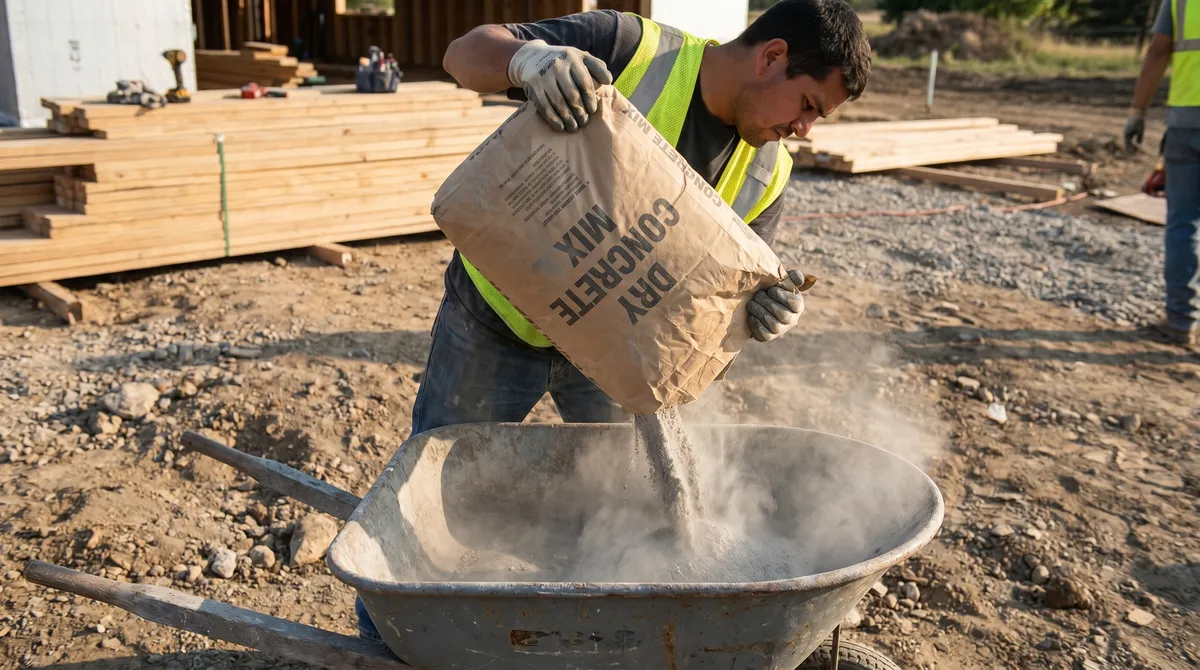
If you are weighing the whole project, the breakdown of how much concrete you need walks through volume, bags and cost side by side so the crossover point is clear before you load the truck or the cart.
Mistakes that leave you short or overpaying
The most common error is forgetting the waste allowance, which leaves you one bag short with the mixer running. Add 5 to 10 percent and round up every time, because a soft or uneven subgrade quietly swallows extra concrete you did not plan for.
The second is mixing up bag yields. A 60 lb bag is not three quarters of an 80 lb bag in volume, it is 0.45 against 0.60 cubic feet, so swapping bag sizes changes the count more than the weight suggests.
The third is hand-mixing a pour that should have been delivered. Mixing 45 bags for a single yard means hauling 3,600 lb of dry material, and the quality drifts as you tire. Let the concrete calculator confirm the bag count and the yardage first, then decide whether your back or a truck should do the work.
Frequently asked questions
How many 60 lb bags of Quikrete are in a yard?
How many 80 lb bags of concrete are in a yard?
How should I compare bagged concrete with ready-mix?
How many bags of concrete do I need for a 10x10 slab?
Can I place bagged concrete without controlled mixing?
Sources and references
These references and structured source records support the method and material data used on this page.
- QUIKRETE Concrete Mix (product and yield data)
- ASTM C387: Packaged dry concrete mixes
- Cubic yard (Wikipedia)
- Sakrete (manufacturer site)