Concrete Curb Cost Worksheet
Build a concrete-curb budget from the measured run and selected cross-section, keeping landscape edging separate from municipal curb-and-gutter work. The tables use illustrative per-foot inputs; replace them with quotes for the required base, reinforcement, finish, access and right-of-way scope.
Key takeaways
- Length and the curb cross-section determine concrete volume, not length alone.
- Landscape edging and public curb-and-gutter have different drainage, profile and approval requirements.
- Price mobilization, removal, base, forms or extrusion, reinforcement, finish and cleanup explicitly.
- The curb calculator quantifies dimensions entered by the user; it does not select a municipal profile.
- All per-foot rates on the page are illustrative inputs rather than market evidence.
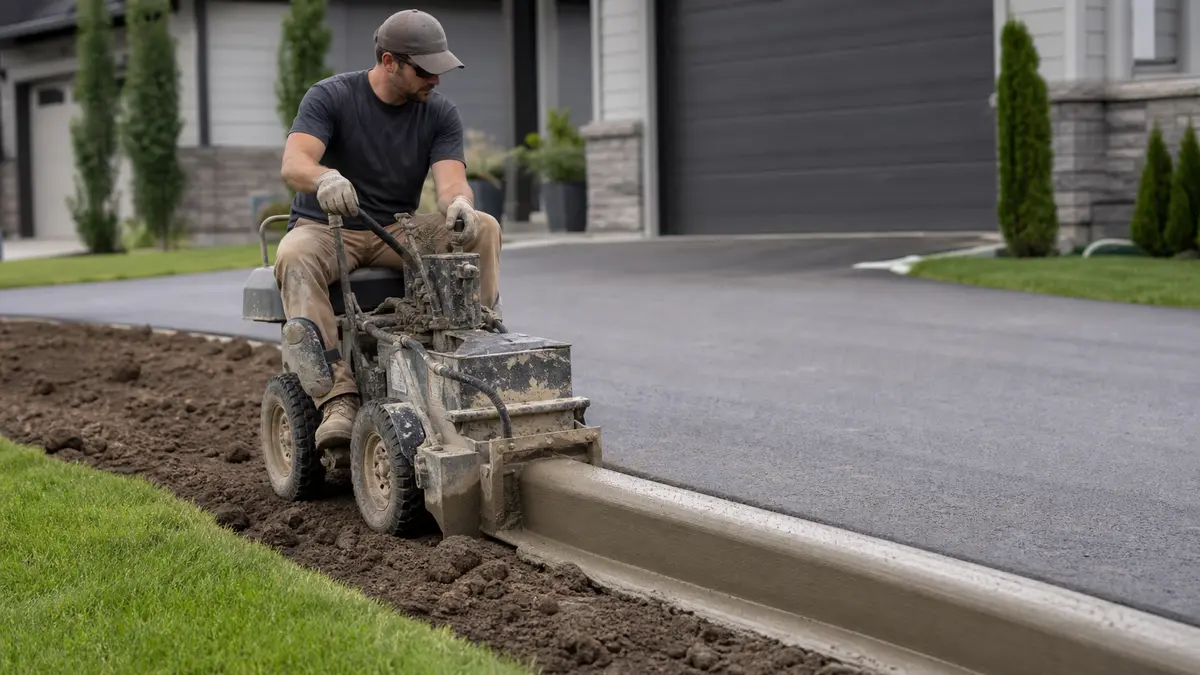
Concrete curb cost per linear foot
| Curb type | Assumed input per linear foot (installed) |
|---|---|
| Basic slant / mower curb | $12 to $15 |
| Stamped or textured curb | $15 to $18 |
| Custom carved or colored curb | $18 to $20 |
| Street curb and gutter (municipal) | $17 to $32 |
| Barrier curb only (6 in, no gutter) | $11 to $22 |
| Granite curb | $45 to $90 |
To turn any of these profiles into a concrete order, enter the height, width and run length in the curb and gutter calculator, which returns cubic yards, bags and an estimated cost. For a landscape curb with no gutter flag, leave the gutter width at zero.
Cost by run length: 100 feet, 50 feet and more
| Run length | Landscape curb ($12 to $20/ft) | Curb and gutter ($17 to $32/ft) |
|---|---|---|
| 20 ft | $240 to $400 | $340 to $640 |
| 50 ft | $600 to $1,000 | $850 to $1,600 |
| 100 ft | $1,200 to $2,000 | $1,700 to $3,200 |
| 200 ft | $2,400 to $4,000 | $3,400 to $6,400 |
What drives the price: labor, reinforcement and finish
Ask bidders to separate mobilization, forming or extrusion, concrete, reinforcement, finish and cleanup. Production depends on the selected method, profile, access and crew, so this page does not assign a daily output or labor percentage.
Price tight access, roots and removal as explicit local scope items.
Landscape curbing vs. street curb and gutter
Landscape curbing and municipal curb and gutter share the same material but different jobs. A landscape curb is a small standalone profile, often 4 to 6 inches tall and 4 to 6 inches wide, poured to edge a bed, driveway or lawn. A curb and gutter is a public-works profile that pairs a taller curb with a sloped gutter flag that carries stormwater to a drain.
Both are the same cross section mathematically, just at different dimensions. Enter the curb height and depth alone to model a landscape curb, or add a gutter width and flag thickness for the full municipal profile above, and either way the same tool returns the concrete volume and bag count.
Check your local public-works standard before pouring a curb along a street or driveway apron, since many municipalities require a specific profile, rebar and permit for anything that touches the right-of-way.
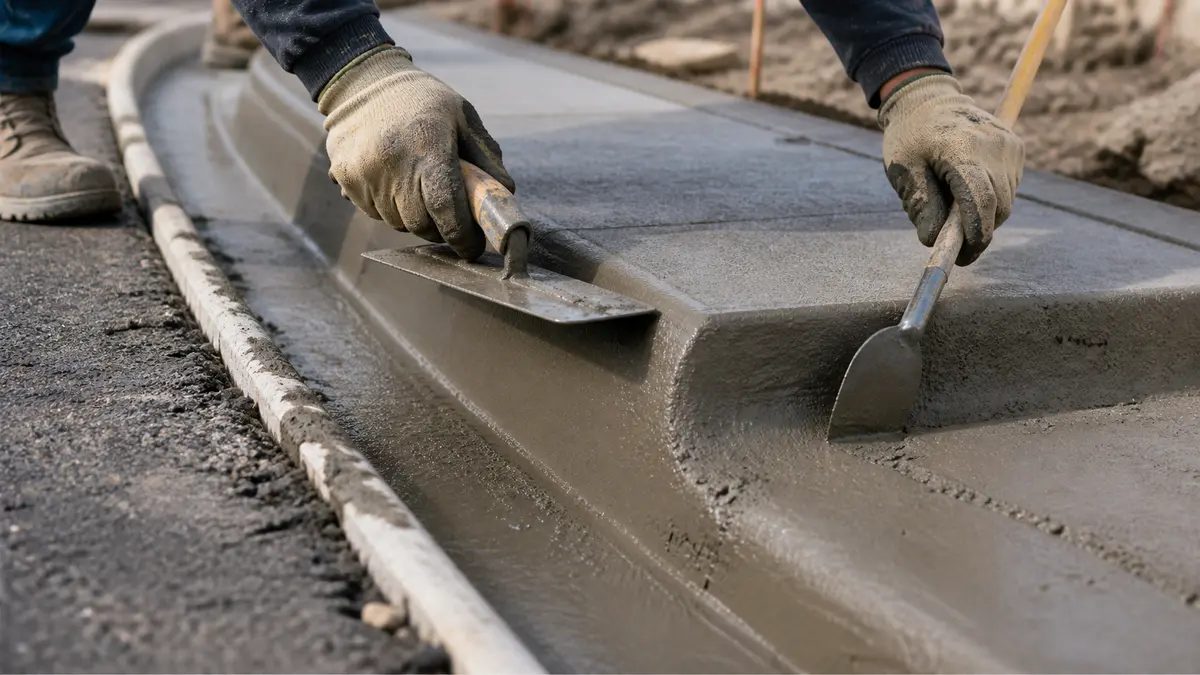
Is concrete landscape curbing worth it?
This page supplies no observed pricing dataset or universal service life; use the stated product and project evidence.
Ask the product supplier and installer to state the base, joints, curing, sealing, maintenance and warranty for the selected curb system.
State the curb profile, measured run, base, reinforcement, finish and access in each quote.
How to keep concrete curb costs down
State the curb profile, measured run, base, reinforcement, finish and access in each quote.
For material and volume planning across a broader concrete project, from footings to a driveway to a curb, the concrete calculator helps quantify each pour before you call for quotes.
Browse the full set of sizing tools on the concrete and masonry calculators hub if the project also includes a slab, block wall or footing.
Frequently asked questions
How much does concrete curbing cost per foot?
How much will 100 feet of edging cost?
Is concrete landscape curbing worth it?
How much would a 20 ft sidewalk cost?
How long does concrete curbing last?
Sources and references
These references and structured source records support the method and material data used on this page.
- Curb (Wikipedia)
- American Concrete Institute (institutional site)
- QUIKRETE (manufacturer site)
- Portland Cement Association