How Much Does a Concrete Sidewalk Cost?

A concrete sidewalk costs about 6 to 14 dollars per square foot installed in 2026, or roughly 25 to 60 dollars per linear foot for a standard 4-foot-wide walk. A typical 50-foot residential sidewalk, 200 square feet, runs 1,400 to 3,400 dollars. Below is the full breakdown by width, thickness, finish and reinforcement, plus a calculator that sizes the concrete for you.

Key takeaways

  • A plain broom-finish sidewalk runs about 6 to 14 dollars per square foot installed in 2026, or 25 to 60 dollars per linear foot for a 4-foot width.
  • A standard 50-foot walk (200 sq ft, 4 inches thick) costs roughly 1,400 to 3,400 dollars, national average near 2,000.
  • Labor is the biggest line, 50 to 60% of the total, at about 3 to 6 dollars per square foot for a broom finish.
  • Concrete alone is only about 1.80 dollars per square foot at 4 inches; wire mesh adds 0.50 to 0.75, rebar 1.00 to 1.50.
  • Decorative finishes add cost: exposed aggregate plus 3 to 6, stamped 12 to 20 per square foot installed.
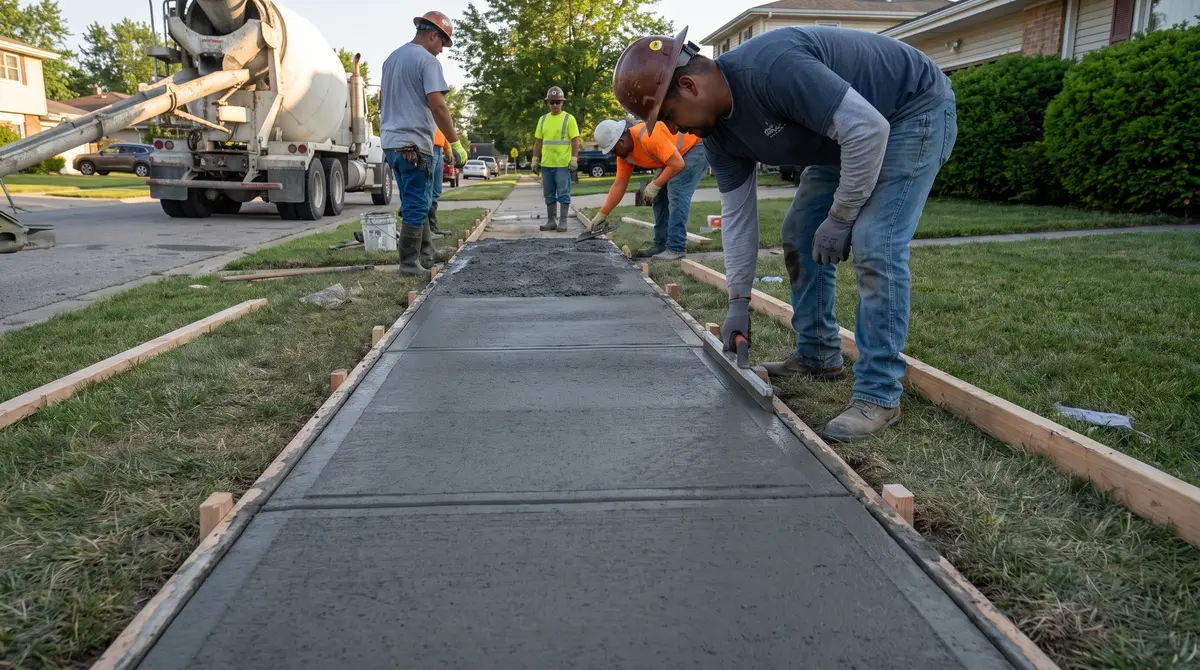
A new broom-finish concrete sidewalk being poured and edged along a residential front yard
Concrete Slab Calculator
Size the job in cubic yards, bags and cost in seconds.
Open the calculator →

Concrete sidewalk cost per square foot and per linear foot

Most homeowners pay about 6 to 14 dollars per square foot for a standard broom-finish concrete sidewalk installed in 2026. Priced by length, a 4-foot-wide walk works out to roughly 25 to 60 dollars per linear foot, since each linear foot covers 4 square feet.

Commercial and ADA-compliant walks cost more, about 10 to 18 dollars per square foot, because they are poured 5 inches thick with rebar and held to tighter slope tolerances. Metro areas and small jobs also push the per-foot price up, since crews charge more to mobilize for a short pour.

Sidewalk (4 ft wide, 4 in)AreaTypical cost (installed)
20 ft long80 sq ft$550 to $1,100
40 ft long160 sq ft$1,100 to $2,200
50 ft long200 sq ft$1,400 to $2,800
100 ft long400 sq ft$2,800 to $5,600

To turn your own dimensions into a concrete order and a rough cost, enter the length, width and thickness in the concrete slab calculator. It handles the cubic yards, bag counts and waste factor for you.

What goes into the price: labor, concrete and base

Labor is the single biggest cost, usually 50 to 60% of the total. A plain broom finish runs about 3 to 6 dollars per square foot in labor; decorative finishes climb to 5 to 10 dollars because they need extra hands and steps.

The concrete itself is a surprisingly small share. A 4-inch slab uses about 0.012 cubic yards per square foot, so at roughly 150 dollars per cubic yard the mix is only about 1.80 dollars per square foot before waste.

Line item (200 sq ft walk)Typical range
Site prep and grading$200 to $500
Gravel base (4 in compacted)$150 to $350
Forming (lumber and stakes)$100 to $250
Wire mesh or rebar$120 to $300
Concrete (3,000 PSI ready-mix)$350 to $650
Labor (pour and finish)$500 to $900
Permit (if required)$100 to $400

A compacted gravel base of about 4 inches is not optional in most climates. It drains water away from the underside of the slab and is the cheapest insurance against the cracking and heaving that later force a full replacement.

How thickness and reinforcement change the cost

Residential sidewalks are standard at 4 inches thick, which is code in most municipalities. Where a walk crosses a driveway or carries occasional vehicle traffic, pour 5 to 6 inches, which raises the concrete volume, and its cost, by a quarter to a half.

Reinforcement is the other lever. Fiber mesh mixed into the concrete adds about 0.35 to 0.50 dollars per square foot, welded wire mesh 0.50 to 0.75, and a rebar grid of #3 bars 1.00 to 1.50. Narrow residential walks usually get wire or fiber; wider, commercial or unstable-soil walks get rebar.

Concrete needed (yd3) = Length(ft) x Width(ft) x (Thickness(in) ÷ 12) ÷ 27

Because the pour is thin and long, small changes in thickness add up fast over a 50 or 100 foot run. To see how going from 4 to 5 inches changes the yards and price, drop both numbers into the slab calculator and compare.

Sidewalk width and ADA requirements that affect price

The federal ADA minimum clear width for an accessible walk is 36 inches, though many state and local codes require 42 or 48 inches, and commercial routes often need 60 inches to allow two wheelchairs to pass. Wider means more square feet, so width drives the bill directly.

Slope matters too, and it is unforgiving. The running slope cannot exceed 1:20 (5%) and the cross slope cannot exceed 1:48 (2%), with no plus tolerance on the cross slope. A reading of 2.1% can force a crew to tear out and repour a section, so precise forming on ADA work costs more up front to avoid a redo.

A public sidewalk in the road right-of-way is usually governed by your city, not just the ADA. Many towns dictate the width, thickness, mix and even ban decorative finishes on public walks. Confirm the spec with your local building department before you order concrete.
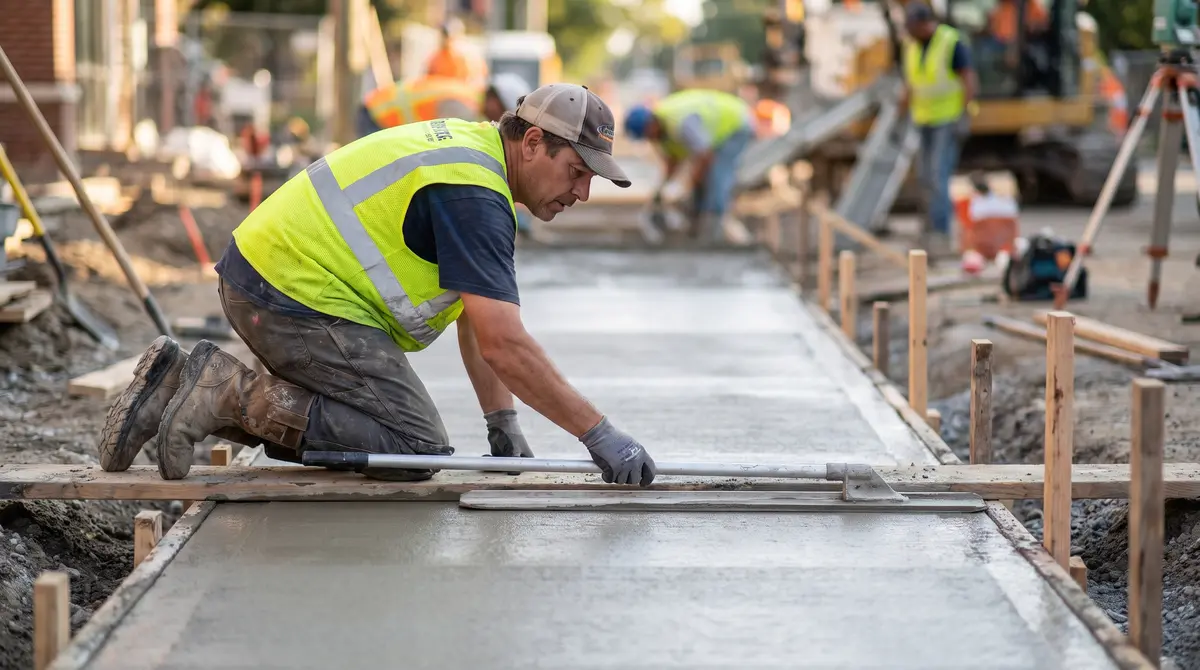
A worker floating and finishing a wet concrete sidewalk between wooden forms on a job site

Decorative finishes: broom, exposed aggregate and stamped

A standard broom finish is the baseline and the cheapest, giving the traction a walk needs at the 6 to 14 dollars per square foot installed range above. Upgrades are priced as an add-on over that base.

Exposed aggregate adds about 3 to 6 dollars per square foot and grips well when wet, which suits walkways. Integral color adds 2 to 5 dollars. Stamped concrete is the priciest common upgrade at roughly 12 to 20 dollars per square foot all in, and it needs resealing every 2 to 3 years to hold its color.

FinishCost (installed)Notes
Broom finish$6 to $14 / sq ftStandard, best traction value
Colored (integral)+$2 to $5 / sq ftOver broom base
Exposed aggregate+$3 to $6 / sq ftHigh slip resistance
Stamped$12 to $20 / sq ftReseal every 2 to 3 years

Replacement, permits and how to save money

Replacing an old walk costs more than pouring new, about 8 to 16 dollars per square foot, because demolition and haul-away of the old concrete run 2 to 6 dollars per square foot on top of the new pour. Tree-root damage and grading add further to a replacement.

Permits vary widely, from about 50 to 100 dollars in some towns to several hundred where a sidewalk opening or right-of-way permit is required. Doing your own site clearing and grading can trim 0.75 to 2 dollars per square foot, and pouring in the off-season often shaves 10 to 20% off contractor rates.

Whatever the finish, the concrete quantity is the same math, so knowing your yards before you call keeps quotes honest. The concrete slab calculator gives the cubic yards, bags and an optional cost so you can sanity-check every bid you receive.

Cost estimate, not a quote. The prices here are ballpark figures for planning only. Real costs vary by region, supplier, season, site access and project size. Always get written quotes from local contractors before you set a budget.

Frequently asked questions

How much does a 50-foot concrete sidewalk cost?
A 50-foot residential sidewalk 4 feet wide, about 200 square feet at 4 inches thick, costs roughly 1,400 to 3,400 dollars installed in 2026, with a national average near 2,000 dollars for a plain broom finish.
How much does a concrete sidewalk cost per square foot?
A standard broom-finish concrete sidewalk costs about 6 to 14 dollars per square foot installed in 2026. Commercial and ADA-compliant walks run 10 to 18 dollars per square foot because they are thicker and reinforced with rebar.
Is it cheaper to pour your own sidewalk?
Yes, doing it yourself can cut costs by 40 to 60% since labor is most of the bill, but a sidewalk needs forming, a compacted base, correct slope and a finished surface. DIY suits short, simple runs; long or ADA walks are usually worth a contractor.
How thick should a concrete sidewalk be?
A residential concrete sidewalk should be 4 inches thick over a 4-inch compacted gravel base. Where it crosses a driveway or carries occasional vehicle traffic, pour 5 to 6 inches and add rebar for the extra load.
Do I need a permit to pour a concrete sidewalk?
Often yes, especially for a public sidewalk in the road right-of-way, where a sidewalk or opening permit is common and costs anywhere from about 50 to several hundred dollars. Check with your local building department, since many cities also dictate the width, thickness and mix.

References

Related