How to Pour a Concrete Slab
A slab pour starts with an approved section and project-specific requirements for subgrade, base, forms, reinforcement, concrete, joints and curing. The sequence below explains the work, while the calculator converts entered dimensions into quantity. It does not select thickness, reinforcement, concrete strength, joint layout or curing duration.
Key takeaways
- Excavation depth follows the approved slab, base and subgrade preparation details.
- Place and compact the specified base material in the required lifts.
- Use the slab thickness, reinforcement and concrete specification stated in the project documents.
- Use the approved joint layout, depth and timing for the slab and placement method.
- Follow the specified curing procedure and verify required strength before loading.
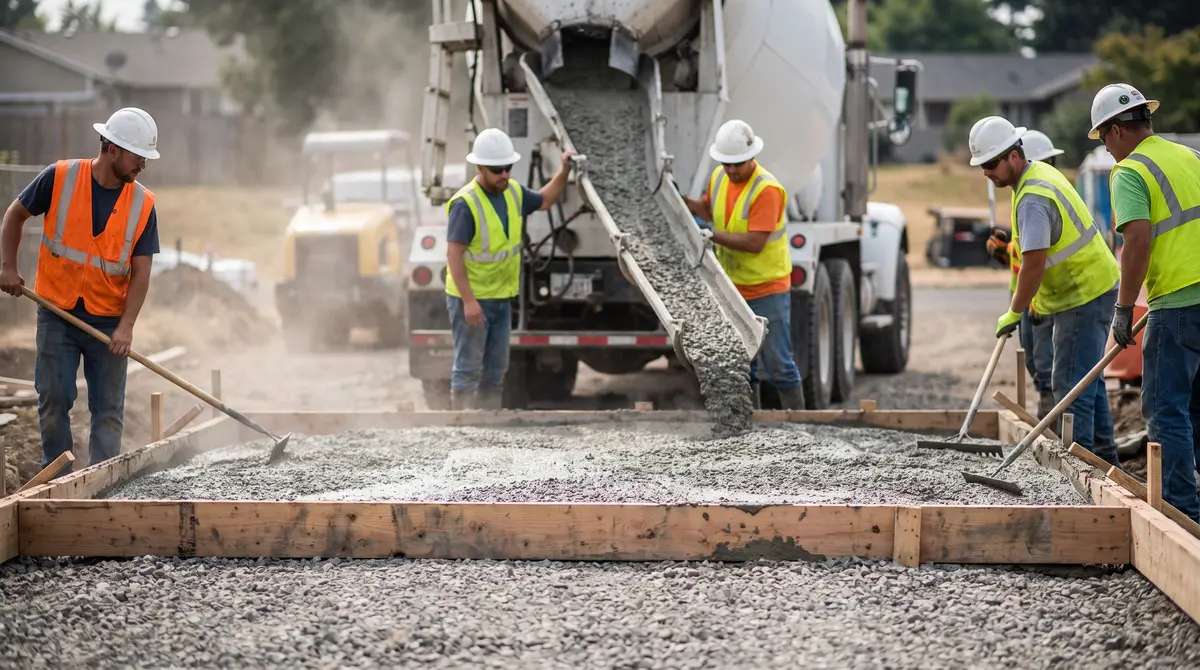
Plan the slab thickness and excavate the site
Obtain the slab thickness, edge detail, elevations, slope and subgrade or base requirements before excavation. These depend on loads, soil, drainage, frost and local requirements.
Set out the approved footprint and elevations, remove unsuitable material and prepare the support specified for the project.
The concrete slab calculator converts entered slab dimensions into volume. It does not determine excavation depth or drainage design.
Build a compacted gravel base
Use the base material, thickness, grading and compaction specified for the slab and site. One gravel depth or aggregate size does not suit every soil and load.
Place the material in the stated lifts and verify compaction by the project method.
Set level forms and add reinforcement
Build forms for the approved geometry and brace them for placement pressure. Check elevations and slope before concrete arrives.
Use reinforcement only as specified. Bar size, spacing, cover, laps and support position are structural inputs and cannot be selected from slab area alone.
Use the specified concrete mixture and keep reinforcement in its required position during placement.
Pour, screed and float the concrete
Plan crew, equipment, access and delivery sequence before placement. Place and consolidate the concrete using the methods required for the mixture and forms.
Do not add unapproved water. Coordinate any permitted jobsite adjustment with the supplier and record it.
Screed and finish to the specified elevations, tolerances and surface. Use the slab calculator to check volume before delivery.
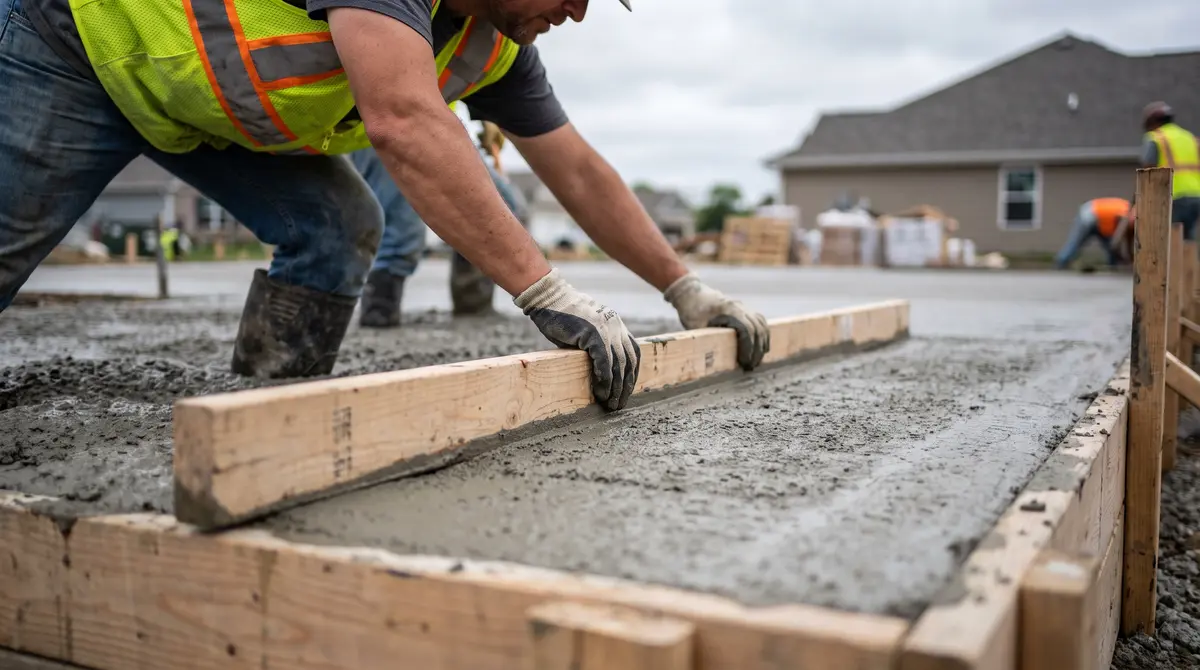
Cut control joints to control cracking
Construct joints at the locations, depths and times stated in the approved joint plan and concrete specification. Reinforcement, slab depth, mixture, restraint and placement sequence all affect the detail.
Do not infer a complete joint layout from thickness alone. Coordinate saw equipment and timing with the specified method and actual concrete conditions.
Cure the slab and know when it is ready
Start the specified curing procedure at the required time and maintain it for the stated duration. Method selection depends on the surface, mixture, weather and later treatments.
Do not authorize foot or vehicle traffic from age alone. Follow required in-place strength or written project instructions. The concrete curing guide explains these limits.
Frequently asked questions
How do you pour a concrete slab step by step?
How thick should a poured concrete slab be?
Do you need gravel under a concrete slab?
How long before you can walk on or drive on a poured slab?
Can I pour a concrete slab myself?
Sources and references
These references and structured source records support the method and material data used on this page.
- American Concrete Institute (institutional site)
- Concrete slab (Wikipedia)
- QUIKRETE: Pouring and Finishing Concrete Slabs
- NRMCA: Ready Mixed Concrete