Mortar Mix Ratio: Type N, S, M and O Explained
The standard mortar mix ratio is 1 part Portland cement, 1 part lime, and 6 parts sand by volume for Type N, the general-purpose mix. Higher strength Type S uses 1 part cement, half a part lime, and 4.5 parts sand, while Type M uses 1 part cement, a quarter part lime, and 3.75 parts sand. Below are all four ASTM C270 types with their proportions, strengths, water amounts, and where each one belongs.
Key takeaways
- Ratios are cement:lime:sand by volume. Type N is 1:1:6 (750 psi), Type S is 1:0.5:4.5 (1,800 psi), Type M is 1:0.25:3.75 (2,500 psi), Type O is 1:2:9 (350 psi).
- Type N is the general-purpose above-grade mix; Type S handles below-grade and soil pressure; Type M is for foundations and retaining walls; Type O is for interior, non-load-bearing repointing.
- Match mortar to the masonry: the mortar should be weaker than the block or brick so cracks run through the joint, not the unit.
- Pre-mixed Type N bags need about 5 quarts of water per 80 lb bag; Type S Mason Mix needs 9 to 14 pints per 80 lb bag.
- One 80 lb bag of pre-mixed mortar lays about 37 standard bricks or 13 standard 8x8x16 blocks with 3/8 inch joints.
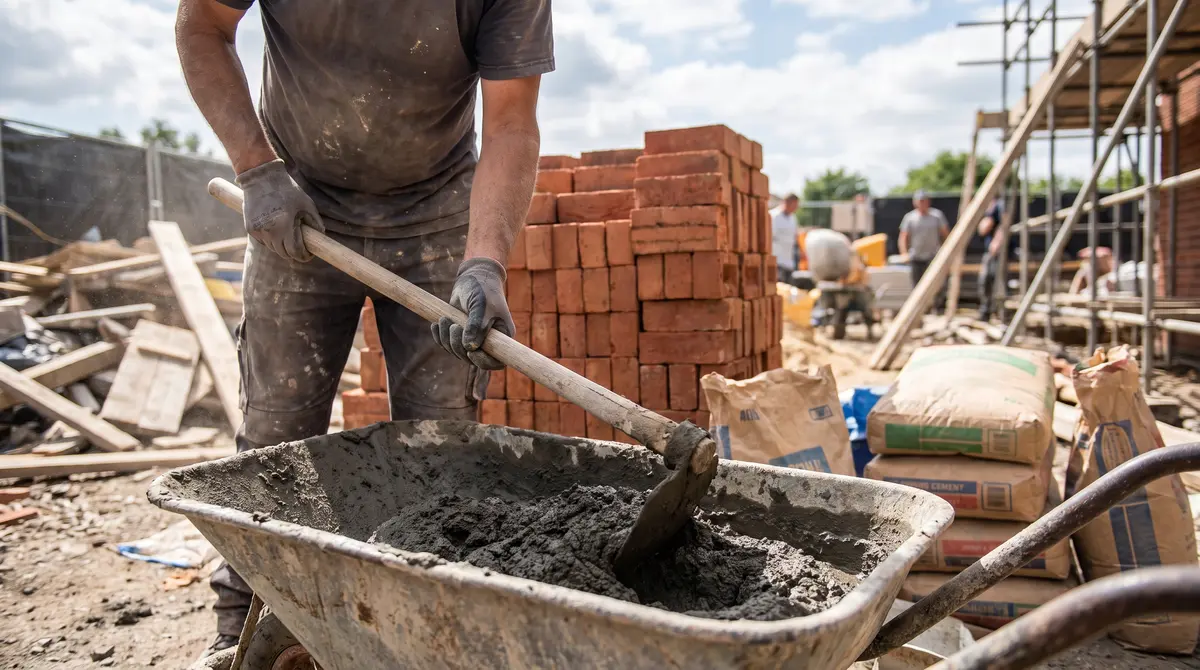
What the mortar mix ratio means
A mortar mix ratio lists three ingredients in order: cement, lime, and sand, always measured by volume. When you see 1:1:6, that is 1 part Portland cement, 1 part hydrated lime, and 6 parts masonry sand.
Lime is not filler. It makes the mortar workable under the trowel, holds water so the mix does not dry too fast, and gives the joint a small amount of self-healing that closes hairline cracks over time.
The proportions come from ASTM C270, the standard that governs mortar for unit masonry. It defines four types by letter, and the sand is always the largest part because it gives the mortar its body without making it too rigid.
Note that the sand must be masonry sand, sometimes called mason sand, which has angular grains that lock together. Play sand and beach sand are too round and will weaken the bond. To skip the volume math, enter your wall in the mortar calculator and it returns the bags and sand for you.
Type N mortar ratio: the general-purpose mix
Type N mortar is the mix ratio you reach for most often: 1 part cement, 1 part lime, 6 parts sand. It reaches a minimum 750 psi at 28 days under the ASTM C270 property specification, with real-world tests often landing higher, around 1,500 to 1,800 psi.
Use Type N for above-grade exterior and interior walls, chimneys, and soft brick or medium-strength block. Its medium strength and higher lime content make it forgiving and a good match for the softer masonry common on homes.
Because it is weaker and more flexible than Type S or M, Type N is also the standard choice for tuckpointing and repointing older brick, where a hard mortar would crack the units instead of the joint.
Type S, M and O ratios and when to use them
The other three types shift the balance of cement to lime. More cement means more compressive strength but less flexibility and workability. Here is how the four ASTM C270 types compare.
| Type | Ratio (cement:lime:sand) | Min. strength | Best for |
|---|---|---|---|
| Type M | 1 : 0.25 : 3.75 | 2,500 psi (17.2 MPa) | Foundations, retaining walls, driveways |
| Type S | 1 : 0.5 : 4.5 | 1,800 psi (12.4 MPa) | Below grade, exterior, soil pressure |
| Type N | 1 : 1 : 6 | 750 psi (5.2 MPa) | Above-grade walls, chimneys, tuckpointing |
| Type O | 1 : 2 : 9 | 350 psi (2.4 MPa) | Interior, non-load-bearing, repointing |
Type S is the go-to for anything below grade or facing soil pressure, such as foundation walls, retaining walls, and pavements, because it bonds well and resists moisture. Many masons trust a slightly richer 1:0.5:4.5 blend for exterior work exposed to weather.
Type M is the strongest at around 2,500 psi and belongs under heavy load, but its low lime content makes it stiff and less adhesive, so it is not for delicate or historic masonry. Type O is a weak interior mortar, mainly for non-load-bearing partitions and gentle repointing of soft old brick.
How much water each mortar mix needs
Water is the variable that mixing charts leave out, because it depends on the sand moisture and the weather, not a fixed ratio. For pre-blended Type N such as QUIKRETE Mortar Mix, add about 5 quarts of water per 80 lb bag, or 3.75 quarts for a 60 lb bag, keeping the maximum under 6 quarts.
Higher-strength pre-mixed Type S, sold as Mason Mix, takes more water: about 9 to 14 pints per 80 lb bag. Always add roughly three-quarters of the water first, mix, then trickle in the rest until the mortar holds a half-inch ridge on a trowel held near vertical without sliding off.
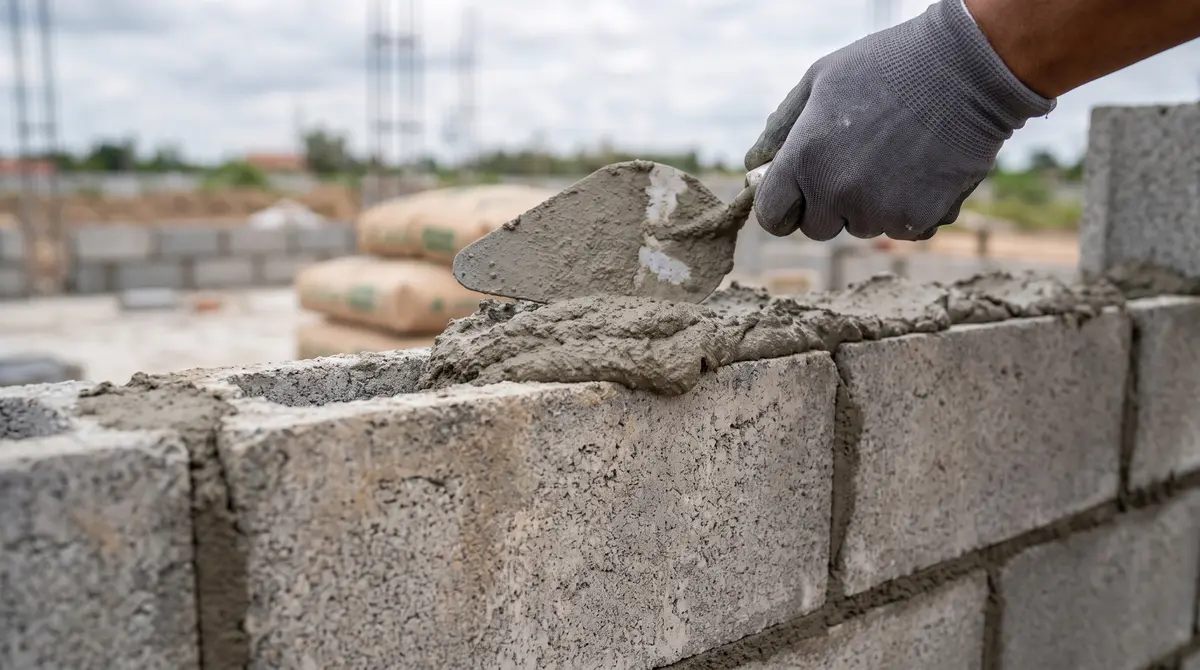
How far a bag of mortar goes: bricks and blocks
Coverage decides how many bags you buy, and it depends on joint size and unit type. As a manufacturer figure, one 80 lb bag of pre-mixed mortar lays up to 37 standard bricks or 13 standard 8x8x16 concrete blocks with 3/8 inch joints.
| Job | 80 lb bags (approx.) | Notes |
|---|---|---|
| 100 standard bricks | 3 bags | Add 10% waste |
| 1,000 standard bricks | 26 to 28 bags | Bulk mix: about 1 ton sand + 8 bags cement |
| 100 blocks (8x8x16) | 7 to 9 bags | 3/8 in bed and head joints |
Plan for 10 to 15% waste for drops, re-tempering, and the mortar left in the mixer. For a block wall specifically, the sibling guide on bags of mortar per 100 block breaks the count down by joint thickness.
If you are estimating a whole wall rather than a unit count, feed the length and height into the mortar calculator to get bags of pre-mix or the cement and sand for a site blend.
Pre-mixed bags versus mixing your own
Compare pre-mixed mortar and site-batched materials with current local quotes for the same mortar type, quantity and delivery scope. Do not assume a fixed percentage saving without a dated supplier dataset.
Whichever route you take, hold the cement-to-lime-to-sand proportion for the specified mortar type and adjust water for the product and conditions. The selected specification governs strength and bond.
Frequently asked questions
What is the correct mortar mix ratio?
What is the ratio of Type S mortar?
What is the 1 2 3 mortar mix?
How much water do I add to a bag of mortar mix?
Can I use mortar without lime?
Sources and references
These references and structured source records support the method and material data used on this page.
- ASTM C270: Standard Specification for Mortar for Unit Masonry
- Mortar (masonry) - Wikipedia
- QUIKRETE Mortar Mix No. 1102 data sheet
- NCMA: National Concrete Masonry Association