Types of Concrete
Concrete is specified by more than a product name or compressive-strength number. Loads, exposure, placement, workability, air content, aggregate and curing requirements all affect the mixture. Use the categories below to understand supplier terminology, then follow the project specification and current product data.
Key takeaways
- Compressive strength is only one concrete requirement; exposure, air content, aggregate and workability can also control selection.
- Ready-mix, bagged, rapid-setting, fiber-reinforced and lightweight products serve different placement and performance needs.
- A higher PSI value does not automatically make a mixture suitable for a particular slab, footing or wall.
- Use the exact mixing and placement method in the current product data or approved mixture, including any stated no-mix application.
- The calculator converts dimensions to volume; it does not select concrete properties or approve substitutions.
How concrete is graded
Most concrete is described by its compressive strength after 28 days of curing, measured in pounds per square inch, or PSI. Residential work usually runs between 2,500 and 4,000 PSI; structural and commercial work goes higher.
Strength is set mainly by the ratio of water to cement: less water gives a stronger, more durable result, which is why mix design matters as much as brand. The other big variables are the aggregate, the additives, and how the concrete is placed and cured.
Standard ready-mix concrete
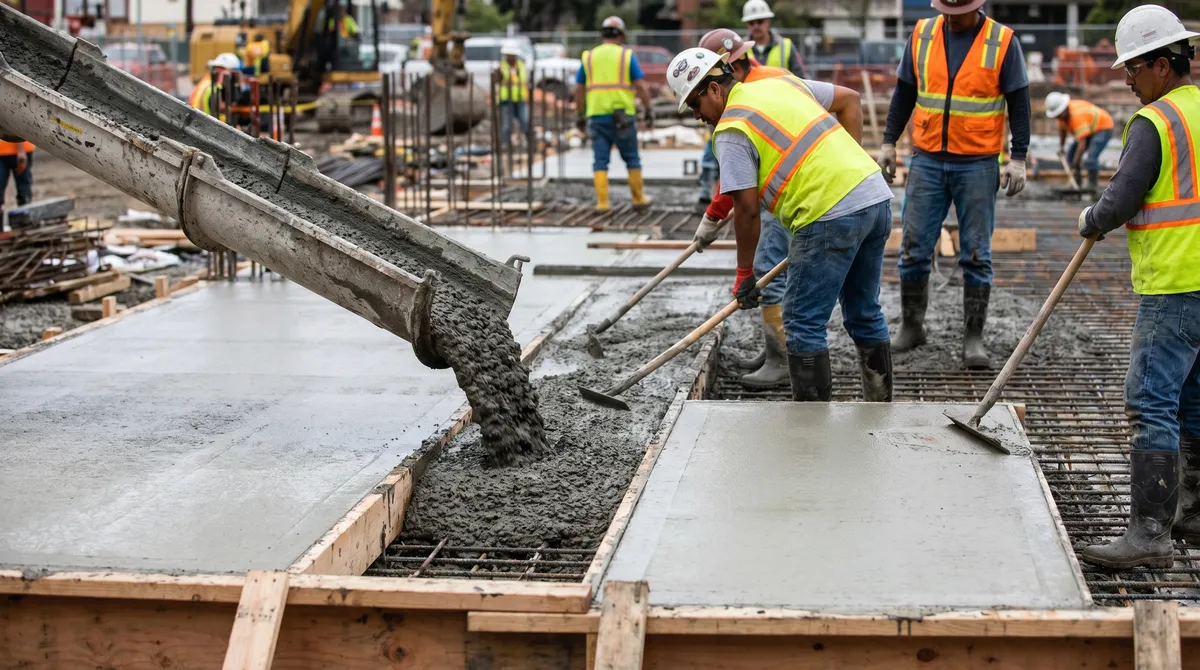
Ready-mix concrete is batched at a plant and delivered in a mixer truck to a stated specification. The order should identify required strength, exposure and air requirements, aggregate, slump or workability, quantity and delivery conditions.
The concrete calculator converts project dimensions to volume and rounds a displayed order quantity. It does not assume or select a compliant mixture.
High-strength concrete
Anything from 5,000 PSI upward is considered high strength, reaching 8,000 PSI and beyond for columns, heavy floors and structural elements that carry large loads. It uses a lower water-cement ratio and often additives like silica fume or fly ash. For most home projects it is overkill, but it is the right call where an engineer specifies it. Pre-mixed high-strength bags exist for posts and small structural repairs.
Fast-setting concrete
Rapid-setting products are formulated for shorter setting or strength-development schedules, but properties and approved applications vary by product. Some post-setting products publish a no-mix method for stated conditions; others require controlled mixing.
Follow the exact current data sheet and project requirements rather than transferring one product's method or timing to another. Count a known cylindrical volume with the sonotube calculator.
Reinforced and fiber-reinforced concrete
Plain concrete is strong in compression but weak in tension, so it cracks under bending and load. Reinforced concrete adds steel rebar or welded wire mesh to carry that tension, which is standard for driveways, structural slabs and footings. Size the steel grid with the rebar calculator.
Fiber-reinforced concrete mixes steel or synthetic fibers throughout the batch. This controls shrinkage cracking and can reduce or replace mesh in light slabs, though rebar is still used where structural strength is required.
How to choose the right type
Select the concrete specification from the approved project documents and applicable requirements. Strength, exposure, air content, aggregate, placement method and curing requirements depend on the element and conditions.
Settle two things before you order: the PSI and whether the pour needs air entrainment or reinforcement. Both affect the mix and the price. Decorative finishes like stamping or color go on top of standard concrete; they are not a different order.
If you are buying bags, you are really just choosing the strength grade printed on the bag. For a truck delivery, tell the supplier the PSI, the slump you want, and whether you need air entrainment. Either way, the volume calculation is identical math regardless of mix type.
Air-entrained, lightweight and decorative
Air-entrained concrete has microscopic air bubbles that give water room to expand when it freezes, so it resists the freeze-thaw cracking that destroys exterior flatwork in cold climates. Lightweight concrete swaps heavy gravel for lighter aggregate to reduce dead load on floors and roofs.
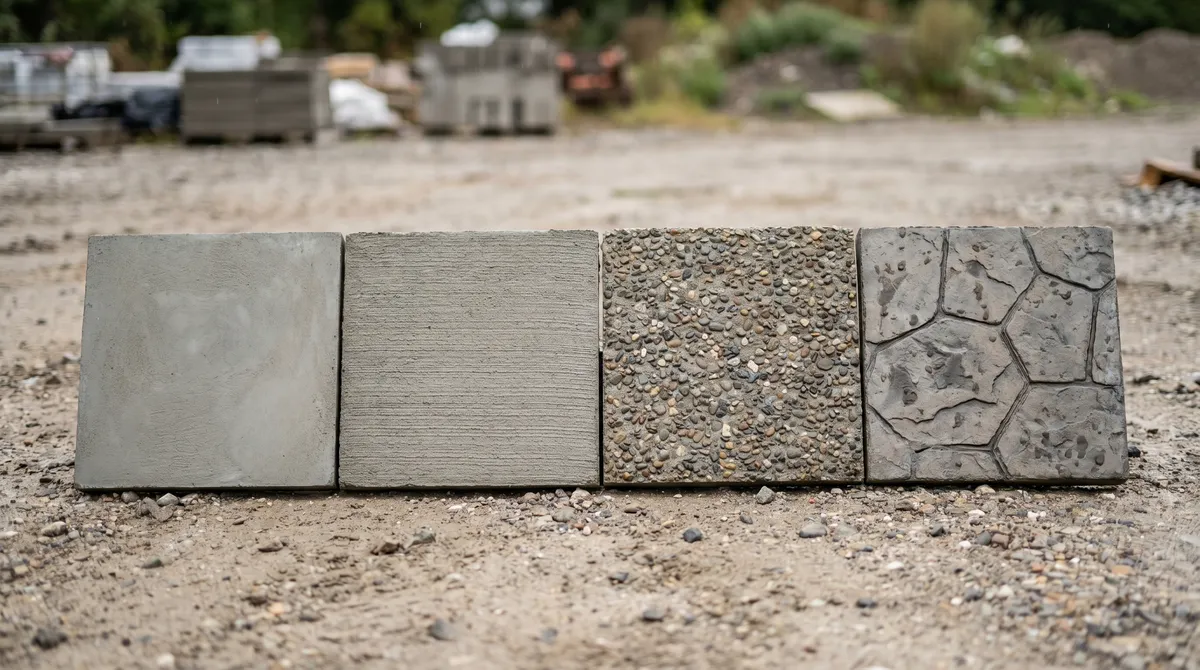
Stamped and colored concrete is not a different mix but a finishing technique applied to standard concrete to mimic stone or brick. Whatever the type, the volume calculation is the same: once the mix is chosen, use the concrete calculator to size the order.
Frequently asked questions
What is the most common way to order concrete for a larger pour?
What PSI concrete do I need for a driveway?
What is the difference between cement and concrete?
Which concrete is best for fence posts?
Sources and references
These references and structured source records support the method and material data used on this page.
- Types of concrete (Wikipedia)
- American Concrete Institute (institutional site)
- NRMCA: concrete in practice