Concrete Mix Ratio: Cement, Sand and Aggregate
A concrete mix ratio states the relative parts of cement, sand and coarse aggregate. A familiar example is 1:2:3 by volume, but that ratio alone does not determine compressive strength or prove suitability for a slab, footing or driveway. Materials, grading, water, admixtures, batching, curing and testing all affect the result. Use a specified mix design or bag instructions where performance matters, then use the quantity method below.
Key takeaways
- A ratio such as 1:2:3 identifies relative volumes of cement, sand and coarse aggregate; it does not guarantee a PSI value.
- Changing cement content changes the proportions, but strength also depends on materials, water, batching, consolidation, curing and testing.
- Follow the specified water limit or the bag manufacturer's instructions instead of using a generic water-to-PSI conversion.
- Follow the curing method and duration specified for the selected concrete and exposure conditions.
- Ratios are by volume, so split your total cubic yards into the right number of parts before buying cement, sand and stone.
What a concrete mix ratio means
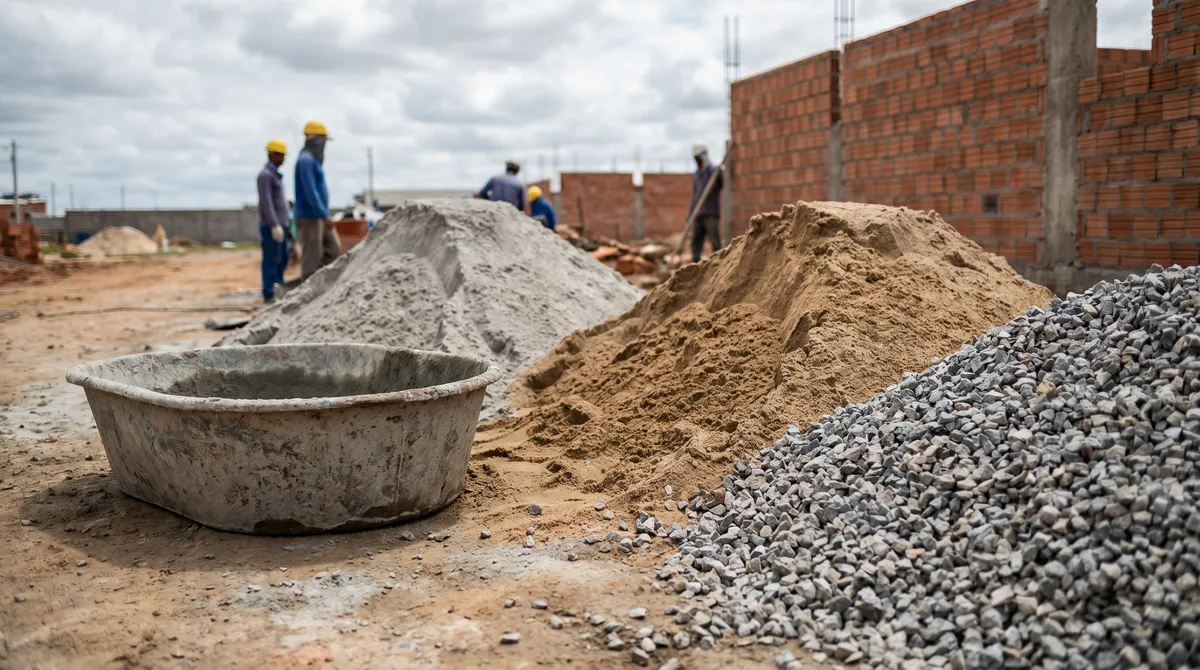
A concrete mix ratio is the proportion of cement, fine aggregate (sand) and coarse aggregate (gravel or crushed stone), always written in that order. A 1:2:3 ratio means one part cement, two parts sand and three parts stone, measured by volume rather than weight.
Cement is the binder that glues everything together. Sand fills the gaps between the larger stones, and the coarse aggregate gives the mix its bulk and strength. Water then triggers the chemical reaction, called hydration, that hardens the paste.
Compare options only after defining the project specification, product data, materials, water limit and acceptance criteria.
Why a ratio cannot be converted directly to PSI
Compressive strength is a tested property of a concrete mixture, not a fixed output of three volume proportions. Aggregate grading and moisture, cement type, supplementary materials, admixtures, actual water content, air, batching accuracy, consolidation, temperature and curing can all change the measured result.
| Nominal proportion | What it states | What it does not establish |
|---|---|---|
| 1:3:6 | 1 cement, 3 sand, 6 coarse aggregate | Compressive strength or permitted use |
| 1:2:4 | 1 cement, 2 sand, 4 coarse aggregate | Compressive strength or permitted use |
| 1:2:3 | 1 cement, 2 sand, 3 coarse aggregate | Compressive strength or permitted use |
| 1:1.5:3 | 1 cement, 1.5 sand, 3 coarse aggregate | Compressive strength or permitted use |
| 1:1:2 | 1 cement, 1 sand, 2 coarse aggregate | Compressive strength or permitted use |
Where a code, drawing or specification requires a strength, exposure class or other performance, use the specified concrete and acceptance requirements. Do not infer compliance by matching a nominal ratio in this table.
The water-cement ratio matters most
The water-cementitious-materials ratio is the weight of water divided by the weight of cementitious materials. It affects strength and durability, but it cannot be converted to a guaranteed PSI without a defined mixture, materials, production controls, curing and test results.
Use the maximum ratio and required performance stated in the project specification, approved mixture or bag instructions. Account for water already present in damp aggregate instead of treating an added gallon figure as universal.
Where an admixture is proposed to change workability, follow the mixture designer's and manufacturer's requirements.
Choosing the right mix for the job
Choose concrete from the required strength, exposure, placement and structural criteria in the project documents or applicable requirements. A nominal cement:sand:aggregate ratio cannot select a mixture for a driveway, footing, column or other structural use.
Aggregate grading and proportion affect workability and finish as well as hardened properties. Any adjustment must remain within the approved mixture or product instructions.
If you are comparing packaged products, use each manufacturer's stated applications, water instructions, yield and performance rather than translating a generic ratio into PSI.
Turning a ratio into bags and volume
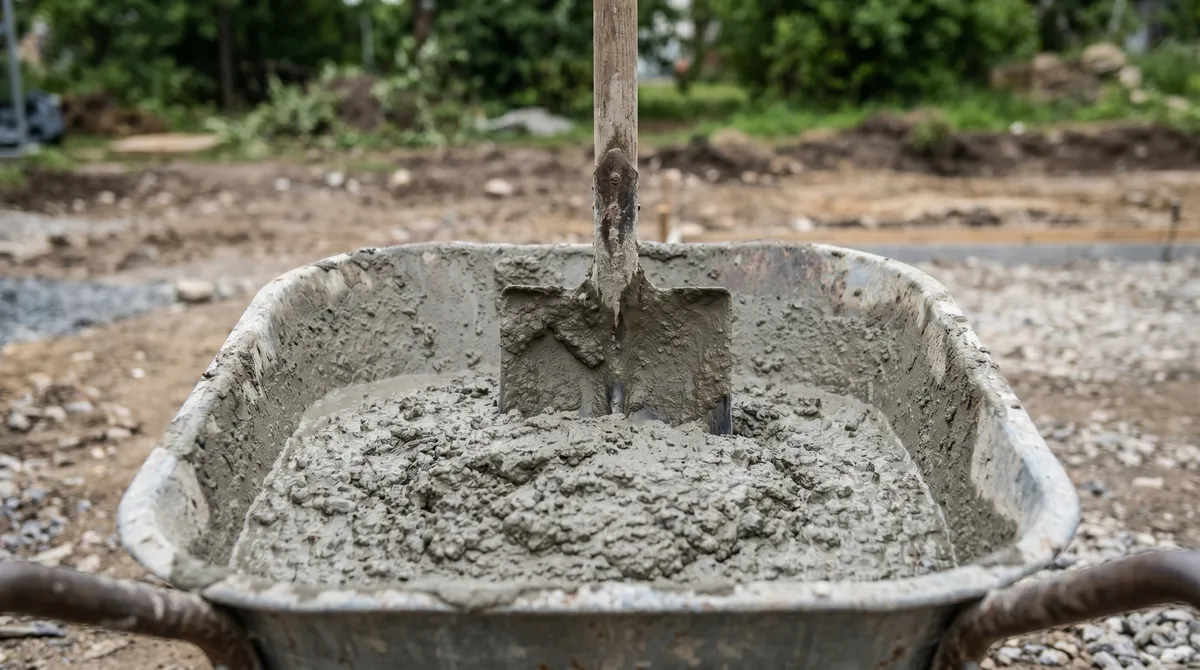
A ratio tells you proportions, not quantities, so you need your total volume first. Add the parts together, then split the volume across them. A 1:2:3 mix has 6 parts total, so cement is one sixth of the dry volume, sand two sixths and aggregate three sixths.
Because the dry materials pack down when mixed with water, a rough rule is that it takes about 1.5 cubic feet of combined dry material to yield 1 cubic foot of concrete. Work out the cubic yards you need in the concrete calculator, then divide that volume into parts to buy the right cement, sand and stone.
parts total = cement + sand + aggregatecement volume = total concrete × (1 ÷ parts total)If you would rather follow the math step by step for an odd shape, the walkthrough on how to calculate concrete shows how to convert dimensions into cubic yards before you split them into a mix ratio.
Mixing tips for strength and durability
Measure by volume with the same bucket or shovel for every part, so a 1:2:3 mix stays 1:2:3. Guessing proportions is the fastest way to a weak, crack-prone pour. Use clean sand and well-graded aggregate, since dirty or single-size stone weakens the bond.
Add water last and slowly. Mix to a workable but not soupy consistency, then stop. The mix should hold a slope when piled, not flow flat. Adding water to make placing easier is the classic mistake that quietly destroys strength.
Finally, follow the curing method and duration stated in the project specification or product data. Strength acceptance and loading time depend on the mixture, temperature, curing and the project's test criteria; a generic 7-day or 28-day rule does not establish design strength. Supplementary materials may also change early-age and later-age performance, so use the approved mixture data.
Frequently asked questions
Is 4 to 1 a good concrete mix?
What is the strongest concrete ratio?
What is the 1/2/3 rule for concrete?
How should a site-batched mix be selected for structural concrete?
How much water do I add to a concrete mix?
What psi does a 1:4:6 concrete mix make?
What psi is a 1:3:4 concrete mix?
Sources and references
These references and structured source records support the method and material data used on this page.
- Concrete (Wikipedia)
- American Concrete Institute (institutional site)
- QUIKRETE (manufacturer site)
- Portland Cement Association: how concrete is made