How Many Cinder Blocks Do I Need?
To find how many cinder blocks you need, multiply the wall area in square feet by 1.125, since one standard 8x8x16 block with a 3/8 inch mortar joint covers 0.889 square feet of wall face. Here is the formula in plain terms, blocks per 100 square feet, how much mortar to buy, and a calculator that does the count for you.
Key takeaways
- A standard 8x8x16 block covers 0.889 sq ft, so you need about 1.125 blocks per square foot of wall.
- A 100 square foot wall takes roughly 113 blocks before waste, so plan for about 120 with a 5 to 10% allowance.
- QUIKRETE Mortar Mix No. 1102 lists up to 12 standard blocks per 80 lb bag, so 100 blocks require at least 9 bags before project waste.
- Subtract door and window openings from the wall area before multiplying, and round blocks up to a whole number.
- Multiply the rounded block count by the selected supplier's current unit or pallet price and include delivery.
The formula: blocks per square foot
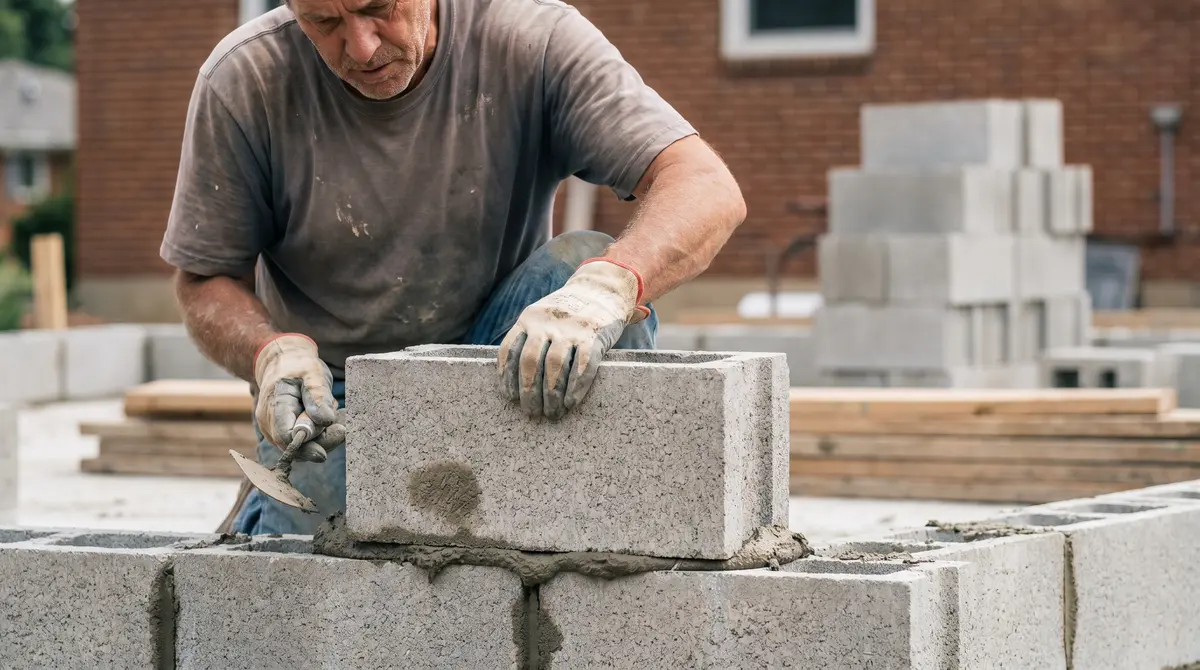
Cinder blocks are counted by wall area, not volume. The most common unit is the 8x8x16 concrete masonry unit, which presents an 8 inch high by 16 inch long face to the wall once it is laid.
That face is 128 square inches, but with a standard 3/8 inch mortar joint each block actually occupies an 8 by 16 inch grid space, which is 0.889 square feet. Divide 1 by 0.889 and you get the rule of thumb: 1.125 blocks per square foot.
Wall area (ft2) = Length(ft) x Height(ft)Blocks = Wall area x 1.125Always add 5 to 10% for breakage, cutting, and the odd block that arrives chipped. Round the final number up to a whole block, because you cannot buy a fraction.
How many blocks per 100 square feet
For a quick estimate, a 100 square foot wall of standard 8x8x16 blocks needs about 113 blocks before waste, or roughly 120 once you add a 5 to 10% allowance. That keeps the math simple: take your wall area, divide by 100, and multiply by 113.
The table below shows common wall sizes using 8 inch blocks. These figures assume a 3/8 inch mortar joint and no openings, so subtract any doors or windows from the area first.
| Wall (8x8x16) | Area (sq ft) | Blocks (+10%) |
|---|---|---|
| 10 x 8 ft | 80 | 99 |
| 20 x 8 ft | 160 | 198 |
| 10 x 12 ft | 120 | 149 |
| 25 x 8 ft | 200 | 248 |
To skip the arithmetic, enter your length and height in the cinder block calculator and it returns the block count, mortar bags, and an optional cost.
How much mortar do you need
Mortar is the second material to buy, and it is easy to under order. The QUIKRETE Mortar Mix No. 1102 data sheet lists a yield of up to 12 standard blocks per 80 lb bag.
80 lb premix bags = Blocks ÷ 12, rounded up100 ÷ 12 = 8.33 → 9 bags minimumBlock sizes and which one to count
Not every job uses the 8 inch block, and the width changes the count only slightly, since all standard CMU share the same 8 by 16 inch face. The 4 inch block is the same 1.125 per square foot, just thinner.
The 4 inch CMU (nominal 4x8x16) is used for non load bearing partitions, veneers, and decorative work where you do not need structural mass. The 6 inch unit suits fire rated and medium load walls, while 12 inch blocks handle foundations and retaining structures.
If you are sizing a structural wall, the standard concrete block sizes guide lays out the nominal and actual dimensions for each width so you order the right unit.
Example: blocks for a 10x12 wall
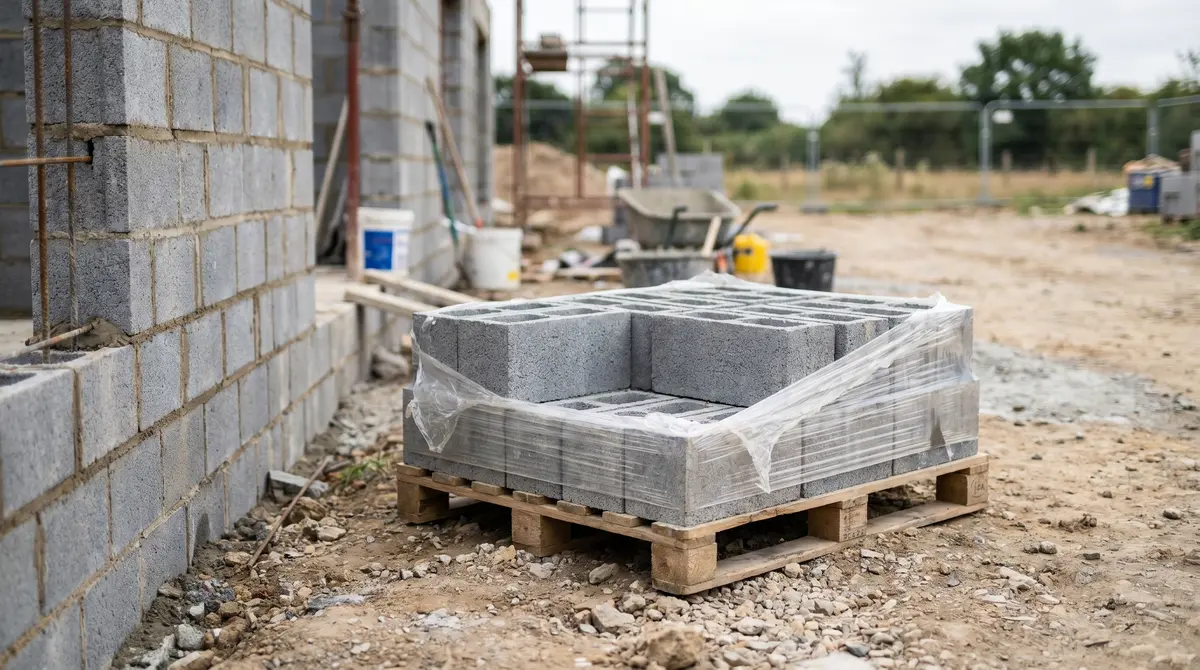
Say you are building a 10 foot long by 12 foot high wall with standard 8x8x16 blocks. The area is 10 times 12, which is 120 square feet.
Multiply 120 by 1.125 and you get 135 blocks, then add 10% for waste to reach about 149 blocks. At the published maximum yield of 12 blocks per 80 lb bag, 135 blocks require 11.25 bags, rounded up to 12 bags before any mortar waste allowance.
If the wall has a 3 by 7 foot doorway, subtract that 21 square feet first: 99 square feet times 1.125 is 112 blocks, plus waste. Always deduct openings before you multiply.
Cinder blocks vs pouring concrete
Block and cast concrete are different wall systems. Compare local bids only after matching wall geometry, foundation, reinforcement, grout, formwork, drainage, finish, access and design scope.
For block material, multiply the rounded quantity by the selected supplier's current unit or pallet price and add delivery. The ranges previously shown on this page did not establish a reliable percentage saving.
If the project is a retaining wall, use a system-specific design and the cost-input checklist in the retaining wall cost guide.
Let the calculator do the count
Working out blocks, mortar, and waste by hand is fine for one straight wall, but it is easy to forget the openings or the 10% allowance. Enter your wall length, height, and block size, and the tool returns the block count, the number of mortar bags, and an optional material cost.
For an L shaped or stepped wall, split it into straight sections, run each one, and add the totals. That keeps the count accurate without forcing an odd shape into a single rectangle.
Frequently asked questions
How do you calculate the number of cinder blocks needed?
How many cinder blocks for a 10x12 wall?
What are 4 inch cinder blocks used for?
How should I compare poured concrete with cinder blocks?
How many bags of mortar do I need per 100 blocks?
Sources and references
These references and structured source records support the method and material data used on this page.
- Concrete masonry unit (Wikipedia)
- ASTM C90: Loadbearing Concrete Masonry Units
- NCMA: Concrete Masonry Unit Shapes and Sizes
- QUIKRETE Mortar Mix No. 1102 data sheet