Standard Concrete Block Sizes
The standard concrete block is the 8 by 8 by 16 inch CMU, which is nominally 8 inches wide, 8 inches high, and 16 inches long. Its actual size is 7 5/8 by 7 5/8 by 15 5/8 inches, exactly 3/8 inch smaller in every direction to leave room for the mortar joint. Here is the full size chart by width, real weights and prices, and the metric and Canadian equivalents.
Key takeaways
- The standard block is 8x8x16 nominal; its actual size is 7 5/8 by 7 5/8 by 15 5/8 inches.
- Every U.S. block is made 3/8 inch smaller than nominal so the mortar joint fills the gap back to the module.
- Standard widths are 4, 6, 8, 10, and 12 inches nominal, all sharing the same 8 by 16 inch face.
- The block calculator converts the selected nominal module and wall area into a takeoff, but the project schedule controls the exact unit type and properties.
- Dimensions are set by ASTM C90; Canadian metric blocks are 190 by 190 by 390 mm (nominal 200x200x400).
Nominal vs actual size: the 3/8 inch rule
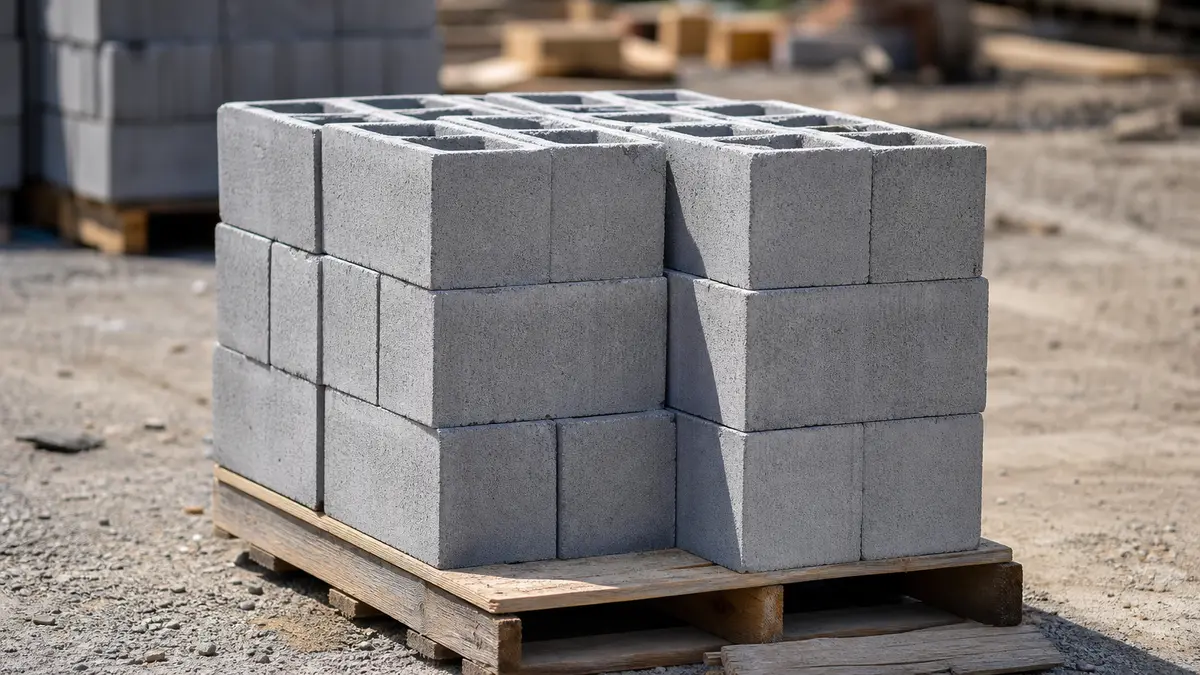
Every concrete masonry unit, or CMU, has two sets of dimensions. The nominal size is what you see on drawings and use to order, while the actual size is the physical block you hold in your hands.
The rule is simple: the nominal dimension equals the actual dimension plus 3/8 inch, the width of one standard mortar joint. U.S. blocks are cast 3/8 inch (9.5 mm) smaller in each direction so that, once laid, the joint fills the gap and returns the wall to the round module.
This is why three courses of 8 inch high block, with 3/8 inch joints, come to exactly 24 inches of wall height. The system keeps masonry on the same 4 inch grid as other building materials, which means far less cutting on site. When you need the count, the concrete block calculator works in nominal sizes for you.
Standard concrete block size chart by width
Standard CMU widths are 4, 6, 8, 10, and 12 inches nominal. Every one of them shares the same face, 8 inches high by 16 inches long, so only the wall thickness changes. The actual face is always 7 5/8 by 15 5/8 inches.
| Nominal (W x H x L) | Actual width | Actual H x L | Common use |
|---|---|---|---|
| 4 x 8 x 16 | 3 5/8" | 7 5/8 x 15 5/8" | Partitions, veneers |
| 6 x 8 x 16 | 5 5/8" | 7 5/8 x 15 5/8" | Fire walls, partitions |
| 8 x 8 x 16 | 7 5/8" | 7 5/8 x 15 5/8" | General construction |
| 10 x 8 x 16 | 9 5/8" | 7 5/8 x 15 5/8" | Higher-load walls |
| 12 x 8 x 16 | 11 5/8" | 7 5/8 x 15 5/8" | Retaining, high load |
Because the face never changes, one full block covers about 0.89 square feet of wall no matter the width. That makes estimating straightforward: roughly 112.5 blocks per 100 square feet of wall before openings. To turn that into a real order for your project, see how many cinder blocks you need.
Why 8x8x16 is the standard block
The 8 by 8 by 16 block dominates the masonry industry, and for good reason. It strikes the best balance between structural strength, ease of handling, and cost, which is why most general construction defaults to it.
Its actual dimensions of 7 5/8 by 7 5/8 by 15 5/8 inches let a single mason lay it by hand all day, and two blocks laid end to end with a joint between them span the same 32 inch module as four bricks. The dimensional rules are governed by ASTM C90, the standard specification for loadbearing concrete masonry units, which also sets the minimum compressive strength at 1,900 psi.
Concrete block weight and cost
A normal-weight 8x8x16 hollow block weighs about 38 pounds, with most products falling between 36 and 42 lb. Lightweight units, often called cinder blocks, run lighter at roughly 28 to 36 lb because they use lighter aggregate.
Other shapes: half, corner, and bond beam
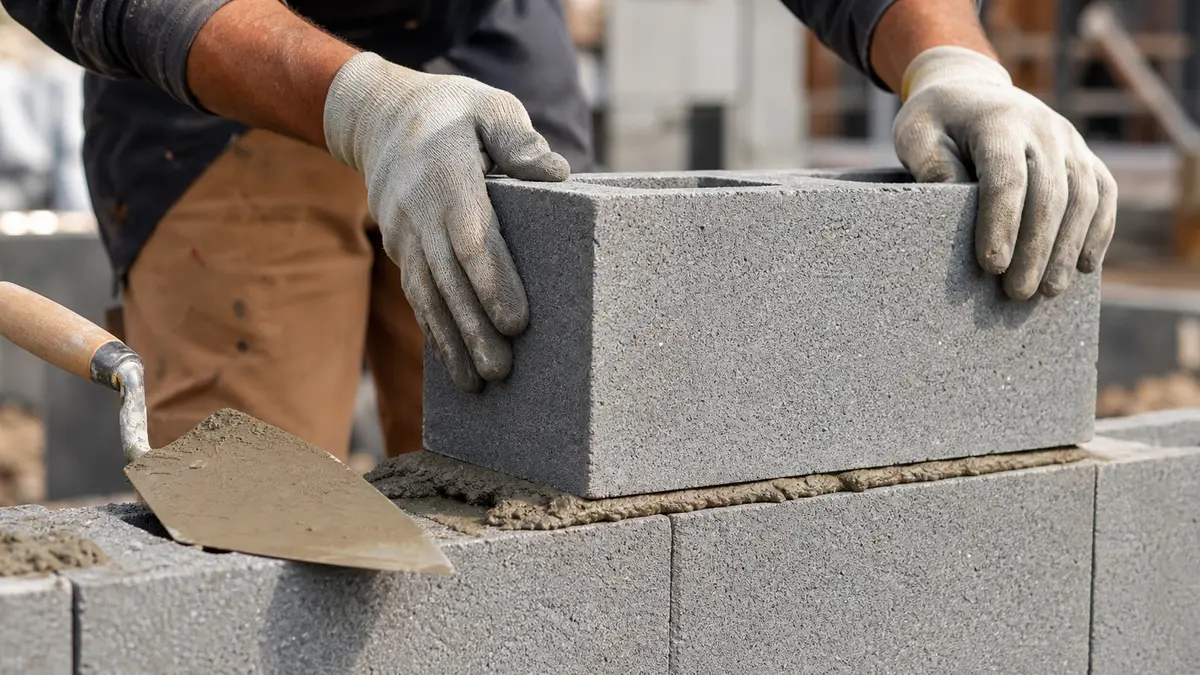
Beyond the plain stretcher block, a few specials handle the ends and tops of walls. Half blocks are cut to half the nominal length, 8 inches instead of 16, so corners and wall ends keep a running bond without awkward cuts.
Corner and end blocks have one finished flat face, and bond beam blocks have a channel cut into the top to hold horizontal rebar and grout. Lintel and pilaster units round out the family for openings and columns. Each still follows the same 8 inch height so courses line up. Once you know the wall area, run it through the block calculator to size your order including the specials.
Metric, Canadian, and UK block sizes
Block dimensions change by country, so check the local designation before ordering. In Canada and much of the metric world, the standard block is a nominal 200 by 200 by 400 mm, with an actual size of 190 by 190 by 390 mm, since the metric joint is a clean 10 mm rather than 3/8 inch.
A U.S. 8x8x16 and a Canadian 190 by 190 by 390 mm block are nearly but not exactly the same size, so never mix the two systems in one wall or coursing errors will accumulate. The UK uses a different module entirely: a 440 by 215 mm face in 100, 140, and 215 mm thicknesses, coordinated to brick courses under BS EN 771-3.
If you are working off concrete volume rather than block count, the concrete calculator covers fills and footings in both units.
Frequently asked questions
What is the standard size of a concrete block?
Why is a concrete block 15 5/8 inches and not 16?
What sizes do concrete blocks come in?
How much does a standard concrete block weigh?
How much does a concrete block cost ?
Sources and references
These references and structured source records support the method and material data used on this page.
- ASTM C90: Loadbearing Concrete Masonry Units
- Concrete masonry unit (Wikipedia)
- NCMA / CMHA technical resources
- CCMPA metric coursing tables, shapes and sizes (PDF)