30x40 Concrete Slab Cost Worksheet
A 30 by 40 foot slab covers 1,200 square feet and contains about 14.8 cubic yards at 4 inches or 22.2 at 6 inches before allowance. Confirm the required section, then apply local quotes for the complete base, reinforcement, concrete, equipment and finish scope.
Key takeaways
- A 30x40 footprint is 1,200 square feet; every added inch of thickness adds about 3.7 cubic yards.
- Moving from 4 to 6 inches increases concrete volume from about 14.8 to 22.2 cubic yards before allowance.
- Thickness, reinforcement, base and vapor control are project inputs, not calculator recommendations.
- Compare bids that identify site work, concrete, reinforcement, equipment, finish and curing.
- The dollar tables use assumed rates solely to demonstrate arithmetic.
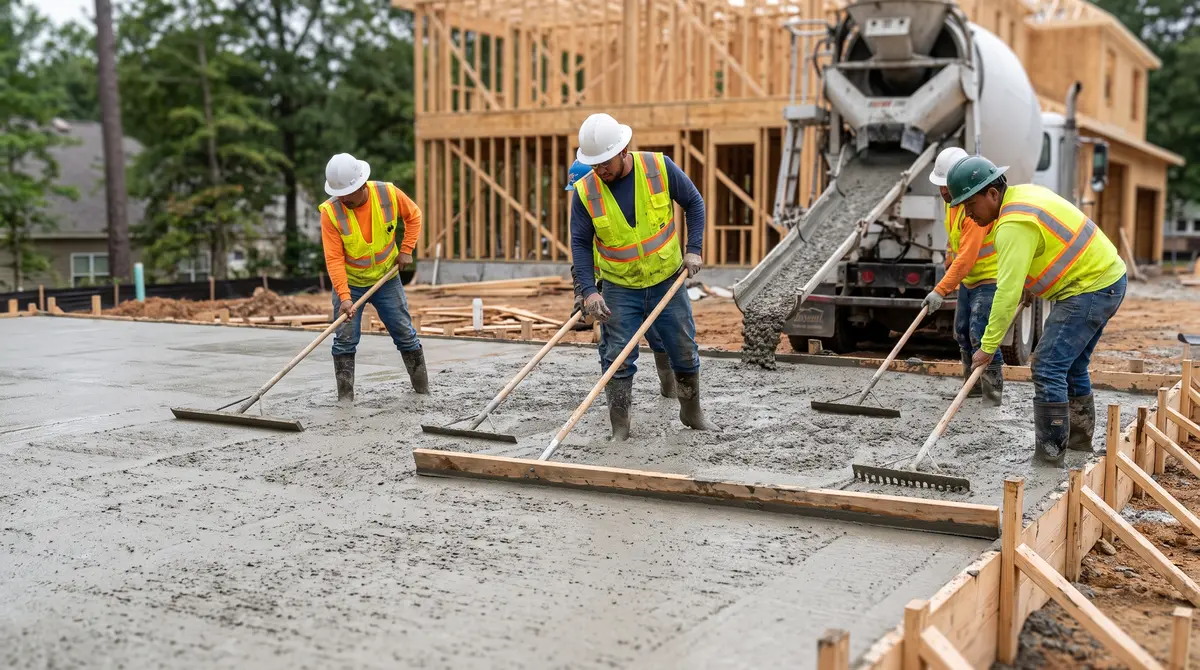
Illustrative cost inputs for a 30x40 concrete slab
The table demonstrates multiplication for three assumed rates and stated example scopes. This is an assumed input range, not observed data or a ranking of specifications.
| Example scope | Assumed input per sq ft | Illustrative 30x40 result |
|---|---|---|
| 4 in, basic broom finish | 6 to 7 dollars | 7,200 to 8,400 dollars |
| 5 in, mesh reinforced | 7 to 9 dollars | 8,400 to 10,800 dollars |
| 6 in, rebar + gravel base | 9 to 12 dollars | 10,800 to 14,400 dollars |
Enter approved dimensions in the concrete slab calculator for quantities, then apply a current scope-matched quote.
How much concrete a 30x40 slab needs by thickness
Thickness drives the material cost more than anything else. Volume is length times width times thickness in feet, divided by 27 to get cubic yards. For 1,200 square feet, a 4 inch slab works out to about 14.8 cubic yards, and a 6 inch slab to about 22.2 cubic yards.
Cubic yards = 30 x 40 x (thickness in ÷ 12) ÷ 27Every extra inch across the full footprint adds roughly 3.7 cubic yards, so moving from 4 to 6 inches is about 50 percent more concrete. Order 10 to 15 percent over the calculated volume for waste and an uneven subgrade.
| Thickness | Cubic yards | +10% waste | Cubic meters |
|---|---|---|---|
| 4 in | 14.8 | 16.3 | 12.5 |
| 5 in | 18.5 | 20.4 | 15.6 |
| 6 in | 22.2 | 24.4 | 18.7 |
Labor and materials on a 1,200 square foot pour
Greater thickness increases concrete volume. Labor, equipment, base, reinforcement and finishing do not follow one fixed percentage, so request separate current prices for the approved section and compare the same scope.
Add-ons that change the price: rebar, gravel and prep
Price only the base, reinforcement, vapor control and site work required by the approved design and site conditions.
| Add-on | Assumed input per sq ft | Illustrative 30x40 result |
|---|---|---|
| Rebar or wire mesh | 0.20 to 0.50 dollars | 240 to 600 dollars |
| Gravel base | 1 to 2 dollars | 1,200 to 2,400 dollars |
| Grading and site prep | varies | 500 to 2,000 dollars |
| Vapor barrier | 0.50 to 0.80 dollars | 600 to 960 dollars |
Use the specified slab section, reinforcement, subbase and vapor-control details. The assumed inputs do not select or validate those details.
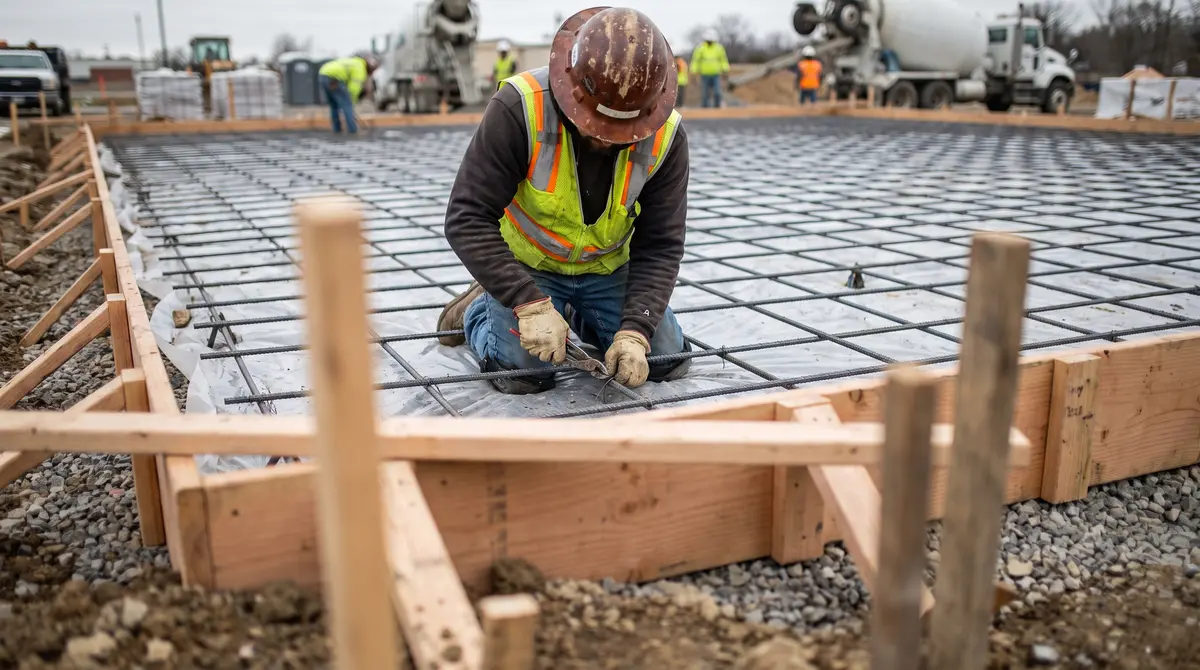
What thickness a 30x40 slab should be
Thickness and reinforcement are design inputs governed by loads, support, concrete properties, joints and applicable requirements. Obtain the approved section before calculating quantity.
The calculator does not predict service life from thickness. Use the project documents and local requirements, then enter those dimensions for volume.
For a garage or building pad, include any specified edge thickening and reinforcement in the takeoff.
How location and finish affect the quote
State the 30x40 slab section, reinforcement, finish, curing and site preparation in each quote.
Ask for each finish as a separate option with its materials, preparation, curing, sealing and maintenance scope stated.
Use the concrete slab calculator for a quantity baseline, then apply the bidder's current rates.
Frequently asked questions
How much does a 30x40 concrete slab cost?
How many yards of concrete for a 30x40 slab?
How should I compare 4-inch and 6-inch 30x40 slab budgets?
How much does labor cost to pour a 30x40 slab?
How long does it take to pour a 30x40 slab?
Sources and references
These references and structured source records support the method and material data used on this page.
- Concrete slab (Wikipedia)
- American Concrete Institute (institutional site)
- NRMCA: Ready Mixed Concrete
- QUIKRETE (manufacturer site)