Concrete Cost Per Yard Worksheet
Calculate concrete volume from approved dimensions, then apply a current plant quote for the required mixture, order size and delivery conditions. The dollar tables show arithmetic using replaceable assumptions and do not establish national per-yard or installed prices.
Key takeaways
- Convert approved dimensions to cubic yards before requesting ready-mix quotes.
- Specify the required mixture and check minimum-load, short-load, delivery, waiting and pumping terms.
- Concrete supply is only one part of an installed slab, footing or wall budget.
- The calculator applies a user-entered price to volume; it does not choose the mixture or quote installation.
- All dollar figures are illustrative assumptions rather than current market data.
How much does concrete cost per cubic yard?
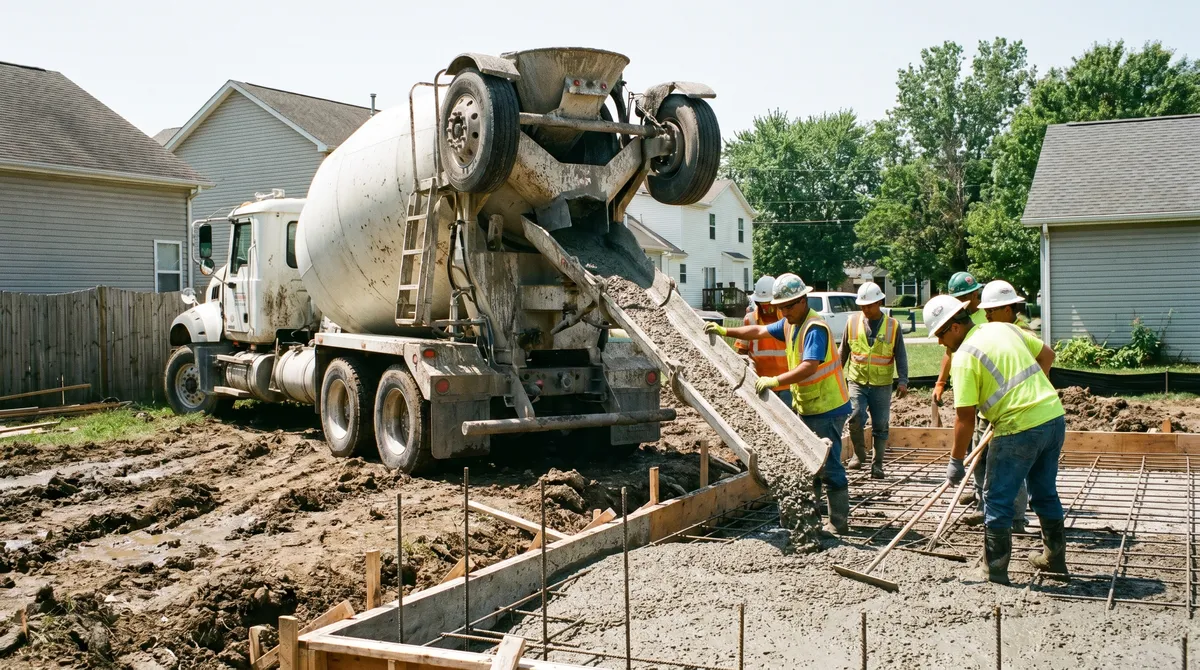
For an illustrative worksheet only, assume 125 to 175 dollars per cubic yard and use 140 to 165 dollars as arithmetic midpoint inputs. These are not observed ready-mix prices. Replace mix specification, delivery, minimum order and fees with a current local plant quote.
| Mix strength | Assumed input per cubic yard | Per cubic meter | Typical use |
|---|---|---|---|
| 3,000 PSI (21 MPa) | 120 to 150 dollars | 157 to 196 dollars | Patios, walkways |
| 4,000 PSI (28 MPa) | 140 to 175 dollars | 183 to 229 dollars | Driveways, garage floors |
| 5,000 PSI (35 MPa) | 160 to 200 dollars | 209 to 262 dollars | Heavy load, structural |
Those numbers cover material and delivery only. To turn a slab or footing into a yard count and a cost, enter your dimensions in the concrete calculator and add your local price per yard.
Concrete cost per square foot installed
Apply current rates only to the specified mix, measured volume, delivery, unloading time and minimum.
Concrete cost by project: slab, patio, driveway
The table demonstrates multiplication with assumed project inputs. It is not a set of installed market totals and does not select thickness, reinforcement, concrete or finish.
| Project | Size | Assumed plain input result | Assumed decorative input result |
|---|---|---|---|
| Patio | ~288 sq ft | 1,700 to 3,500 dollars | 3,500 to 7,200 dollars |
| Two-car driveway | ~600 sq ft | 3,000 to 6,000 dollars | 6,000 to 11,000 dollars |
| Sidewalk | per sq ft | 6 to 10 dollars | 10 to 18 dollars |
| Garage pad | 24 x 24 ft | 3,500 to 6,900 dollars | n/a |
Use project documents or local requirements for the concrete section, then request current local quotes for that same scope.
Stamped and decorative concrete prices
What drives the final cost: fees and region
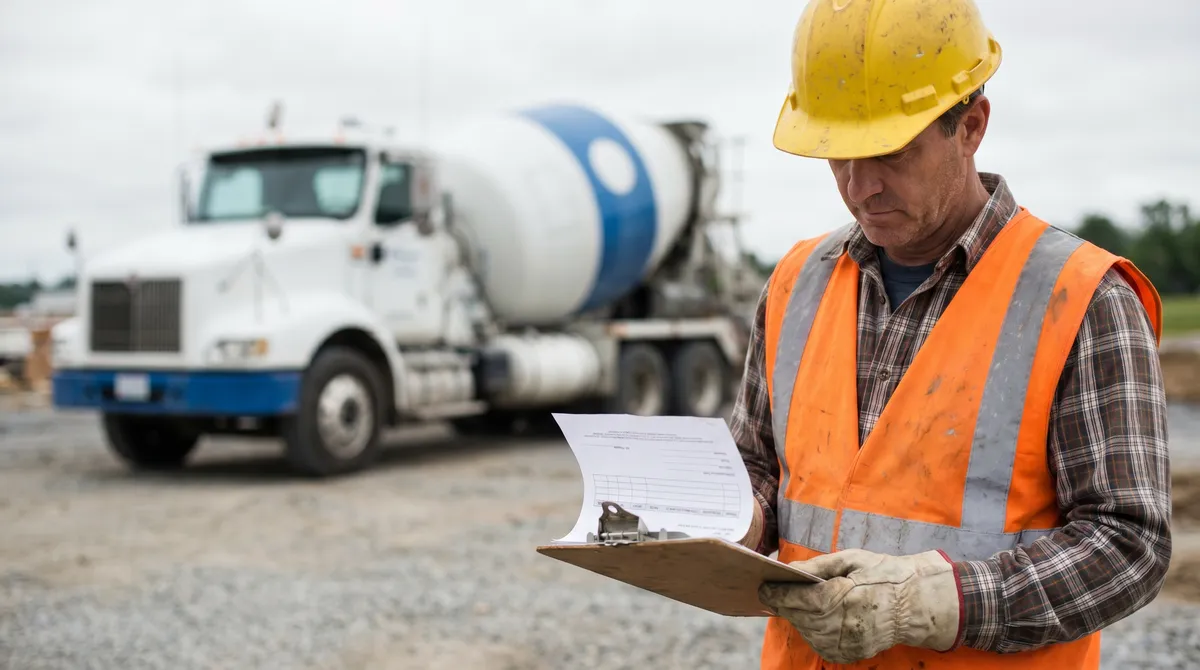
State the specified mix, measured volume, delivery, unloading time and minimum in each quote.
Comparing bagged and delivered concrete quotes
Compare bagged mix and ready-mix from current quotes that include product specification, quantity, delivery, minimum order, equipment and labor. The concrete calculator supplies quantities but does not establish an economic cutoff.
Frequently asked questions
How much does a 20x20 concrete slab cost?
How much does 1000 square feet of concrete cost?
Should an improvised concrete blend be used for structural work?
How should I compare bagged and delivered concrete quotes?
How much does a cubic yard of concrete cover?
Sources and references
These references and structured source records support the method and material data used on this page.
- NRMCA: Ready Mixed Concrete
- Concrete (Wikipedia)
- QUIKRETE (manufacturer site)
- American Concrete Institute (institutional site)