Rebar Cost Worksheet by Size and Weight
Calculate the required rebar length and weight, then request current quotes for the specified bar size, grade, stock length, fabrication and delivery scope.
Key takeaways
- Measure the project before requesting prices.
- Compare quotes that cover the same materials, access, site work and finish.
- Separate material, labor, delivery, removal, permits and design where they apply.
- Use the calculated length and weight to request current, scope-matched local quotes.
- Compare quotes only for the bar size, grade, stock length, fabrication and delivery actually specified.
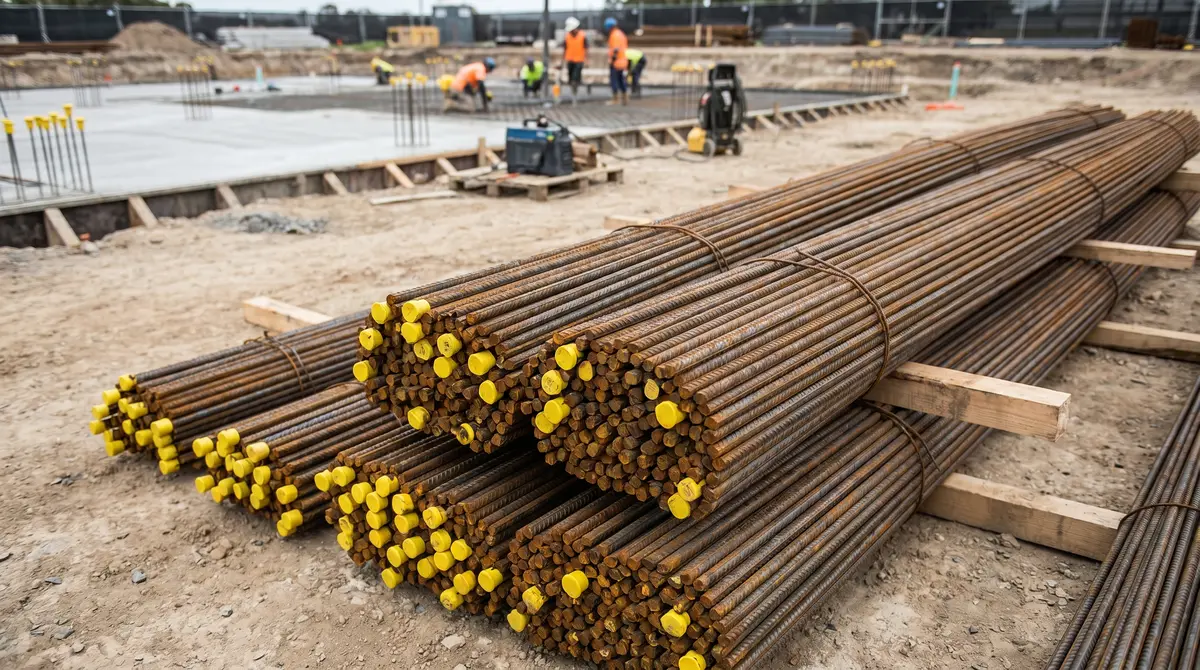
Rebar cost per foot by size
Bar size drives the price because thicker bars hold more steel. The numbering is simple: the size number is the diameter in eighths of an inch, so a #4 bar is four eighths, or half an inch. Heavier bars like #6 cost more per foot because they weigh more.
| Bar size | Diameter | Weight (lb/ft) | Cost per foot |
|---|---|---|---|
| #3 | 3/8 in | 0.376 | 0.30 to 0.55 |
| #4 | 1/2 in | 0.668 | 0.55 to 0.85 |
| #5 | 5/8 in | 1.043 | 0.80 to 1.10 |
| #6 | 3/4 in | 1.502 | 1.10 to 1.50 |
To turn your slab or footing into total feet of rebar, bar weight and a cost estimate, enter the layout in the rebar calculator instead of pricing each piece by hand.
What a 20 ft stick of rebar costs
| 20 ft stick | Approx. price | Cost per foot |
|---|---|---|
| #3 | 5.64 | 0.28 |
| #4 | 9.99 | 0.50 |
| #5 | 15.63 | 0.78 |
| #6 | 22.73 | 1.14 |
Grade 40 vs grade 60 rebar pricing
Grade refers to the minimum yield strength of the steel, not its size. Grade 60 rebar has a 60,000 psi yield and is the default for most slabs, driveways and structural pours, while Grade 40 rebar at 40,000 psi suits patios and light, non-structural work.
Apply current rates only to the specified bar size, grade, stock length, fabrication, quantity and delivery.
Cost of coated and stainless steel rebar
State the specified bar size, grade, stock length, fabrication, quantity and delivery in each quote.
| Rebar type | Cost per foot | Best for |
|---|---|---|
| Carbon steel | 0.40 to 1.25 | Standard dry slabs and footings |
| Galvanized (zinc) | 1.20 to 1.60 | Moderate corrosion resistance |
| Epoxy-coated | 1.20 to 1.80 | Driveways, pavement, bridges |
| Stainless steel | 3.50 to 8.00 | Coastal, marine, 75+ year life |
Apply current rates only to the specified bar size, grade, stock length, fabrication, quantity and delivery.
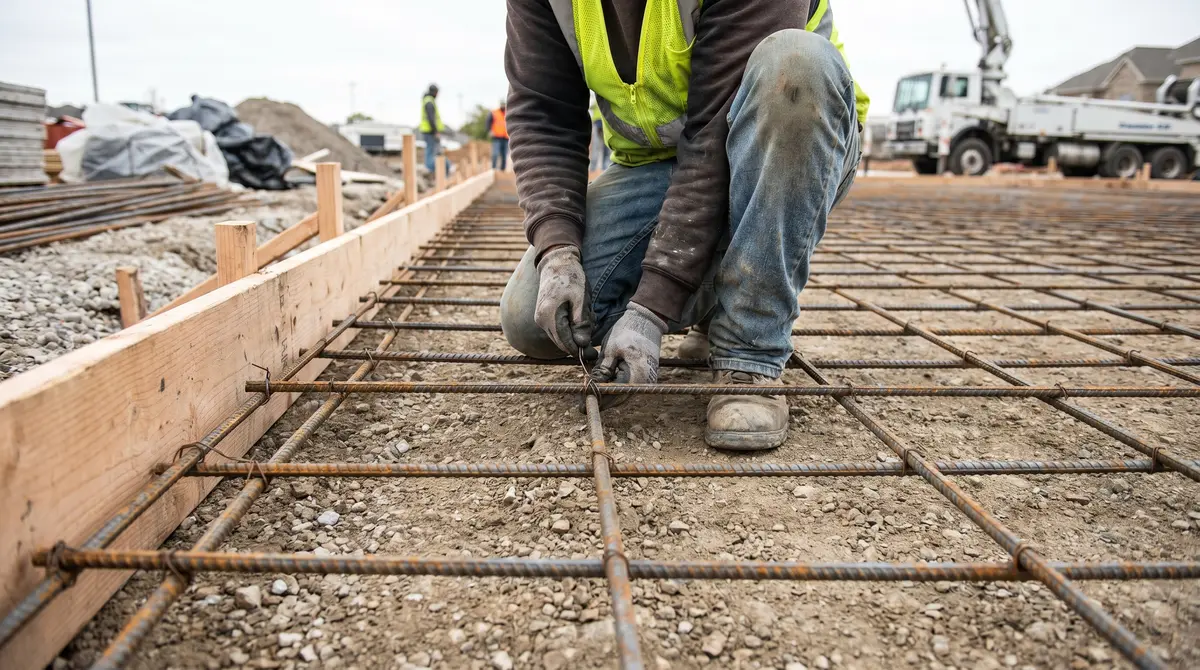
Rebar price per ton for bigger projects
One ton of #4 covers about 2,994 linear feet at 0.668 lb per foot, while a ton of #5 covers about 1,917 feet at 1.043 lb per foot. The rebar weight chart converts specified lengths to order weight.
Bar size and spacing come from the approved reinforcement design. The rebar size chart lists physical properties; it does not select reinforcement.
Compare reinforcement alternatives from the design
Welded wire mesh and fiber additives reinforce against shrinkage cracking, but they do not replace properly sized rebar in footings, retaining walls or anything carrying load. Match the reinforcement to what the pour actually has to hold.
Apply current rates only to the specified bar size, grade, stock length, fabrication, quantity and delivery.
Frequently asked questions
How do I establish a current rebar price?
How much does a 20 ft stick of rebar cost?
How should I compare alternatives to rebar?
How much does 10 feet of rebar cost?
Is grade 60 rebar worth the extra cost over grade 40?
Sources and references
These references and structured source records support the method and material data used on this page.
- Rebar (Wikipedia)
- ASTM A615: Carbon-Steel Bars for Concrete Reinforcement
- Harris Supply: A615 Grade 60 Rebar Specifications
- CRSI: Concrete Reinforcing Steel Institute