Retaining Wall Cost Per Square Foot Worksheet
Estimate retaining-wall cost from face area only after a suitable wall system and site design are established. Excavation, foundation, drainage, reinforcement, backfill, access and permits can dominate the scope; all rates below are replaceable worksheet assumptions rather than market data.
Key takeaways
- Wall face area equals length multiplied by average exposed height.
- Soil, water, slope and surcharge affect foundation, drainage and reinforcement requirements.
- Block, poured concrete, timber, stone and gabion systems require different complete scopes.
- The calculator counts units and applies an entered rate; it does not select or design the wall.
- Every dollar range on the page is an illustrative assumption to replace with local quotes.
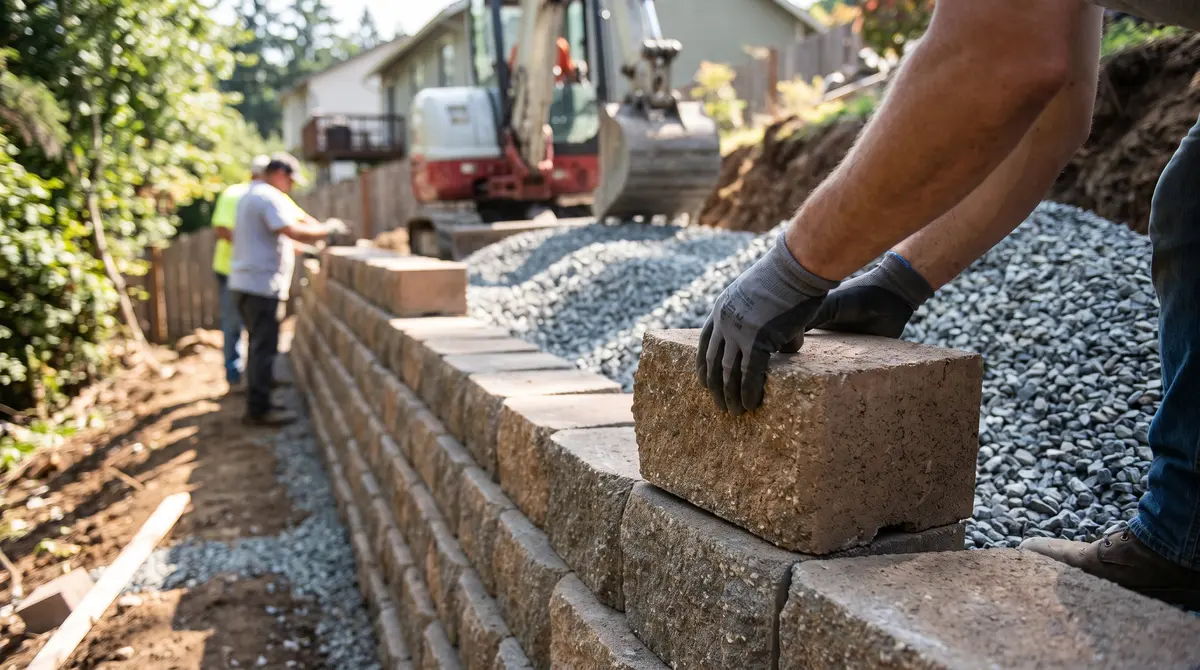
Cost per square foot by material
Wall-face area is length multiplied by average exposed height. A quoted rate is meaningful only when it identifies the wall system, excavation, foundation or leveling pad, drainage, reinforcement, finish, access, design and permits.
The figures below are assumed worksheet inputs. They are not observed US prices and do not rank systems by price, strength or service life.
| Material | Assumed input per sq ft (installed) | Scope to define |
|---|---|---|
| Wood / timber | $15 to $30 | Foundation, treatment and drainage |
| Segmental concrete block | $20 to $35 | Unit, base, drainage and reinforcement |
| Brick | $20 to $40 | Wall assembly and foundation |
| Poured concrete | $35 to $60 | Forms, steel and finish |
| Natural stone | $15 to $95 | Stone, fitting and foundation |
| Gabion | $10 to $55 | Basket, fill and foundation detail |
Enter length, height, product dimensions and a current local rate in the retaining wall calculator. The tool calculates quantities and an input-based cost scenario; it does not select or design the wall system.
Comparing poured concrete and block scopes
If you are comparing a wall against a flatwork pour like a patio, the concrete calculator handles slab and footing volumes in cubic yards, which is the unit ready mix is sold in.
What drives the price up
Height, wall system, soil, water, surcharge, slope and access can all change the required work. Obtain the foundation, drainage and reinforcement details from the selected system and applicable design.
| Scope item | Illustrative input |
|---|---|
| Concrete footing, if specified | $18 to $55 per linear ft |
| Rebar, if specified | $1.50 to $2.50 per sq ft |
| Permit, if required | $50 to $450 |
| Structural design, if required | $500 to $2,000+ |
| Drainage work | $10 to $85+ per linear ft |
When you need a permit and an engineer
The model IBC contains a permit exception for qualifying retaining walls not over 4 feet high, measured from the bottom of the footing to the top of the wall, unless they support a surcharge or impound Class I, II or IIIA liquids. Local adoption and amendments control.
Do not use exposed face height alone for that check. Confirm the measuring point, surcharge, slope, water, wall system and permit or design requirements with the local authority.
Manufacturer charts apply only within their stated scope. A short wall can still require engineering because of site loads, soil or water.
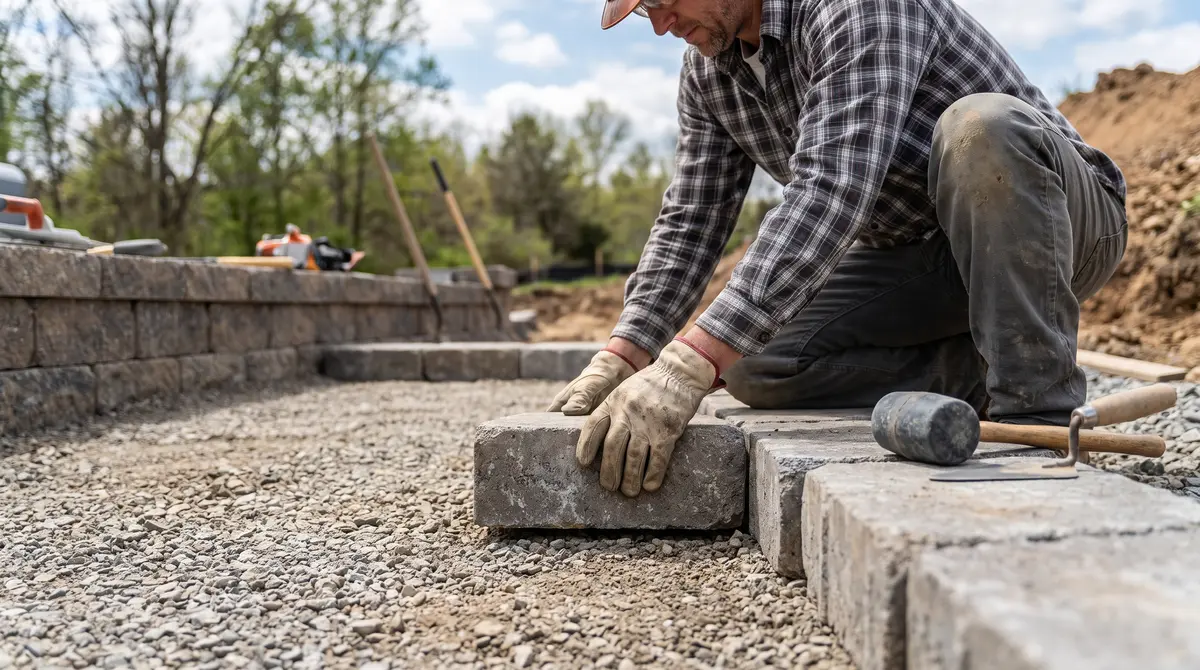
Do not skip the drainage
Use the drainage aggregate, filter, pipe and outlet details required by the selected wall system and site design. The required width and material are not universal across segmental block, masonry, cast concrete, timber and gabion walls.
Water and soil conditions must be included in the design. Do not use the calculator's backfill input as a substitute for a drainage detail.
After the detail is defined, the retaining wall calculator can quantify the entered backfill zone.
Worked example: a 30 by 3 foot wall
Take a common backyard wall, 30 feet long and 3 feet of exposed height. The wall face is 30 times 3, which is 90 square feet. That is the number every contractor rate is multiplied against.
Wall face (ft2) = Length(ft) × Exposed height(ft)90 = 30 × 3For a sloped or stepped run, split it into sections, find each face area, and add them. The calculator does the arithmetic, the block and cubic yard counts, and an optional cost so you are not juggling decimals by hand.
Frequently asked questions
How much does a retaining wall cost per square foot?
How do I calculate the square footage of a retaining wall?
How should I compare block and poured concrete retaining-wall quotes?
Do I need a permit for a retaining wall?
What extra costs come with a retaining wall?
Sources and references
These references and structured source records support the method and material data used on this page.
- Retaining wall (Wikipedia)
- IBC 2021 Section 1807.2: Retaining walls
- NCMA: Segmental retaining wall resources
- Allan Block: Retaining wall design and installation