Standard Brick Sizes
The standard US brick is the modular brick, measuring 3-5/8 inches thick, 2-1/4 inches high, and 7-5/8 inches long as manufactured, or 4 x 2-2/3 x 8 inches once you add the standard 3/8 inch mortar joint. Other common sizes like Norman, Roman, Utility, and Jumbo change the length and height for different coursing, while the UK and Canada use their own metric standards. Below is the full chart of actual and nominal sizes, what each is used for, and how to turn a size into a bricks-needed count.
Key takeaways
- The US modular brick is 3-5/8 x 2-1/4 x 7-5/8 inches actual, or 4 x 2-2/3 x 8 inches nominal with a 3/8 inch mortar joint.
- Nominal size equals actual size plus one mortar joint, and only modular bricks have a true nominal dimension.
- Common variants change length or height for coursing: Norman and Roman run 11-5/8 to 12 inches long, Utility bricks are 3-5/8 inches high.
- The UK standard brick is 215 x 102.5 x 65 mm actual, or 225 x 112.5 x 75 mm coordinating size with a 10 mm joint.
- Canada's Metric Modular brick is 90 x 57 x 190 mm, close to but not identical to the US modular size.
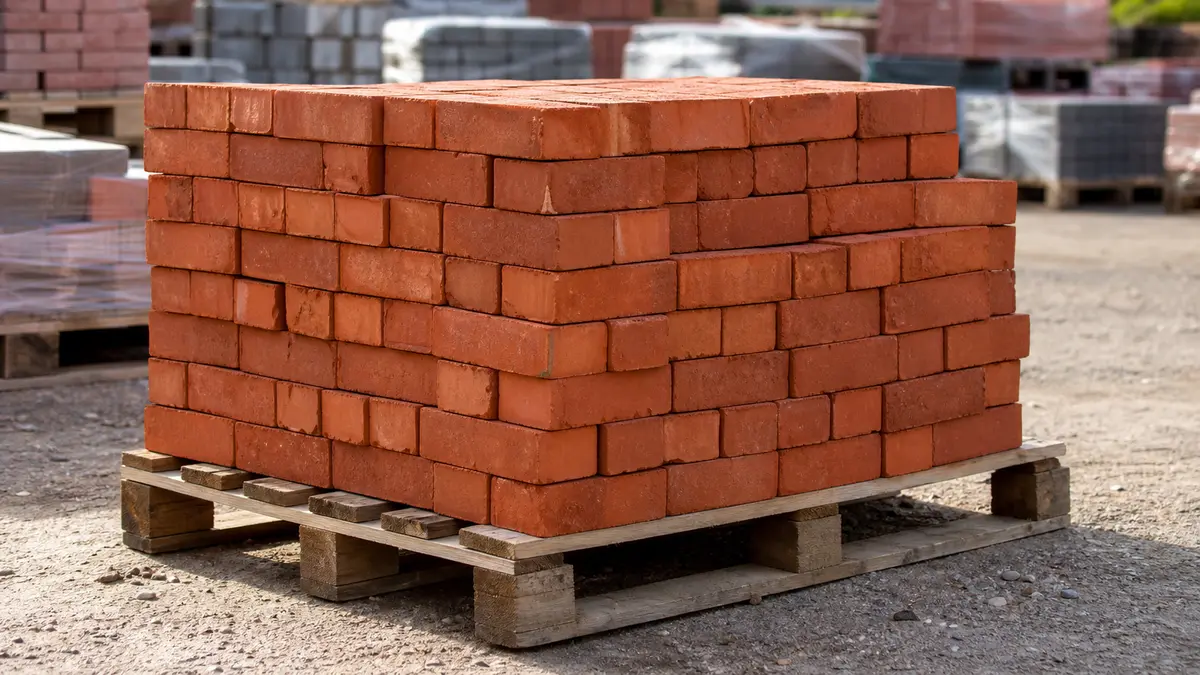
The standard US modular brick size
In the United States, the brick almost every mason reaches for is the modular brick. As manufactured, it measures 3-5/8 inches thick, 2-1/4 inches high, and 7-5/8 inches long, what the industry calls the actual (specified) size.
Add a standard 3/8 inch mortar joint on each face and the brick occupies a nominal size of 4 x 2-2/3 x 8 inches, a clean 4-inch module that lines up with doors, windows, and other framing on a standard grid.
Nominal size = Actual size + mortar joint (typically 3/8 in.)That 3/8 inch joint is set by TMS 602, the Specification for Masonry Structures referenced in most US building codes, though 1/2 inch joints also appear on some projects. Only modular bricks carry a true nominal dimension; non-modular sizes like Queen and King are specified without one.
Actual vs nominal: why brick sizes come in two numbers
Every brick spec sheet lists two sets of numbers, and mixing them up is the most common estimating mistake. The specified (actual) dimension is the physical brick coming off the manufacturing line, within the tolerances set by ASTM C216 for facing brick or ASTM C652 for hollow brick.
The nominal dimension is that actual brick plus its mortar joint, rounded to a coordinating number like 4 or 8 inches. Architects use nominal sizes for wall layout and coursing, while suppliers and estimators need the actual size to calculate real coverage per square foot.
To turn either number into a bricks-needed count for your wall, plug your dimensions into the brick calculator rather than converting by hand.
Chart: common modular brick sizes (actual vs nominal)
Beyond the standard modular brick, several coursing sizes are common in the US, each changing the height or length to hit a different modular coordination. Depth stays 3-5/8 inches actual on nearly all of them.
| Type | Actual, W x H x L (in) | Nominal, W x H x L (in) |
|---|---|---|
| Modular | 3-5/8 x 2-1/4 x 7-5/8 | 4 x 2-2/3 x 8 |
| Engineer Modular | 3-5/8 x 2-13/16 x 7-5/8 | 4 x 3-1/5 x 8 |
| Norman | 3-5/8 x 2-1/4 x 11-5/8 | 4 x 2-2/3 x 12 |
| Engineer Norman | 3-5/8 x 2-13/16 x 11-5/8 | 4 x 3-1/5 x 12 |
| Roman | 3-5/8 x 1-5/8 x 11-5/8 | 4 x 2 x 12 |
| Utility | 3-5/8 x 3-5/8 x 11-5/8 | 4 x 4 x 12 |
| Jumbo (modular) | 3-5/8 x 2-3/4 x 7-5/8 | 4 x 3 x 8 |
Norman and Roman bricks stretch the wall faster per unit because of their extra length, while Utility bricks cut the course count with a taller face, useful when a project needs fewer joints to strike.
Non-modular sizes: Standard, Queen, King, and Jumbo
Some traditional and oversized bricks are specified without a nominal dimension, because they are not designed to hit a 4-inch module. Sizes still vary a little by manufacturer, so always check the supplier's spec sheet before ordering.
| Type | Typical actual size, W x H x L (in) |
|---|---|
| Standard (non-modular) | 3-5/8 x 2-1/4 x 8 |
| Queen | 3 x 2-3/4 x 8 |
| King | 3 x 2-5/8 to 2-3/4 x 9-5/8 |
| Closure (Jumbo Standard) | 3-5/8 x 2-3/4 x 8 |
Queen and King bricks run larger than modular, which cuts the number of bricks per square foot but changes the mortar joint math too. If you are counting units for one of these non-standard sizes, the how many bricks do I need guide walks through adjusting the per-square-foot figure for a different brick size.
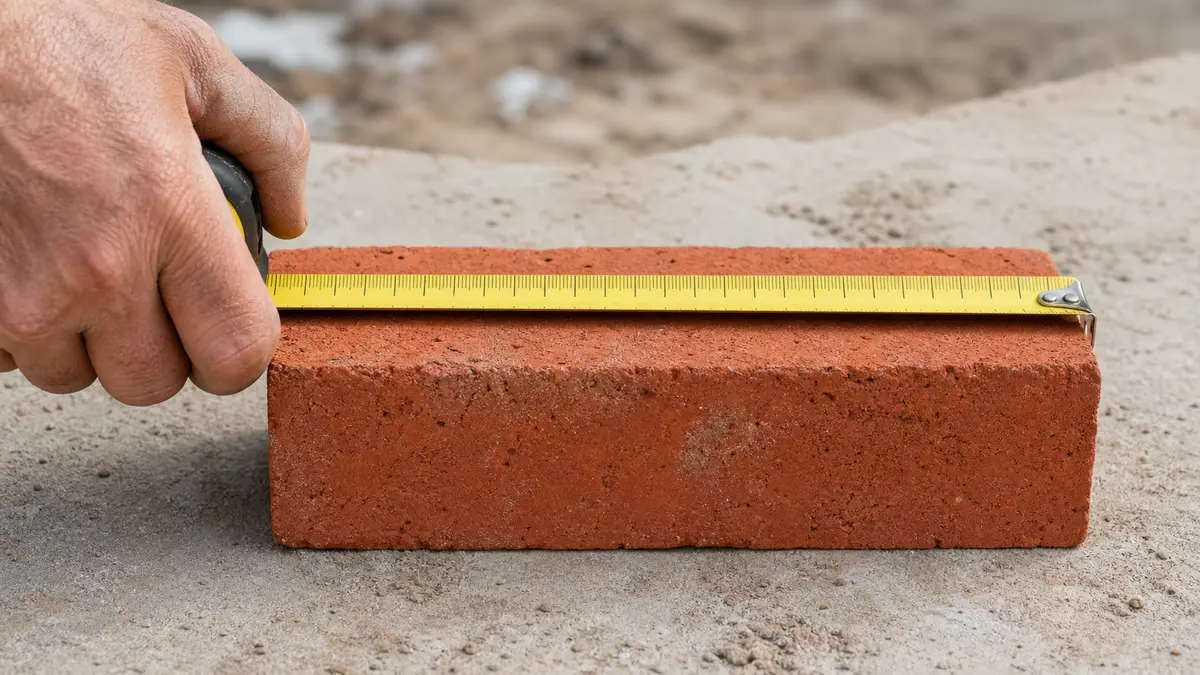
UK and metric brick sizes
Outside North America, brick sizing runs on metric standards that do not match the US inch-based system. The UK's standard brick, set out in BS EN 771-1 (which replaced BS 3921), is 215 x 102.5 x 65 mm as manufactured (length x depth x height).
With the UK's standard 10 mm mortar joint, the coordinating size becomes 225 x 112.5 x 75 mm, a dimension chosen so four courses of brickwork equal exactly 300 mm. This is why UK brick counts are usually quoted as 60 bricks per square meter for a half-brick (102.5 mm) wall.
Canada uses its own metric line, led by the Metric Modular brick at 90 x 57 x 190 mm (width x height x length), close to the US modular brick in proportion but not a direct inch conversion. Regional Canadian sizes like the Ontario (60 x 213 x 102 mm) and Quebec Modular (57 x 203 x 90 mm) bricks also circulate depending on the province.
How brick size changes your bricks-needed count
Brick size is the first input in any material takeoff, because it sets how many units cover one square foot of wall. A standard US modular brick with its 3/8 inch joint covers about 0.148 square feet of wall face, which works out to roughly 7 bricks per square foot for a single-wythe wall.
Switch to a Norman or Roman brick and that count drops, since each unit is longer and covers more area per joint. Switch to Utility brick and it drops further still, since the taller face covers even more ground per course.
Rather than recalculating coverage by hand for every size, enter your wall area and brick type into the brick calculator to get an exact quantity, plus mortar bags and an estimated cost.
Frequently asked questions
What is the standard brick size in the US?
What is the difference between actual and nominal brick size?
What size is a UK standard brick?
How big is a Roman brick compared to a modular brick?
Do all bricks have a nominal size?
Sources and references
These references and structured source records support the method and material data used on this page.
- ASTM C216: Standard Specification for Facing Brick
- Brick (Wikipedia)
- TMS 402/602-22: Building Code Requirements and Specification for Masonry Structures
- Glen-Gery: Brick Dimensions & Sizes Chart