How Many Bricks Do I Need?
For a standard single-brick wall, plan on about 7 modular bricks per square foot of wall face, then add 10% for cuts and breakage. A 100 square foot wall takes roughly 700 bricks, or about 770 with waste. Below is the formula, worked examples by wall size, how many mortar bags you need, and a calculator that does the count for you.
Key takeaways
- A standard modular brick with a 3/8 inch mortar joint covers about 0.148 square feet, so you need about 6.75 to 7 bricks per square foot of single-wythe wall.
- Bricks needed = wall area in square feet x 7, then add 5 to 10% for cuts and breakage.
- A 100 square foot wall takes about 700 bricks, or roughly 770 with 10% waste.
- A double-wythe (full-brick) wall about 9 inches thick needs twice the bricks for the same wall face.
- QUIKRETE Mortar Mix No. 1102 lists up to 37 modular bricks per 80 lb bag, so 1,000 bricks require at least 28 bags before project waste.
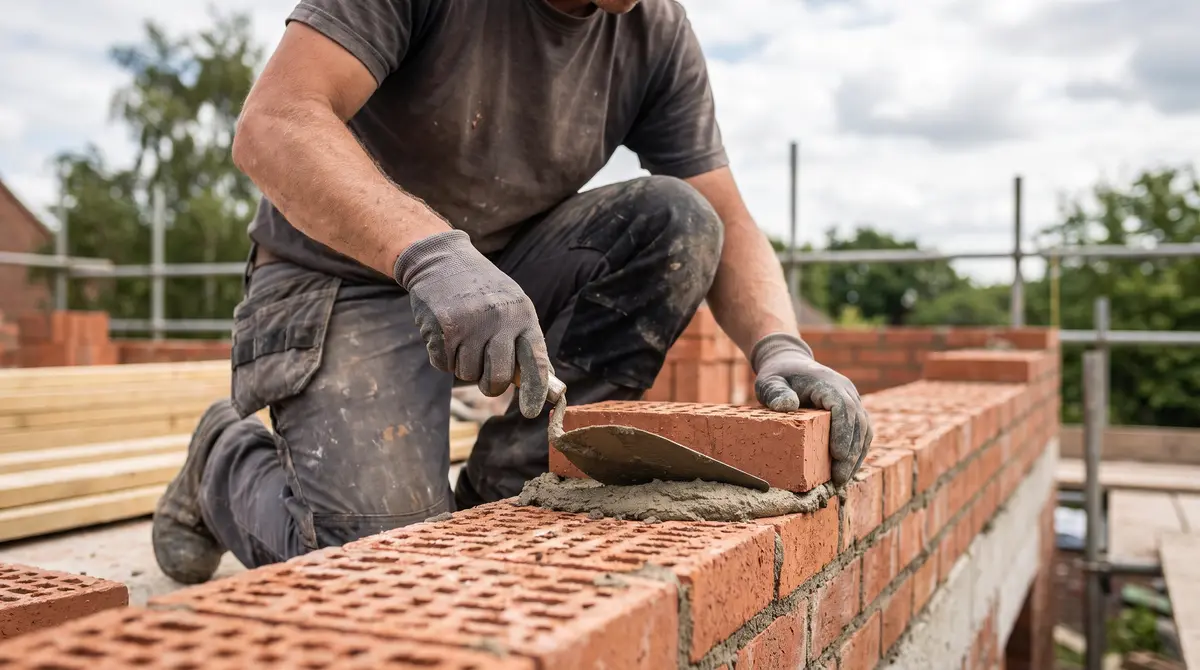
How many bricks per square foot of wall
Brick quantity starts from the wall area, not the number of bricks in a row. The standard unit in North America is the modular brick, which measures 3-5/8 inches deep, 2-1/4 inches high, and 7-5/8 inches long. Add the standard 3/8 inch mortar joint to the face and each brick covers about 8 inches by 2-5/8 inches, or 0.148 square feet.
Dividing one square foot by that face area gives about 6.75 to 7 bricks per square foot of single-wythe wall, the figure the Brick Industry Association uses in Technical Note 10. That single number does most of the work in any brick estimate.
Bricks = Wall area (ft2) x 7Wall area = Length(ft) x Height(ft)To skip the arithmetic and get bricks, mortar and cost in one step, enter your wall dimensions in the brick calculator.
Worked examples by wall size
Once you know it is about 7 bricks per square foot, any wall is a two step calculation: find the area, then multiply. A wall 20 feet long and 8 feet high is 160 square feet, which needs about 1,120 bricks, or roughly 1,230 with 10% waste added.
| Wall size | Area (ft2) | Bricks (single wythe) | With 10% waste |
|---|---|---|---|
| 10 x 8 ft | 80 | 560 | 616 |
| 20 x 8 ft | 160 | 1,120 | 1,232 |
| 30 x 6 ft | 180 | 1,260 | 1,386 |
| 40 x 8 ft | 320 | 2,240 | 2,464 |
Subtract openings before you order. A single door of about 20 square feet or a window of 12 square feet removes roughly 140 and 84 bricks, so mark them off the gross area first, then apply the waste factor to what is left.
Single wythe versus double wythe walls
Wall thickness changes the count as much as the size does. A single-wythe wall is one brick thick, about 3-5/8 inches, and is what most veneers and garden walls use at 7 bricks per square foot.
A double-wythe or full-brick wall is two bricks deep, about 9 inches thick, so it needs twice the bricks for the same wall face, near 14 per square foot. Structural garden walls, piers and older solid-masonry homes are usually double wythe.
If you are pricing a freestanding boundary or retaining wall rather than a veneer, the brick wall calculator factors in wall thickness and courses so you are not doubling the count by hand.
How much mortar for your bricks
Mortar is the other material you order with brick, and premixed mortar must not be confused with masonry cement used in a site-mixed mortar. The QUIKRETE Mortar Mix No. 1102 data sheet lists a yield of up to 37 standard bricks per 80 lb bag.
80 lb premix bags = Bricks ÷ 37, rounded up1,000 ÷ 37 = 27.03 → 28 bags minimum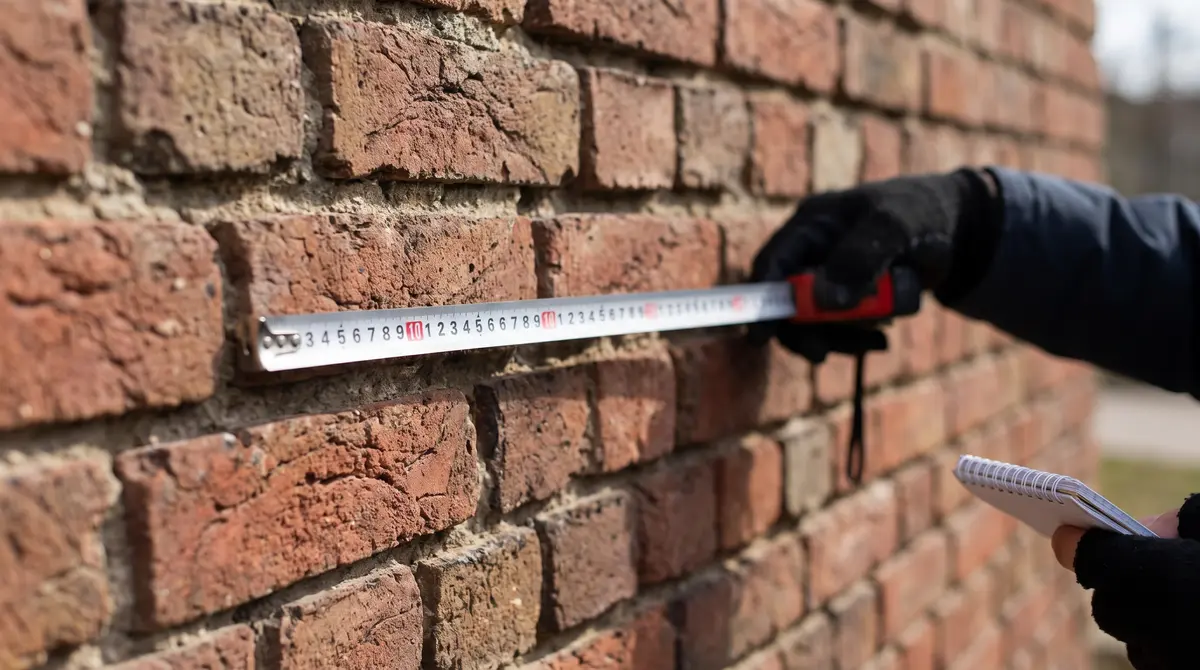
Apply a current supplier price
After calculating and rounding the brick count, ask the selected supplier for unit or pallet price, pallet quantity, delivery, minimum order, returns and batch availability.
Multiply the purchase quantity by that current quote. Keep brick, premixed mortar or site-mixed mortar components, accessories and labor as separate lines.
The brick calculator can apply a price you enter; it does not provide a verified current market rate.
Tips to order the right number of bricks
The most common reason people run short is skipping the waste factor. Cuts at corners and openings, breakage in handling, and the odd flawed unit add up, so add 5% for a simple straight wall and 10% or more for jobs with many corners, arches or angled cuts.
The second mistake is forgetting that a wall has two faces of geometry only when it is double wythe. Confirm whether you are building a single-brick veneer or a full-brick wall before you multiply, because getting that wrong doubles or halves the order.
Measure length and height in feet, subtract openings, then multiply the net area by 7 and add waste. If you would rather not risk a slipped decimal, the brick calculator returns the brick count, mortar bags and an optional budget from your dimensions and entered rate.
Frequently asked questions
How many bricks do I need per square foot?
How many bricks do I need for a 100 square foot wall?
How do I calculate how many bricks I need?
How many bricks are in a pallet?
How do I price 1,000 bricks?
Sources and references
These references and structured source records support the method and material data used on this page.
- Brick (Wikipedia)
- Brick Industry Association Technical Note 10
- ASTM C216: Facing Brick standard
- QUIKRETE Mortar Mix (data sheet)