How Many Bricks Per Square Foot?
A single-wythe wall built with standard modular brick takes about 6.75 to 7 bricks per square foot, using the industry-standard 3/8 inch mortar joint from BIA Technical Note 10. That ratio shifts with brick size, dropping to around 4.5 per square foot for Norman brick and 3 for Utility brick, and it roughly doubles to 13.5 per square foot for a double-wythe wall. Below is the full per-square-foot chart by brick type, quick conversions for a pallet of 500 or 1,000 bricks and a 200 square foot wall, current brick costs, and a calculator that runs the exact count for your project.
Key takeaways
- A single-wythe wall needs about 6.75 to 7 standard modular bricks per square foot, per BIA Technical Note 10, Table 4.
- The ratio changes by brick type: about 5.6 per square foot for Queen brick, 4.5 for Norman, and 3 for Utility brick.
- A double-wythe wall roughly doubles the count, to about 13.5 to 14 modular bricks per square foot.
- A standard pallet of 500 bricks covers about 71 square feet of wall, or closer to 100 square feet laid flat as paving.
- Any entered unit price applies to the calculated brick quantity only; mortar, ties, support, delivery, cutting and labor remain outside that material subtotal.
How many bricks per square foot (the quick answer)
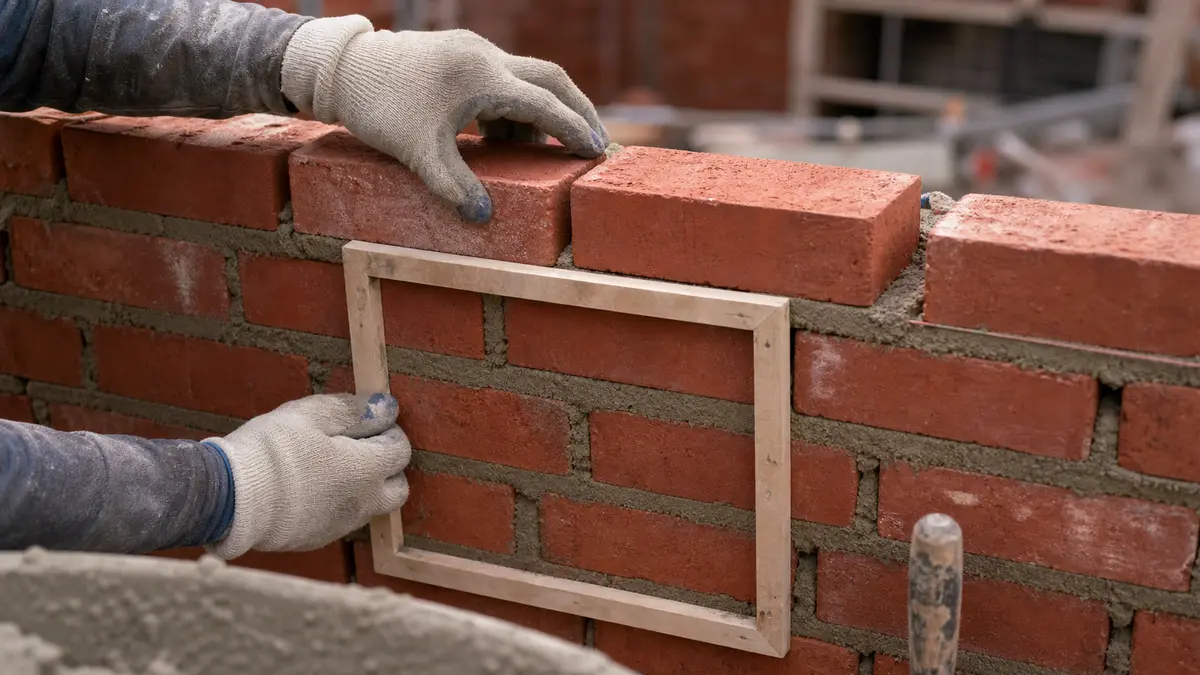
A single-wythe wall built with standard modular brick and a 3/8 inch mortar joint takes about 6.75 to 7 bricks per square foot. That figure comes straight from BIA Technical Note 10, the reference table masons and estimators use for brick coverage.
The math behind it is simple: one modular brick, nominal 8 inches long by 2-2/3 inches high, covers about 0.148 square feet of wall face. Divide 144 square inches by that face area and you land on 6.75 bricks per square foot, commonly rounded up to 7 for easy math.
Bricks per sq ft = 144 ÷ (nominal length(in) x nominal height(in))That single ratio is the fastest way to price or order a brick job. To turn it into an exact count for your wall, enter your length and height in the brick calculator.
Bricks per square foot by brick type (BIA chart)
Not every brick covers the same area. Longer or taller units need fewer per square foot, while smaller units need more, so the ratio shifts with the size you actually order.
| Brick type | Nominal size (in) | Bricks per sq ft |
|---|---|---|
| Modular | 4 x 2-2/3 x 8 | 6.75 |
| Standard (non-modular) | 3-5/8 x 2-1/4 x 8 | 6.55 |
| Queen | 3 x 2-3/4 x 8 | 5.63 |
| King | 3 x 2-5/8 x 9-5/8 | 4.55 |
| Norman | 4 x 2-2/3 x 12 | 4.50 |
| Utility | 4 x 4 x 12 | 3.00 |
These figures come from BIA Technical Note 10, Table 4, and already assume a standard 3/8 inch mortar joint. If you are unsure which size you are working with, the standard brick sizes guide lists actual and nominal dimensions for each one.
Single wythe vs double wythe: the count doubles
Every ratio above assumes a single-wythe wall, one brick deep, which is what most veneers and garden walls use. A double-wythe or full-brick wall stacks two layers, so the bricks-per-square-foot figure roughly doubles.
For standard modular brick, that means a double-wythe wall needs about 13.5 to 14 bricks per square foot instead of 6.75 to 7. Structural garden walls, piers and older solid-masonry homes are usually built double wythe.
Confirm which one you are pricing before you multiply, since mixing up single and double wythe is one of the most common errors in a brick takeoff.
Quick conversions: 500 bricks, 1000 bricks, 200 square feet
A standard pallet holds about 500 bricks, and at 7 bricks per square foot that pallet covers roughly 71 square feet of wall. Laid flat as paving instead of stood on edge, the same 500 bricks cover closer to 100 square feet.
Flip the ratio the other way and a 200 square foot wall needs about 1,400 bricks at 7 per square foot, or roughly 1,540 once a 10% waste allowance is added for cuts and breakage.
A full order of 1,000 bricks covers about 143 square feet of single-wythe wall before waste. For a project-specific count with door and window openings subtracted, the how many bricks do I need guide walks through worked examples by wall size.
What 1000 bricks cost per square foot
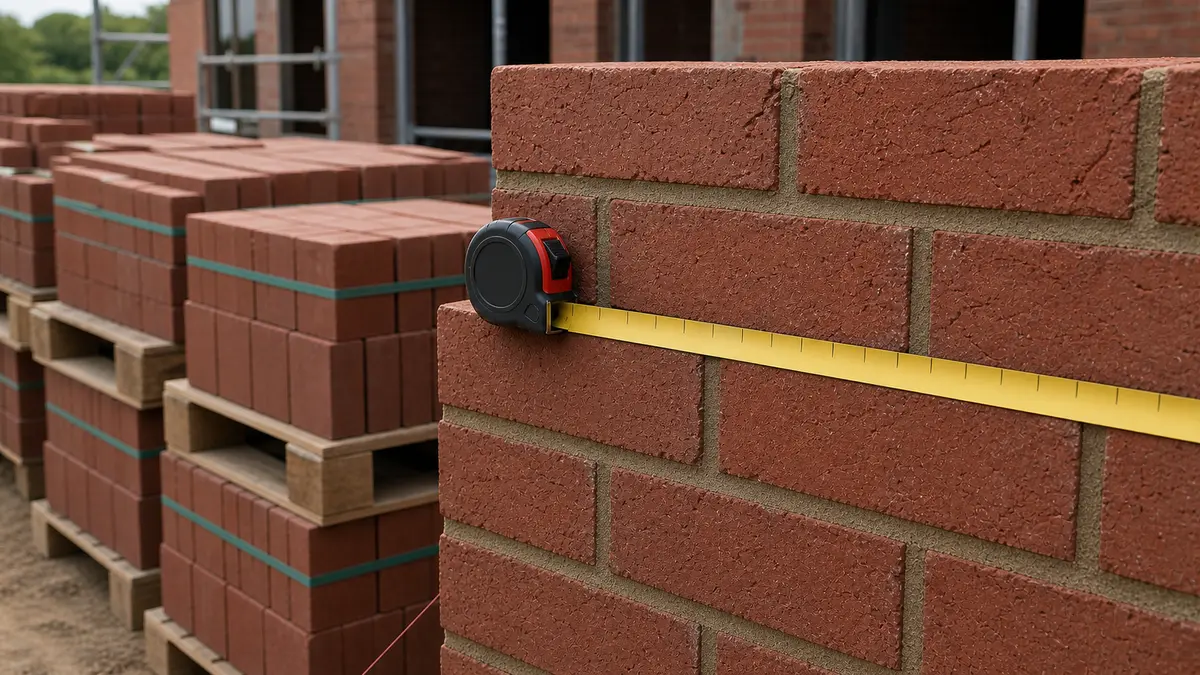
For an illustrative material worksheet only, assume 0.35 to 0.90 dollars per brick, or 350 to 900 dollars per 1,000, and use 550 dollars as an arithmetic midpoint. Replace every input with a current supplier quote for the selected unit.
Tips for an accurate brick takeoff
Start from net wall area, not gross. Subtract door and window openings before multiplying by the bricks-per-square-foot ratio, since a single door removes roughly 140 bricks at the standard 7 per square foot rate.
Confirm the brick type before you price the job. A Norman or Utility brick job priced at the modular rate of 7 per square foot will over-order by 30 to 50 percent, wasting money on units you never lay.
Once you know your wall size and brick type, the brick calculator converts both into an exact bricks-needed count, mortar bags, and a material cost estimate in one step.
Frequently asked questions
How many bricks make 1 square foot?
What does 1000 bricks cost?
How many sq ft is 500 bricks?
How many bricks are required for 200 sq ft?
How many bricks per square foot for a double wythe wall?
Sources and references
These references and structured source records support the method and material data used on this page.
- Brick (Wikipedia)
- BIA Technical Note 10: Dimensioning and Estimating Brick Masonry
- ASTM C216: Facing Brick standard
- TMS 402/602-22: Building Code Requirements and Specification for Masonry Structures