How Many Pavers Do I Need?
The number of pavers you need equals your patio's area in square feet divided by one paver's area in square feet, plus about 10 percent for cuts and breakage. A 10 by 10 foot patio, 100 square feet, takes roughly 100 pavers at 12x12 inches or 25 at 24x24 inches, while a 20 by 20 foot patio needs about four times that. Below is the formula, a paver count by size, worked examples for common patio dimensions, and what to add for base material and waste.
Key takeaways
- Pavers needed = patio area (sq ft) divided by one paver's area (sq ft), then add 5 to 15% for waste.
- A 12x12 inch paver covers exactly 1 square foot, so it is the easiest size to count by hand.
- A 20x20 ft patio (400 sq ft) needs about 100 24x24 inch pavers, or 110 with a 10% waste allowance.
- A 10x10 ft patio (100 sq ft) needs about 25 24x24 inch pavers, or 28 with waste.
- Pavers cannot go straight on dirt; they need 4 to 6 inches of compacted gravel base plus a 1 inch sand bedding layer.
How to calculate how many pavers you need
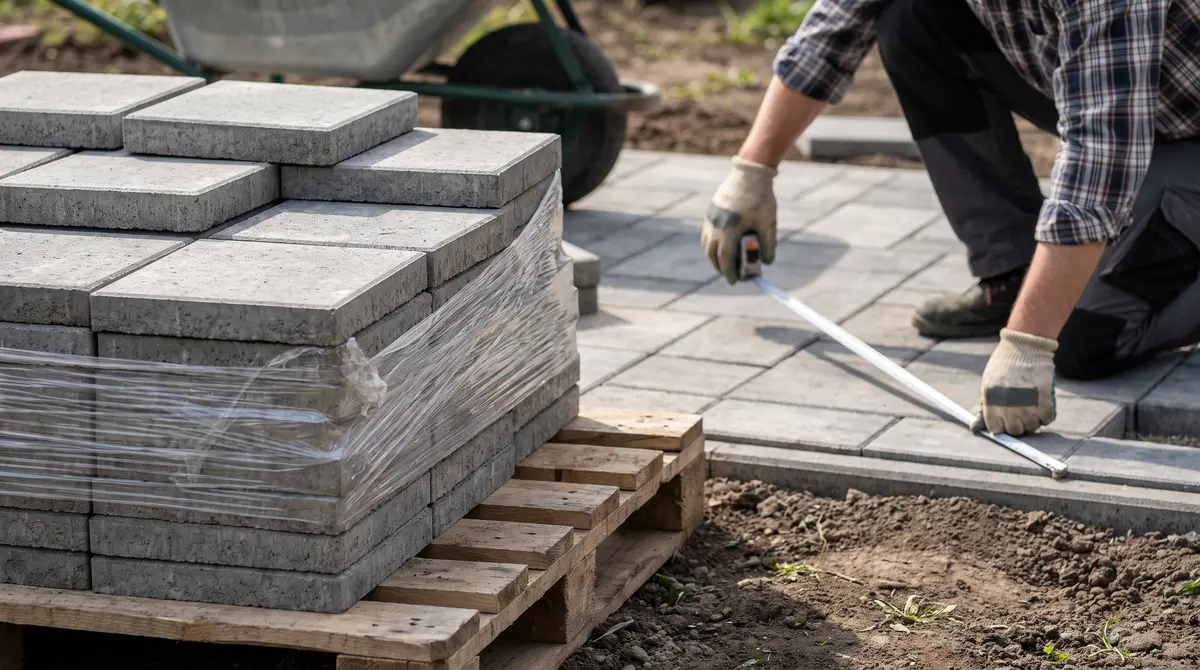
Start by measuring the length and width of your patio, walkway, or driveway in feet, then multiply them to get the total square footage. If the area is not a simple rectangle, split it into smaller rectangles, find each square footage, and add them together.
Next, find the paver's own coverage. Paver dimensions are listed in inches, so multiply length by width in inches and divide by 144 to convert to square feet. A 12x12 inch paver, for example, is 144 square inches divided by 144, exactly 1 square foot.
Paver area (ft2) = length(in) x width(in) ÷ 144Pavers needed = patio area(ft2) ÷ paver area(ft2)Divide the patio's square footage by the paver's square footage to get the base count, then add a waste allowance. To skip the arithmetic, enter your dimensions in the paver calculator and it returns the exact count and pallets for your size and pattern.
Pavers needed per 100 square feet, by size
Once you know your patio's square footage, this table shows roughly how many pavers of each common size cover every 100 square feet. Multiply the count by your area divided by 100 to scale it to your project.
| Paver size | Coverage each | Per 100 sq ft |
|---|---|---|
| 4 x 8 in (brick) | 0.22 ft2 | 450 |
| 6 x 6 in | 0.25 ft2 | 400 |
| 6 x 9 in | 0.375 ft2 | 267 |
| 12 x 12 in | 1.0 ft2 | 100 |
| 16 x 16 in | 1.78 ft2 | 56 |
| 18 x 18 in | 2.25 ft2 | 44 |
| 24 x 24 in | 4.0 ft2 | 25 |
Large format pavers like 24x24 inch slabs mean fewer joints and faster installation, but they are heavier to handle and show every dip in an uneven base. Small brick sizes hide base imperfections better but multiply the number of joints and cuts.
Worked examples for common patio sizes
Here is the math applied to patio sizes people actually build, mixing paver sizes to show how the count changes with both variables.
| Patio size | Area | Paver size | Count | With 10% waste |
|---|---|---|---|---|
| 8 x 10 ft | 80 ft2 | 12 x 12 in | 80 | 88 |
| 10 x 10 ft | 100 ft2 | 24 x 24 in | 25 | 28 |
| 12 x 12 ft | 144 ft2 | 16 x 16 in | 81 | 90 |
| 20 x 20 ft | 400 ft2 | 24 x 24 in | 100 | 110 |
A 12x12 foot patio with 16x16 inch pavers needs 81 units before waste. Multiplying by 1.10 gives 89.1, which must be rounded up to 90 whole pavers. A 20x20 foot patio is 400 square feet, so 24x24 inch pavers at 4 square feet each work out to exactly 100 pavers, or 110 once you add waste.
For a full size-by-size breakdown on the classic 100 square foot patio, see how many pavers for a 10x10 patio, which covers every common paver size for that footprint.
How much extra to order for waste and cuts
Never order the exact count from the formula. Some pavers crack during handling or cutting, and every edge that does not land on a full unit becomes a cut piece plus scrap.
For a straight running bond layout on a square or rectangular area, add 5 to 10 percent. For a 45 degree herringbone pattern, curved borders, or a lot of steps and corners, add 15 percent, since diagonal cuts waste far more material at the edges.
Pavers need a base, not bare dirt
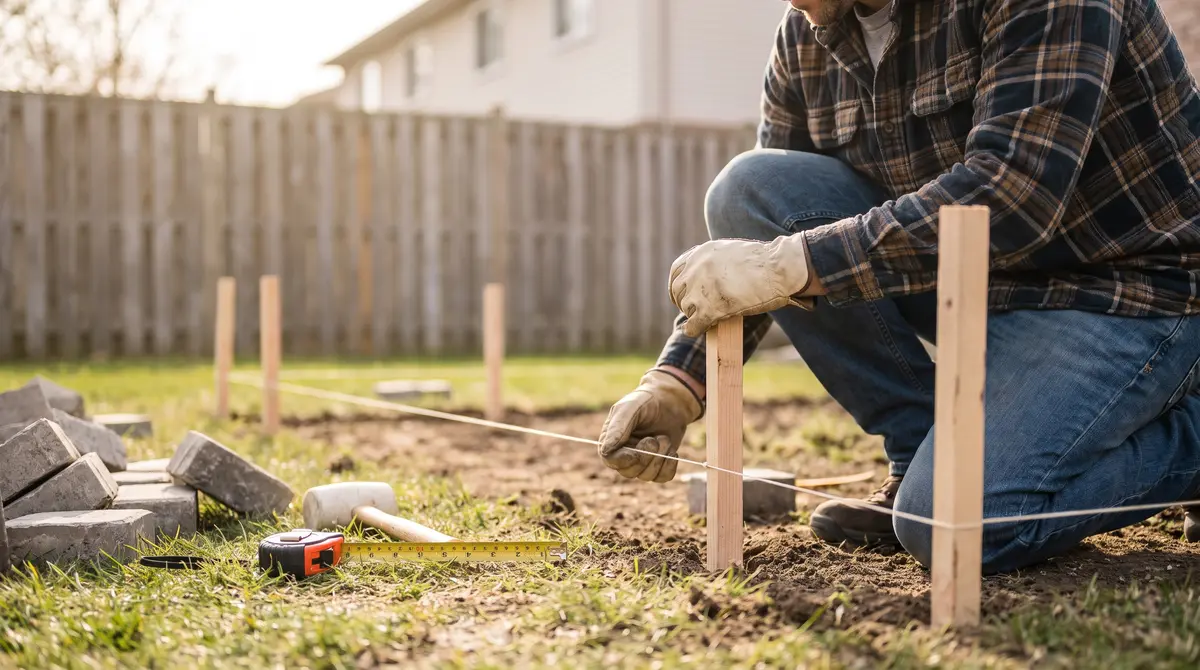
No, pavers should never be laid directly on dirt. Bare soil compresses unevenly under weight and holds water, so pavers set on it will sink, rock, and let weeds grow through the joints within a season or two.
Underneath the pavers, install the compacted base depth specified for the pavement system, subgrade, climate and load, followed by the specified bedding layer.
Loose-to-compacted volume varies by aggregate and equipment, so use the supplier's conversion factor. If the stated compaction loss is exactly 20%, divide the required compacted volume by 0.80, which is a 25% loose-volume allowance. The paver base guide shows that arithmetic.
Apply current supplier and installer prices
Once the quantity is checked, multiply the rounded paver count by the selected supplier's current unit or pallet price. Record pallet quantity, delivery, returns and whether caps, edging or special pieces are separate.
For installation, compare local quotes that use the same excavation, base, bedding, edge restraint, pattern, cuts and cleanup scope. Product standards do not establish a national installed price.
For a cost-input checklist by patio size, see the paver patio cost guide.
Frequently asked questions
How do I calculate how many pavers I need?
Can I lay pavers directly on dirt?
How many pavers for a 20x20 patio?
How many 24x24 pavers for a 10x10 patio?
How much extra should I buy for waste?
Sources and references
These references and structured source records support the method and material data used on this page.
- Pavement (Wikipedia)
- Interlocking Concrete Pavement Institute (ICPI)
- ASTM C936: Standard Specification for Interlocking Concrete Paving Units
- Belgard (manufacturer site)