How Many Pavers for a 10x10 Patio?
A 10 by 10 foot patio covers 100 square feet, so the paver count depends on the size you pick: about 450 standard 4x8 inch bricks, 100 of the 12x12 inch squares, or 25 of the big 24x24 slabs, before you add 10 percent for cuts and breakage. Below is the count for every common paver size, the simple formula behind it, how much base and sand you need underneath, and a calculator that does the whole job.
Key takeaways
- A 10x10 patio is 100 square feet; divide 100 by one paver's square footage to get the count.
- By size, that is roughly 450 pavers at 4x8 in, 400 at 6x6, 100 at 12x12, 57 at 16x16, or 25 at 24x24.
- Add 10 percent for a straight lay and 15 percent for a diagonal or curved pattern to cover cuts.
- Underneath you need about 1.25 cubic yards of gravel base (order 20 percent extra for compaction) plus roughly 0.3 cubic yards of bedding sand.
- The paver calculator uses the actual unit dimensions, pattern allowance and entered base depths; it does not choose the pavement section or drainage design.
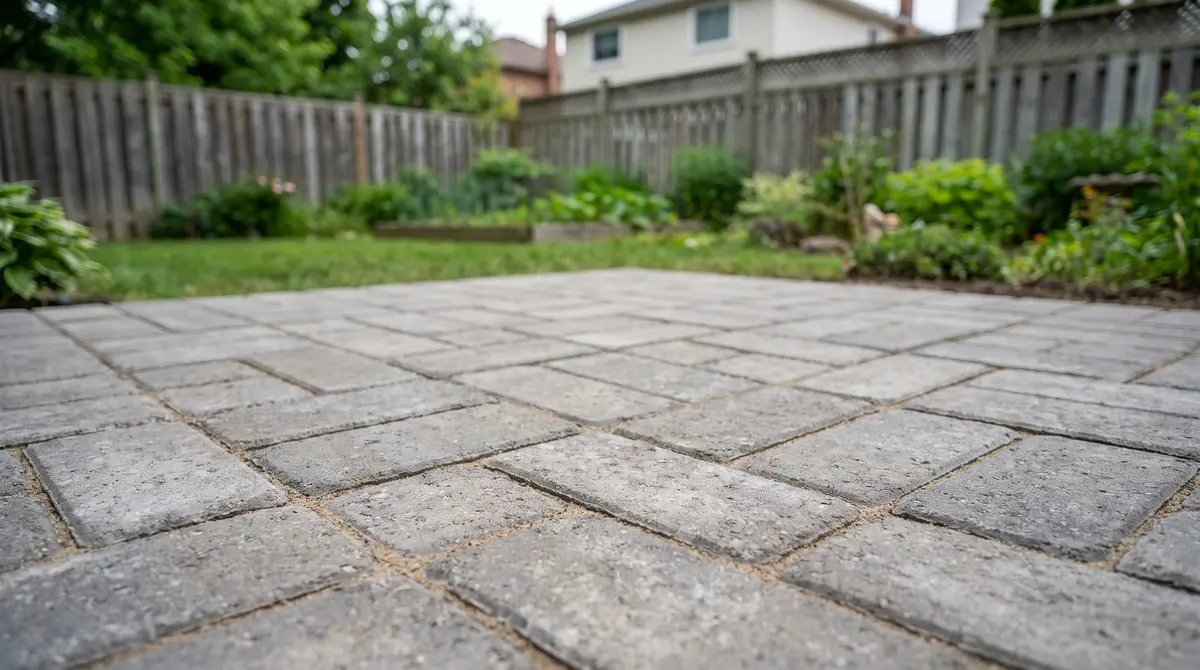
The formula: area divided by paver size
Every paver estimate is one division. A 10 by 10 foot patio is 10 times 10, or 100 square feet. To find how many pavers fill it, divide that 100 by the area a single paver covers.
Paver sizes are given in inches, so convert to square feet first: multiply length by width in inches and divide by 144. A 4 by 8 inch brick is 32 square inches, which is 0.222 square feet, so 100 divided by 0.222 is about 450 pavers.
Paver area (ft2) = length(in) x width(in) ÷ 144Pavers needed = patio area(ft2) ÷ paver area(ft2)That is the whole method. If you would rather skip the arithmetic, enter your size and paver dimensions in the paver calculator and it returns the exact count with waste already added.
Pavers needed for 100 square feet by size
The single biggest lever on your paver count is the size you choose. Small brick pavers give you hundreds of joints and a busy look; large format slabs cover the same 100 square feet with a fraction of the pieces. Here are the counts for the common sizes, before waste.
| Paver size | Coverage each | Count for 100 sq ft | With 10% waste |
|---|---|---|---|
| 4 x 8 in (brick) | 0.222 ft2 | 450 | 495 |
| 6 x 6 in | 0.25 ft2 | 400 | 440 |
| 6 x 9 in | 0.375 ft2 | 267 | 294 |
| 12 x 12 in | 1.0 ft2 | 100 | 110 |
| 16 x 16 in | 1.77 ft2 | 57 | 63 |
| 24 x 24 in | 4.0 ft2 | 25 | 28 |
The 12 by 12 inch square is the easy case: it covers exactly one square foot, so you need 100 for a 10 by 10 patio, one paver per square foot. Everything else is just the division above.
How much waste to add for cuts and breakage
Never order the bare count. You will crack a few slabs, and every edge that does not land on a full paver has to be cut, which turns one paver into scrap plus a piece. A waste allowance covers both.
For a simple straight, or running bond, layout on a square 10 by 10 patio, 10 percent is the standard buffer, so a 4x8 brick job goes from 450 to about 495 pavers. If you are laying a 45 degree herringbone or have a curved border, bump it to 15 percent, because diagonal patterns cut far more perimeter pieces.
Buying by the pallet vs. individually
Suppliers sell pavers two ways, and how they sell yours changes the round-up. Bought loose, you order the exact count plus waste. Bought by the pallet, you round up to whole pallets.
A typical paver pallet covers 100 to 120 square feet, which is roughly one pallet for a 10 by 10 patio. That is convenient, but a full pallet of 4x8 brick weighs around 3,000 to 4,000 pounds, so check delivery and whether you need the truck to place it near the work.
If your patio is not a clean rectangle, break it into rectangles, find each area, add them, then divide. The paver calculator handles odd shapes and tells you both the paver count and how many pallets that works out to.
Base and sand you need under the pavers
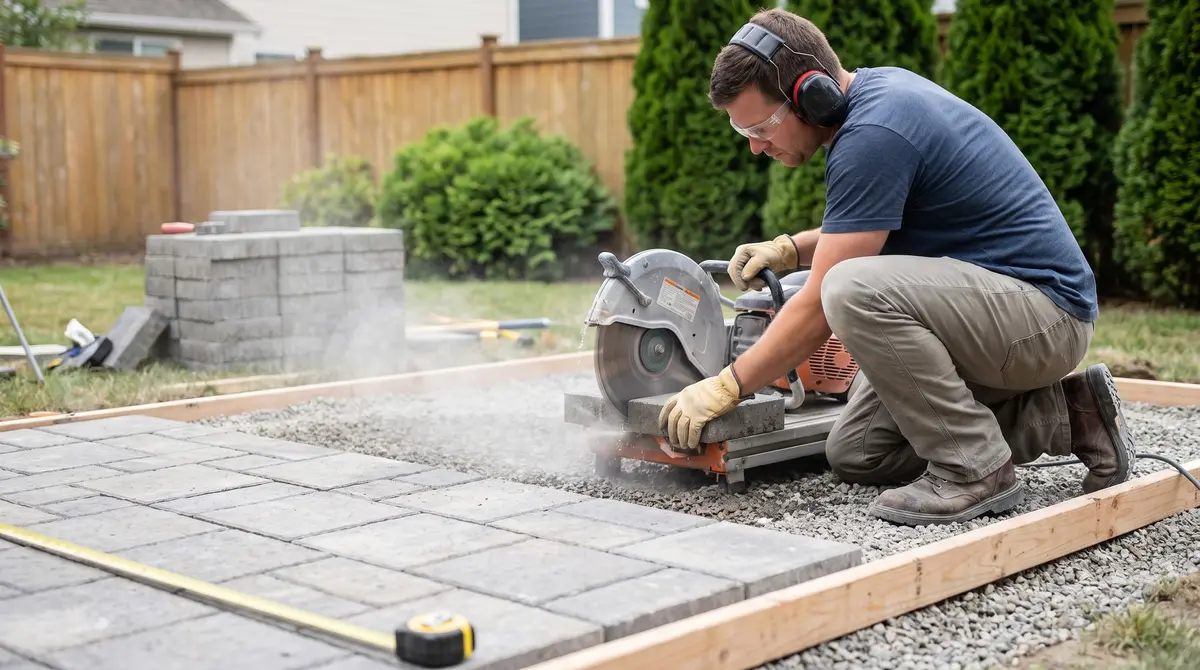
The base, bedding and edge-restraint details must follow the selected paver system and site conditions.
For a 100 square foot patio, a 4 inch compacted base volume is about 1.23 cubic yards before any supplier-specific conversion from compacted to delivered quantity. A 1 inch bedding layer is about 0.31 cubic yards before allowance.
| Illustrative layer (100 sq ft) | Geometric volume | Purchase conversion |
|---|---|---|
| Base, 4 in compacted | 1.23 cu yd | Use supplier material data |
| Bedding, 1 in | 0.31 cu yd | Use supplier material data |
Confirm excavation width, aggregate grading, lift thickness and compaction with the selected system. Do not assume a universal 20% compaction factor.
What a 10x10 paver patio costs
Use the calculated paver, base and bedding quantities with current local supplier quotes. State the paver format, pattern, cutting allowance, delivery and site preparation rather than applying an unsupported market rate.
Frequently asked questions
How many pavers do I need for a 10x10 patio?
How many 12x12 pavers do I need for a 10x10 patio?
How much extra should I buy for waste?
How much base and sand does a 10x10 patio need?
How much does a 10x10 paver patio cost?
Sources and references
These references and structured source records support the method and material data used on this page.
- Pavement (Wikipedia)
- Interlocking Concrete Pavement Institute (ICPI)
- ASTM C936: Standard Specification for Interlocking Concrete Paving Units
- Belgard (manufacturer site)