How Much Concrete Do I Need for a Sonotube?
A standard 12-inch sonotube filled 4 feet deep takes about 3.46 cubic feet of concrete, roughly 6 bags of 80-lb mix or 8 bags of 60-lb mix once you add a 10% waste allowance. Smaller 8-inch tubes need as few as 3 bags per 4 feet of depth, while a wide 24-inch column can take 23 bags or more. Below is the formula, a bag count by diameter and depth, and a calculator that gives the exact number for your tube.
Key takeaways
- A 12-inch sonotube 4 feet deep needs about 6 bags of 80-lb concrete mix, or 8 bags of 60-lb mix, with 10% waste included.
- Concrete volume scales with the radius squared, so going from a 10-inch to a 12-inch tube adds roughly 45% more concrete at the same depth.
- A 12-inch tube uses about 1.4 bags of 80-lb mix per linear foot of depth, so a 6-foot tube needs roughly 9 bags.
- Not every sonotube needs a separate footing pad, but codes commonly require one for decks and porches, especially in sandy or loose soil.
- One 80-lb bag of concrete yields 0.60 cubic feet, so it takes about 45 bags to fill a full cubic yard.
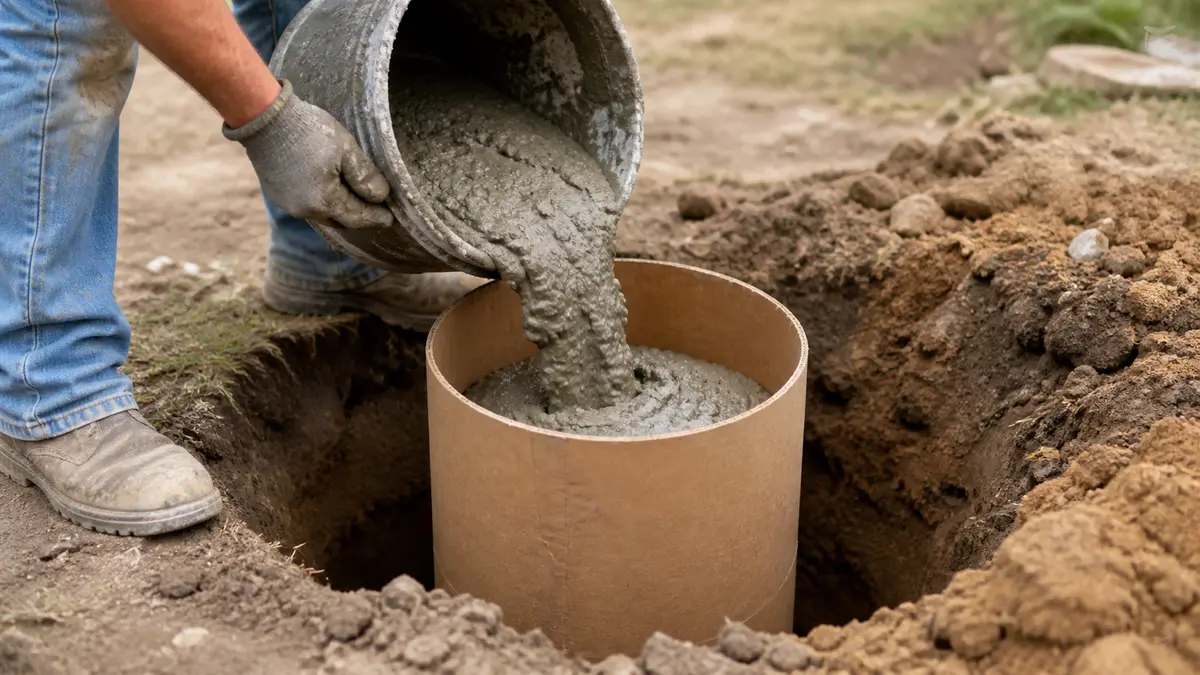
The formula: how much concrete fills a sonotube
A sonotube is a cylinder, so its volume is pi times the radius squared times the depth, all in feet. Since diameter is usually given in inches, divide it by 24 to get the radius in feet, then square that number before multiplying by pi and the depth.
Radius (ft) = Diameter (in) ÷ 24Volume (ft3) = π x radius2 x depthFor a 12-inch tube, the radius is 0.5 feet. At 4 feet deep that is pi times 0.25 times 4, about 3.14 cubic feet. Add 10% for spillage and an uneven hole bottom and you land at roughly 3.46 cubic feet, which rounds up to 6 bags of 80-lb concrete mix. For any diameter and depth, the sonotube calculator runs this math and returns the bag count directly.
Concrete per linear foot, by sonotube diameter
Apply current rates only to the calculated tube volume, bag count and selected product.
| Tube diameter | Cubic feet per ft (+10%) | 80 lb bags per ft |
|---|---|---|
| 8 in | 0.38 | 0.64 |
| 10 in | 0.60 | 1.00 |
| 12 in | 0.86 | 1.44 |
| 16 in | 1.54 | 2.56 |
| 18 in | 1.94 | 3.24 |
| 24 in | 3.46 | 5.76 |
Multiply the bags-per-foot column by your actual hole depth and round up. A 10-inch tube 5 feet deep, for example, needs about 5 bags, while the same depth in a 16-inch tube jumps to about 13 bags.
How many bags for a 12-inch sonotube, by depth
The table is a quantity example for a 12-inch tube at entered depths, with an assumed 10% allowance. It does not state common or required footing dimensions.
| Example depth | Cubic feet (+10%) | 80 lb bags | 60 lb bags |
|---|---|---|---|
| 2 ft | 1.73 | 3 | 4 |
| 3 ft | 2.59 | 5 | 6 |
| 4 ft | 3.46 | 6 | 8 |
| 5 ft | 4.32 | 8 | 10 |
| 6 ft | 5.18 | 9 | 12 |
| 8 ft | 6.91 | 12 | 16 |
Use the approved diameter and depth, then measure the actual excavation before buying.
Does a sonotube need a separate footing pad?
A tube is formwork for a concrete pier; its diameter and depth do not prove adequate bearing, frost protection, reinforcement or connection capacity.
Use the footing and pier geometry specified for actual loads, soil and local requirements. The approved detail may use a straight shaft, a wider base or another foundation system.
Once that geometry is known, calculate the shaft and any separate pad volumes. The deck-footing quantity guide explains the arithmetic without selecting the footing.

Bags versus ready-mix: what it costs
If the same project also involves setting posts without a tube, like a fence line, the math changes slightly since the post itself displaces some volume. The breakdown in bags of concrete per fence post covers that adjustment.
Tips to avoid running short mid-pour
Measure the actual tube diameter and hole depth before buying, not the nominal size on the label. Sonotube forms sold as 12 inches can run slightly larger inside, and a hand-dug hole is rarely a perfect cylinder.
Always round every bag count up, never down. A tube running short with wet concrete already curing in the mix cannot wait for another trip to the store.
Buy one extra bag beyond the calculated total for any tube deeper than about 4 feet, since deeper pours lose more concrete to an uneven hole bottom and settling as the form fills.
Frequently asked questions
How many bags of concrete do I need for a sonotube?
How many 80 lb bags of concrete to fill a 12 inch sonotube?
How much Quikrete for 12 Sonotube?
Does a 12 sonotube need a footing?
How much concrete do I need for an 8 inch sonotube?
Sources and references
These references and structured source records support the method and material data used on this page.
- Concrete (Wikipedia)
- Sonotube Concrete Forms (Sonoco manufacturer)
- QUIKRETE Concrete Mix (product data)
- IRC 2021 R403.1.4 Minimum Depth (ICC Digital Codes)