How Much Concrete for a Deck Footing?
A standard 12-inch sonotube footing poured 4 feet deep takes about 3.1 cubic feet of concrete, close to 3.45 cubic feet once you add waste, which works out to 6 bags of 80-lb concrete mix. Smaller 8-inch tubes need as few as 3 bags, while a wide 24-inch footing under a heavy beam can take 23 bags or more. Below is the volume by tube size and depth, what that means in bags versus ready-mix, and a calculator that gives the exact count for your holes.
Key takeaways
- A 12-inch sonotube footing 4 feet deep needs about 3.1 cubic feet of concrete, roughly 6 bags of 80-lb mix once waste is added.
- Tube diameter runs 8 to 24 inches depending on post load; depth is set by the local frost line, commonly 12 to 48 inches or more.
- One 80-lb bag of concrete yields 0.60 cubic feet, so it takes about 45 bags to fill a full cubic yard.
- Standard bagged concrete mix cures to about 4,000 psi, above the 2,500 to 3,000 psi most codes require for residential footings.
- The Sonotube calculator quantifies concrete for a specified diameter, depth and count; loads, soil, frost depth, reinforcement and footing size come from the applicable design.
The formula: how much concrete one deck footing needs
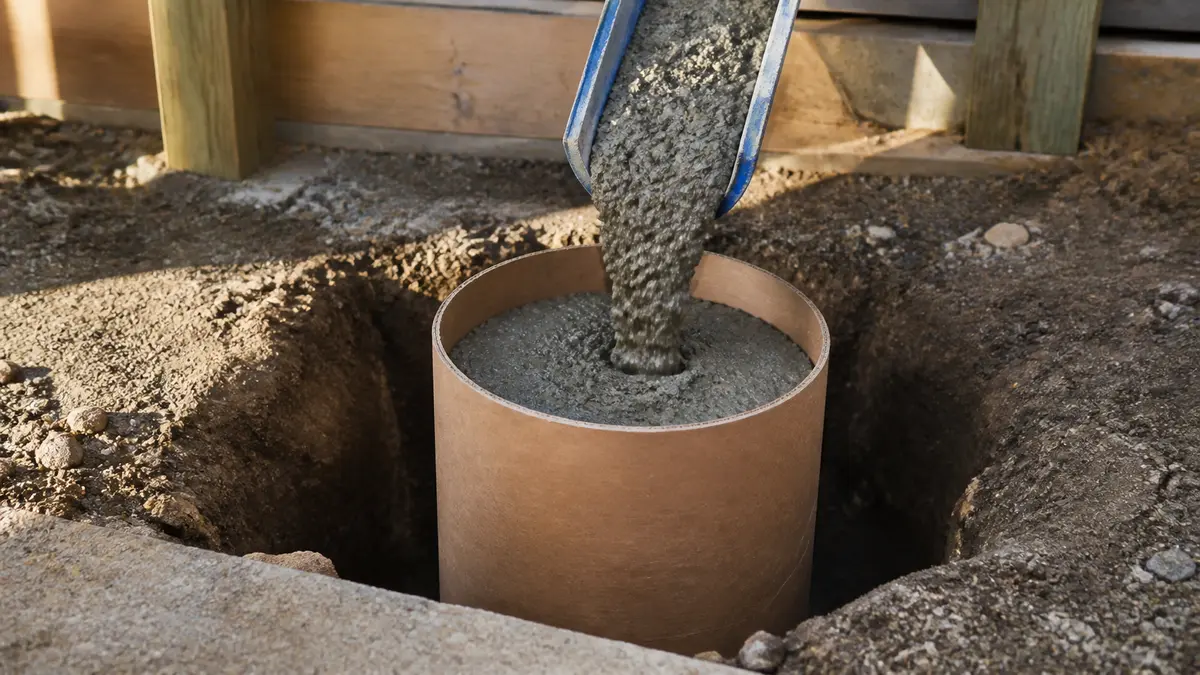
A deck footing poured in a sonotube is a cylinder, so its volume is pi times the radius squared times the depth, all in feet. Unlike a fence post, the footing is usually poured solid with no post embedded, since the post base sits on top via a bracket after the concrete cures.
A 12-inch tube has a radius of 0.5 feet. At 4 feet deep that is pi times 0.25 times 4, about 3.14 cubic feet. Add 10% for spillage and an uneven hole bottom and you land at roughly 3.45 cubic feet, which rounds up to 6 bags of 80-lb concrete mix.
Volume (ft3) = π x radius2 x depthBags needed = (Volume x 1.10) ÷ bag yieldEvery footing on a deck can use a different diameter, so plug each hole into the sonotube calculator rather than reusing one number for the whole job.
Concrete by sonotube diameter and depth
The table below assumes a 4-foot deep pour, a common depth in mixed and cold climates, with an 80-lb bag yielding 0.60 cubic feet after a 10% waste allowance. Deeper or shallower holes scale up or down from these numbers.
| Tube diameter | Cubic feet (4 ft deep) | 80 lb bags (+10%) |
|---|---|---|
| 8 in | 1.4 | 3 |
| 10 in | 2.2 | 4 |
| 12 in | 3.1 | 6 |
| 16 in | 5.6 | 10 |
| 18 in | 7.1 | 13 |
| 24 in | 12.6 | 23 |
A 12-inch tube 3 feet deep needs about 5 bags, and the same tube at 5 feet needs about 8 bags. Depth changes the bag count almost as much as diameter does, so measure the actual hole before buying.
Picking the right diameter and depth for the footing
Post size alone does not determine tube diameter. Use the applicable code table and notes, approved plans or an engineered design based on tributary area, loads and soil.
Depth depends on the adopted frost-protection, embedment, soil and inspection requirements.
After diameter and depth are approved, the deck footing guide explains the quantity inputs.
Bags versus ready-mix: what deck footings cost
For a full deck project that also includes a landing pad or patio slab, the concrete calculator handles that flat work separately from the round footings.
What concrete mix and PSI to use
Use the concrete strength, exposure and placement method required by the adopted code and approved design. Product color or bag category does not establish compliance.
Use a fast-setting or conventional product only within its manufacturer instructions and approved application. Do not infer suitability from set time alone.
Ask the supplier for concrete that matches the project specification.
Avoiding common mistakes when pouring footings
The most common shortfall is skipping the waste factor. Hand-dug holes are never a perfect cylinder, and the last few inches of a tube always seem to eat more concrete than the math predicted. Round every bag count up, not down.
The second mistake is guessing depth instead of checking it. A footing poured 6 inches shy of the frost line can heave over a hard winter, cracking the bond between footing and post bracket. Confirm the frost depth with your local building department before you dig.
Consolidate the concrete as you pour by rodding or vibrating the tube, since trapped air pockets weaken the footing right where the post load concentrates.
Frequently asked questions
How many bags of concrete do I need for deck footings?
Can I use Quikrete for deck footings?
Is 4000 psi concrete good for deck footings?
How much concrete for a 12x12 footer?
How deep should a deck footing be?
Sources and references
These references and structured source records support the method and material data used on this page.
- QUIKRETE Concrete Mix (product data)
- IRC 2021 R507.3.1 Minimum Footing Size (ICC Digital Codes)
- AWC DCA-6 Prescriptive Residential Deck Construction Guide
- NRMCA: Ready Mixed Concrete