How Much Mortar Do I Need?
As a rule of thumb, one 80 lb bag of mortar mix lays about 13 standard 8 by 8 by 16 inch blocks, or roughly 37 standard bricks, at a 3/8 inch joint. Put another way, you need close to 3 bags per 100 block and about 7 bags per 1,000 brick. Here are the numbers by unit, the formula behind them, and a calculator that does the count for you.
Key takeaways
- One 80 lb bag of mortar lays about 13 standard 8x8x16 blocks or 37 standard bricks at a 3/8 inch joint.
- Plan on roughly 3 bags of mortar per 100 concrete blocks, or 7 bags per 1,000 bricks.
- A 60 lb bag covers about 75% of an 80 lb bag, so 9 to 10 blocks or 27 bricks.
- Add 10 to 15% extra for waste, spillage and bad mixes, and round bag counts up.
- Match the mortar type to the job: Type N above grade, Type S at or below grade per ASTM C270.
How much mortar per block and per brick
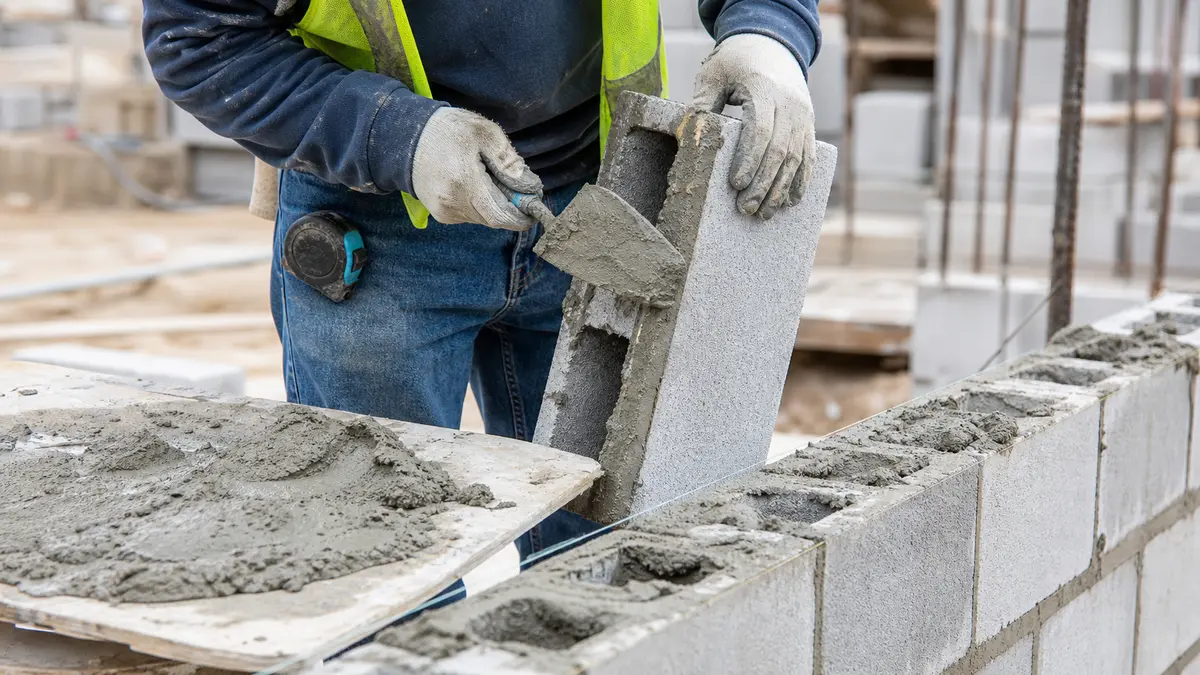
Mortar is estimated by the masonry unit, not by volume, because the joint size and unit size set how much you use. At the standard 3/8 inch joint, one 80 lb bag of pre-blended mortar lays about 13 standard 8 by 8 by 16 inch blocks or about 37 standard bricks.
Scaled up, that works out to roughly 3 bags per 100 block and 7 bags per 1,000 brick. These are the same figures QUIKRETE prints for its Mason Mix, calculated for an 8 by 2 by 4 inch brick or an 8 by 8 by 16 inch block at a 3/8 inch joint. To get a tailored count, enter your wall size in the mortar calculator and it returns the bags directly.
| Unit | Per 80 lb bag | Per 60 lb bag |
|---|---|---|
| Standard block (8x8x16 in) | ~13 | ~9 to 10 |
| Standard brick | ~37 | ~27 |
The formula behind the bag count
The underlying number is mortar volume. A wall of standard concrete block needs about 9.5 cubic feet of mortar per 100 block at a 3/8 inch joint, and a standard brick wall needs roughly 7 cubic feet per 1,000 brick. From there you divide by the yield of a bag.
bags = (units ÷ units-per-bag)round up, then × 1.10 for wasteSo a wall of 300 block divided by 13 is about 23 bags before waste, and around 25 to 26 once you add 10 to 15%. The math is simple, but it is easy to slip a figure across a whole elevation, which is why most masons run the wall dimensions through a tool first.
Worked example for a block wall
Take a 20 foot long, 8 foot tall block wall. At 1.125 standard blocks per square foot, that 160 square foot wall is about 180 blocks. Divide by 13 blocks per bag and you get roughly 14 bags of 80 lb mortar before waste, or about 15 to 16 with a 10 to 15% allowance.
If you are still sizing the wall itself, the guide to how many cinder blocks you need gives the block count first, which you then feed into the mortar estimate. Pair the two and you order block and mortar in one trip.
What changes how much mortar you need
Joint thickness is the biggest variable. A 1/2 inch joint instead of 3/8 inch pushes mortar use up noticeably, while tight 1/4 inch joints stretch a bag further. Unit size matters too: larger blocks need fewer joints per square foot, so they use proportionally less mortar than small brick.
Workmanship and waste round it out. Mortar that stiffens on the board, drops off the trowel, or sits in a bad batch is gone, so the trade adds 10 to 15% on top. The standard concrete block sizes reference helps confirm which unit you are actually laying before you commit to a count.
Mortar types and which to buy
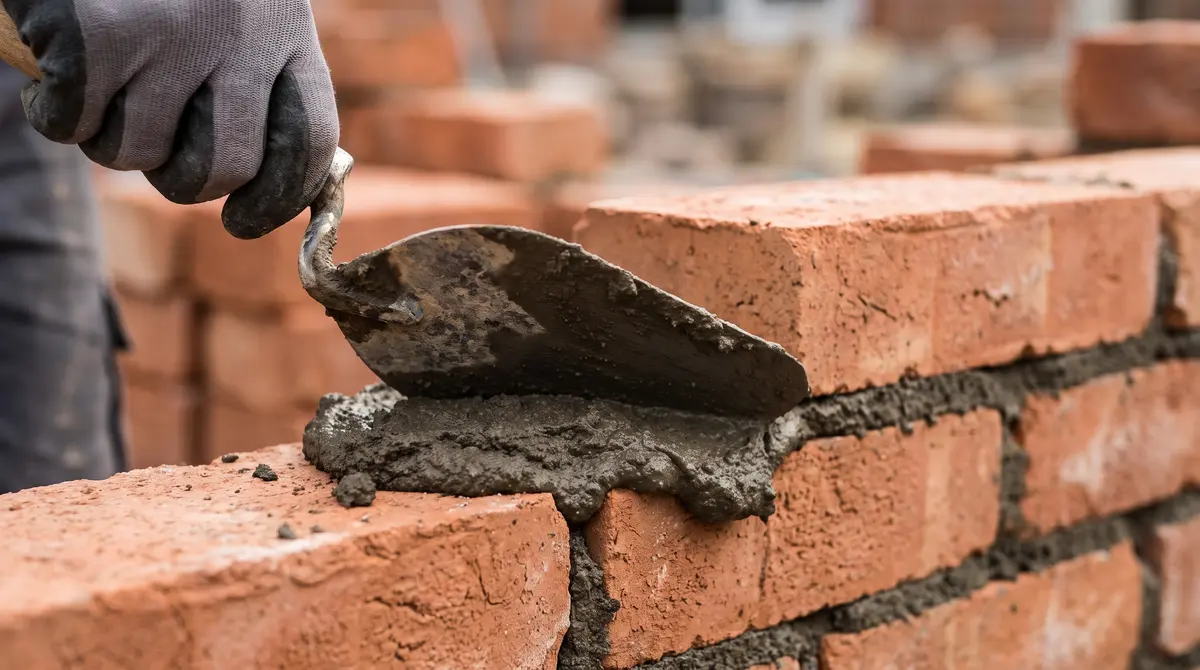
Pre-blended mortar comes in types set by ASTM C270, graded by strength. Type N at about 750 psi is the common choice for above grade exterior and interior walls. Type S at about 1,800 psi is the general purpose pick for at or below grade work, foundations and retaining walls. Type M at about 2,500 psi is for heavy load and below grade only.
The quantity you need does not change much between types, since they are mixed and laid the same way, but the price and strength do. A rule worth knowing: mortar is meant to be a little weaker than the units it joins, so any cracking runs through the joint and not the block. Choose the lowest type that meets the load, not the strongest.
Let the calculator do the count
Estimating one short wall by hand is fine, but bag counts drift fast once a job has several elevations or mixed units. Enter your wall length, height and unit type in the mortar calculator and it returns the number of 60 and 80 lb bags, with the waste allowance built in.
For a job that needs both block and the fill or footing behind it, work out the core fill and any footing separately too, so the mortar, the fill and the footing are all costed in one pass rather than guessed at the counter.
Frequently asked questions
How many blocks does an 80 lb bag of mortar lay?
How many bricks will one bag of mortar lay?
How much mortar do I need per 100 concrete blocks?
How much extra mortar should I buy for waste?
What type of mortar should I use?
Sources and references
These references and structured source records support the method and material data used on this page.
- Mortar (Wikipedia)
- QUIKRETE Mason Mix spec data sheet (No. 1136)
- ASTM C270: Standard Specification for Mortar for Unit Masonry