How Much Mortar for 1000 Bricks?
You need about 7 bags of masonry cement mixed with sand, or roughly 27 to 28 bags of pre-mixed 80 lb mortar mix, to lay 1000 standard modular bricks with 3/8 inch joints in running bond. The exact count depends on which product you buy, so below is the math for both methods, the sand you need, and what a crew charges to lay 1000 bricks .
Key takeaways
- Pre-mixed mortar: about 27 to 28 bags of 80 lb mix lay 1000 standard bricks at 3/8 inch joints.
- Masonry cement method: about 7 to 8 bags of cement plus roughly 1 ton of sand per 1000 bricks.
- One 80 lb bag of pre-mixed mortar lays about 37 standard bricks, per Quikrete's published coverage rating.
- A 1/2 inch joint uses about 25% more mortar than a standard 3/8 inch joint, so thicker joints raise bag counts fast.
- Use the exact mortar product yield, brick format, joint and bedding method in the mortar calculator; the displayed unit price covers mortar material only.
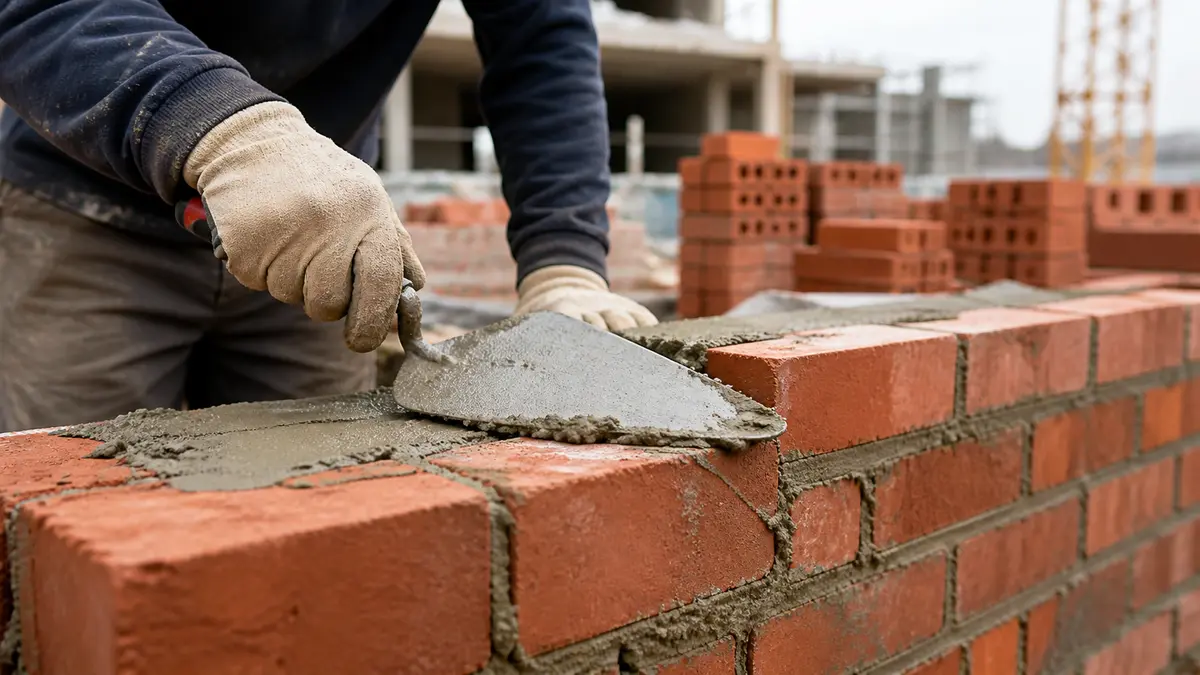
The short answer: mortar for 1000 bricks
The count splits into two products that people both call mortar. Masonry cement is a bag of cement you mix with your own sand, and the trade rule of thumb is about 7 bags per 1000 standard bricks. Pre-mixed mortar already has the sand blended in, so each bag covers far fewer bricks.
For pre-mixed mortar, plan on about 27 to 28 bags of 80 lb mix per 1000 modular bricks with standard 3/8 inch joints. That figure comes straight from the manufacturer's own coverage rating of 37 bricks laid per bag.
| Method per 1000 bricks | Bags needed | Notes |
|---|---|---|
| Masonry cement + sand | 7 to 8 bags | plus about 1 ton of sand |
| Pre-mixed 80 lb mortar | 27 to 28 bags | 3/8 in joint, running bond |
| Pre-mixed 60 lb mortar | 36 bags | 3/8 in joint, running bond |
To skip the conversions, enter your brick count and joint size into the mortar calculator and it returns bags for either method along with the sand you need.
How much mortar one brick actually uses
Quikrete, the most cited premix brand, states that one 80 lb bag of Mortar Mix lays about 37 standard modular bricks and yields roughly 0.83 cubic feet of wet mortar. Divide 1000 by 37 and round up: that lands at 27 bags.
Bags (80 lb) = Bricks ÷ 37Mortar volume (ft3) = Bags × 0.83Twenty seven bags works out to about 22.4 cubic feet of mortar, close to 0.83 cubic yards, for all 1000 bricks. Add 5 to 10% for waste and tooling losses, which pushes a careful order to about 30 bags.
This assumes a standard 4 by 2.25 by 8 inch modular brick with 3/8 inch bed and head joints, laid in running bond. Thicker joints or oversize brick change the math, covered further down.
Pre-mixed mortar bags by size for 1000 bricks
Bag yield scales with weight, so smaller bags need proportionally more of them to cover the same wall. An 80 lb bag stays the most economical per brick, since you pay less handling and packaging per cubic foot of mortar.
| Bag size | Yield per bag | Bricks per bag | Bags per 1000 |
|---|---|---|---|
| 80 lb | 0.83 ft3 | 37 | 27 to 28 |
| 60 lb | 0.62 ft3 | 28 | 36 |
| 40 lb | 0.42 ft3 | 18 | 55 |
The same yield math applies to concrete block. If your project mixes brick and block, see how many bags of mortar per 100 block for the CMU side of the job.
Masonry cement method: 7 bags plus about 1 ton of sand
Compare options only after defining the specified mortar type, product yield and measured brick quantity.
Sand runs about one cubic yard, close to 1 ton, for every 7 bags of masonry cement. Utility and engineer size brick carry more mortar per unit, so those jobs can need 9 to 13 bags per 1000 bricks instead of 7.
| Brick type | Cement bags per 1000 | Notes |
|---|---|---|
| Modular (standard) | 7 to 8 | most common US brick size |
| Engineer | 8 to 9 | slightly taller unit |
| Utility | 10 to 13 | larger unit, more mortar per brick |
The mix itself matters too: a standard Type N blend is roughly 1 part masonry cement to 3 parts sand by volume. See mortar mix ratio for the exact proportions by type and when to step up to Type S.
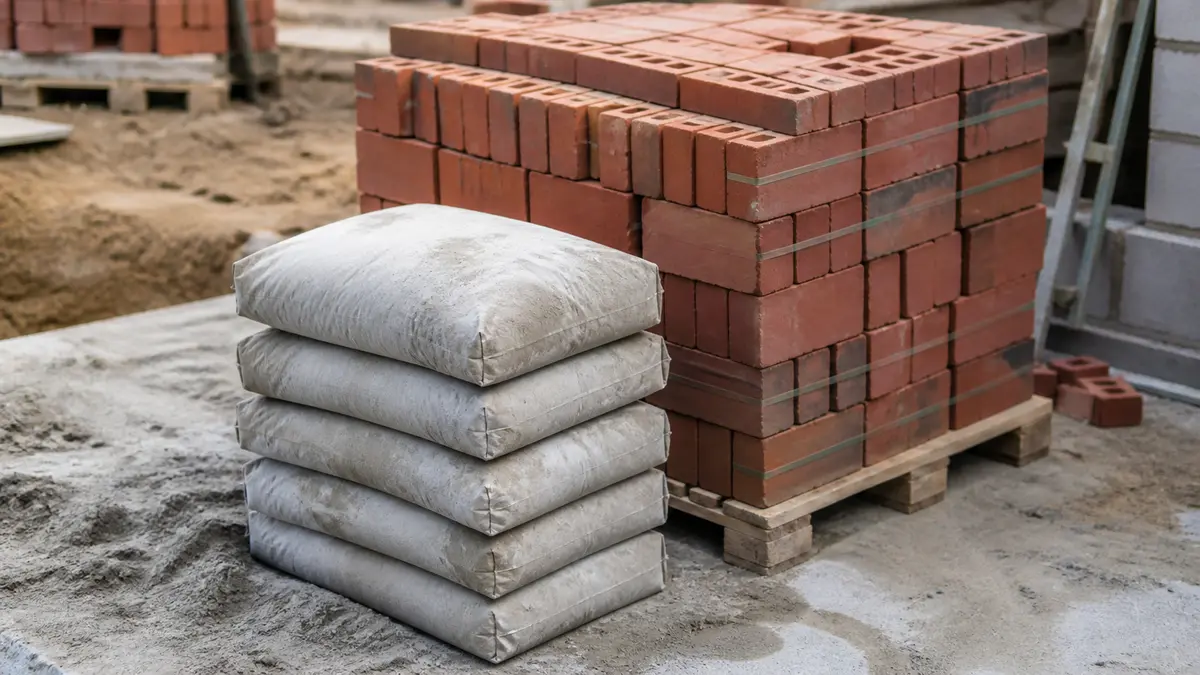
Brick size, joint thickness, and what changes the count
Joint thickness moves the number more than most people expect. A 1/2 inch joint uses roughly 25% more mortar than a standard 3/8 inch joint, so a job with thick joints can need 34 to 35 bags of 80 lb premix instead of 27.
Brick size works the other way. Larger units like Norman or utility brick cover more wall area per piece, so a wall needs fewer bricks, but each one still carries a joint on every side, which keeps mortar volume closer to what smaller brick uses.
If you have not counted your bricks yet, the brick calculator turns your wall dimensions into a brick count first, so you can size the mortar from there.
What 1000 bricks of mortar and labor cost
Frequently asked questions
How many bags of mortar do I need for 1000 bricks?
How many bags of mortar per 100 bricks?
How much does a bricklayer charge to lay 1000 bricks?
How much cement do I need for 1000 blocks?
How many blocks will an 80 lb bag of mortar hold?
Sources and references
These references and structured source records support the method and material data used on this page.
- Mortar (Wikipedia)
- QUIKRETE Mortar Mix No. 1102 (data sheet)
- ASTM C270: Standard Specification for Mortar for Unit Masonry
- Brick Industry Association