How to Mix Concrete
To mix concrete, combine 1 part cement, 2 parts sand and 3 parts gravel by volume, then add water gradually until the mix looks like thick oatmeal and holds its shape when squeezed. Below is the exact ratio for common jobs, how much water each bag needs, the hand mixing steps, and the mistakes that quietly cut a pour's strength.
Key takeaways
- A 1:2:3 cement, sand and gravel ratio by volume gives about 3,000 PSI, right for patios, sidewalks and general slabs.
- Water to cement ratio matters more than the dry ratio: 0.50 water-cement gives about 3,500 PSI, 0.40 gives about 5,000 PSI.
- An 80 lb bag of pre-mixed concrete needs about 6 pints (3 quarts) of water; 60 lb bags need about 4.5 pints and 40 lb bags about 3 pints.
- One extra quart of water per 80 lb bag can cut compressive strength by up to 40%, so add water slowly and stop as soon as it holds a peak.
- Hand mixing works for jobs under about 0.5 cubic yards; anything larger goes faster and more evenly in a power mixer or as ready-mix.
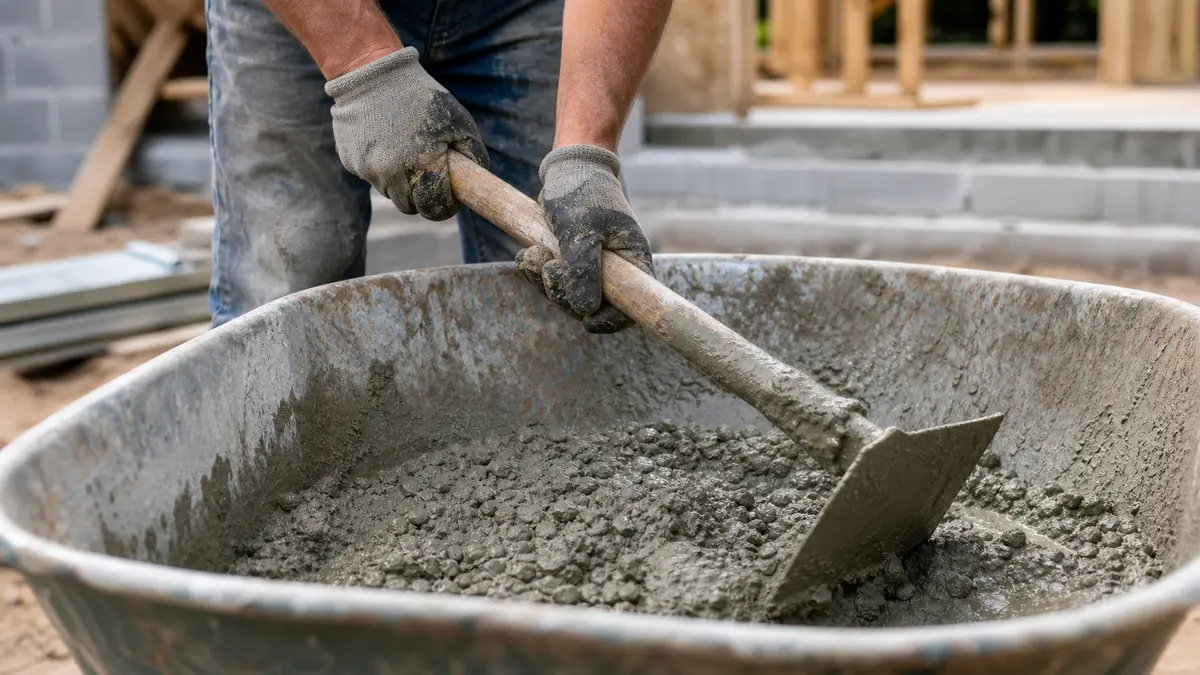
The right cement, sand and gravel ratio
Concrete is a mix of cement, sand, gravel and water, and the ratio of the first three by volume decides how strong it ends up. The all-purpose ratio is 1 part cement, 2 parts sand, 3 parts gravel (written 1:2:3), which cures to roughly 3,000 PSI and covers most patios, walkways and non-structural slabs.
This all-purpose ratio is only one of several standard mixes. The guide to types of concrete covers high-strength, fast-setting and air-entrained options for jobs that call for something different.
| Ratio (cement:sand:gravel) | Approx. strength | Best use |
|---|---|---|
| 1:3:6 | ~1,500 PSI | Fill, sub-base |
| 1:2:4 | ~2,200 PSI | Light footings |
| 1:2:3 | ~3,000 PSI | Patios, sidewalks, slabs |
| 1:1.5:3 | ~3,600 to 4,000 PSI | Driveways, foundations |
| 1:1:2 | 5,000 PSI+ | Structural columns (needs vibration) |
For small batches, keep the same proportions using a bucket instead of a cubic foot: for example, 1 bucket of cement, 2 buckets of sand and 3 buckets of gravel. If you would rather skip measuring the raw materials yourself, buying pre-mixed bags or entering your slab size in the concrete calculator gives you the exact volume and bag count first.
Water to cement ratio: the number that actually matters
The dry ratio sets the recipe, but the water-cement ratio (w/c), the weight of water divided by the weight of cement, is what actually controls strength. Less water means stronger, denser concrete; more water means weaker concrete that is easier to pour but cracks and wears sooner.
| Water/cement ratio | Approx. strength |
|---|---|
| 0.40 | ~5,000 PSI |
| 0.50 | ~3,500 PSI |
| 0.60 | ~2,500 PSI |
For one 94 lb bag of portland cement at a 0.50 ratio, that is about 47 lb of water, or 5.6 gallons. Damp sand from an outdoor pile can already hold 3 to 6% moisture by weight, which is hidden water you have not accounted for, so start on the dry side and adjust.
How to mix concrete by hand, step by step
Hand mixing suits small jobs, generally under about 0.5 cubic yards (roughly 13 cubic feet). Work out how much concrete you need before you start so you are not mixing a second batch mid-pour.
Lay a tarp or use a clean wheelbarrow, then measure the sand, gravel and cement into it in that order. Form a depression in the center and pour in about two-thirds of the water.
Work the pile with a hoe or square shovel, folding the dry material into the water and adding the rest gradually. Aim for a consistency like thick oatmeal or peanut butter that holds a peak when you draw the hoe through it; if it slumps flat and runs, it has too much water and needs more dry mix.
Mixing larger batches with a power mixer
Once a job passes about half a cubic yard, a drum mixer is faster and gives a more uniform mix than a hoe. Allow at least 1 cubic foot of mixer capacity per 80 lb bag being mixed at once.
Pour roughly half the measured water into the running drum first, then add the dry mix. Let it turn for about a minute, then add the remaining water in small amounts, mixing for 3 to 5 minutes total until the batch looks uniform with no dry pockets.
For anything beyond a few cubic yards, ordering ready-mix delivered by truck is usually faster and more consistent than mixing on site. The bags per cubic yard breakdown shows where that crossover point usually falls.
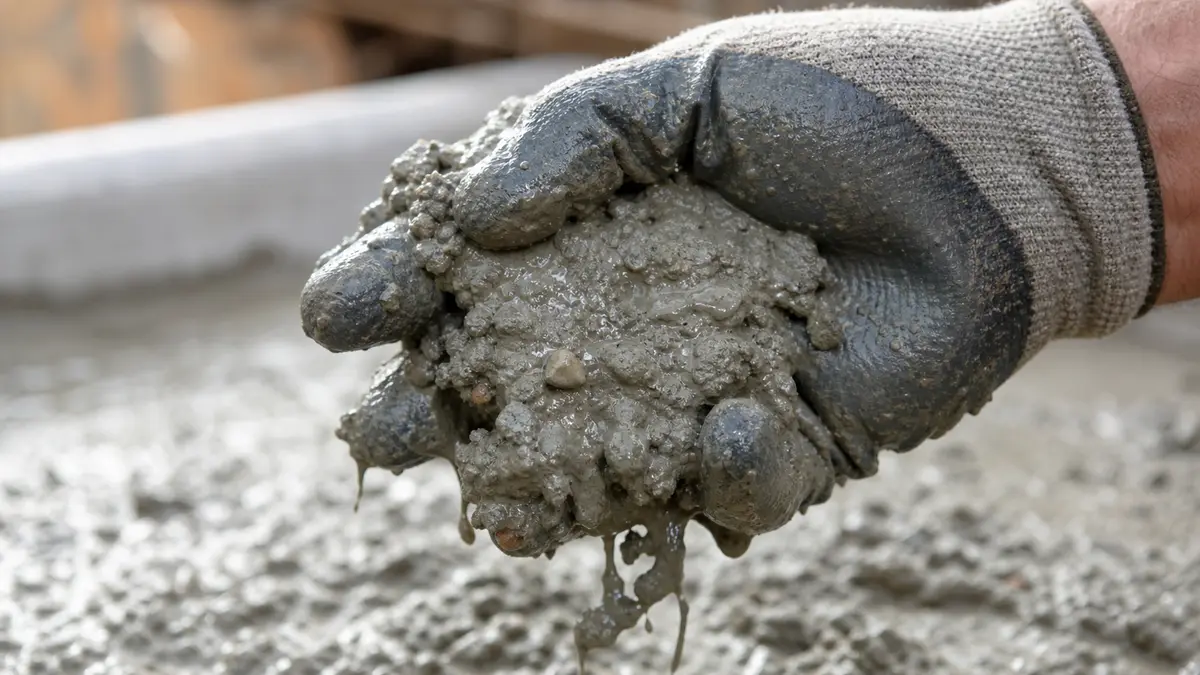
How much water goes in each bag of pre-mixed concrete
Bagged concrete mix already contains cement, sand and gravel in the right proportions, so you only add water. QUIKRETE's data sheet calls for about 6 pints (3 quarts) of water per 80 lb bag, with a workable range of 6 to 9 pints depending on desired slump.
| Bag size | Water per bag | Yield |
|---|---|---|
| 40 lb | ~3 pt (1.4 L) | 0.30 ft3 |
| 60 lb | ~4.5 pt (2.1 L) | 0.45 ft3 |
| 80 lb | ~6 pt (2.8 L) | 0.60 ft3 |
Add roughly two-thirds of the water first, mix, then add the rest sparingly until the batch holds together. If you still need to work out how to calculate the total volume for your project, that guide walks through the cubic yard math before you start mixing.
Common mistakes and curing after the pour
The most common error is adding extra water for easier pouring. One extra quart of water per 80 lb bag can cut compressive strength by up to 40%, since excess water leaves voids as it evaporates. Add water slowly and stop as soon as the mix holds a peak.
The second mistake is skipping cure time. Concrete needs to stay moist to keep hydrating, so cover fresh pours with plastic sheeting or keep them damp for at least 3 to 7 days, and expect full design strength around 28 days. Concrete left to dry in open air reaches only about half the strength of properly cured concrete.
Frequently asked questions
What is the ratio for mixing concrete?
How much water do I add to a bag of concrete?
What is the 1 2 3 rule for concrete?
Can you mix concrete by hand?
How long does mixed concrete take to cure?
Sources and references
These references and structured source records support the method and material data used on this page.
- Concrete (Wikipedia)
- QUIKRETE Concrete Mix data sheet
- NRMCA CIP 11: Curing In-Place Concrete
- ASTM C387/C387M: Packaged, Dry, Combined Materials for Concrete