How Long Does Concrete Take to Cure?
Concrete is commonly specified and tested at 28 days, but that does not make 28 days a universal end of curing or make a slab automatically safe for foot or vehicle traffic on a fixed day. Curing method and duration depend on the mixture, temperature, moisture, exposure and specification. Loading should follow the project requirements and verified strength.
Key takeaways
- Twenty-eight days is a common specified test age, not a universal end of curing or strength gain.
- Do not allow foot or vehicle traffic from age alone; follow required in-place strength or written project instructions.
- Curing is hydration, a chemical reaction between cement and water, not just drying out.
- Use the curing method and duration specified for the mixture, surface, exposure and later finishes.
- Temperature, wind and humidity can change protection needs and strength development.
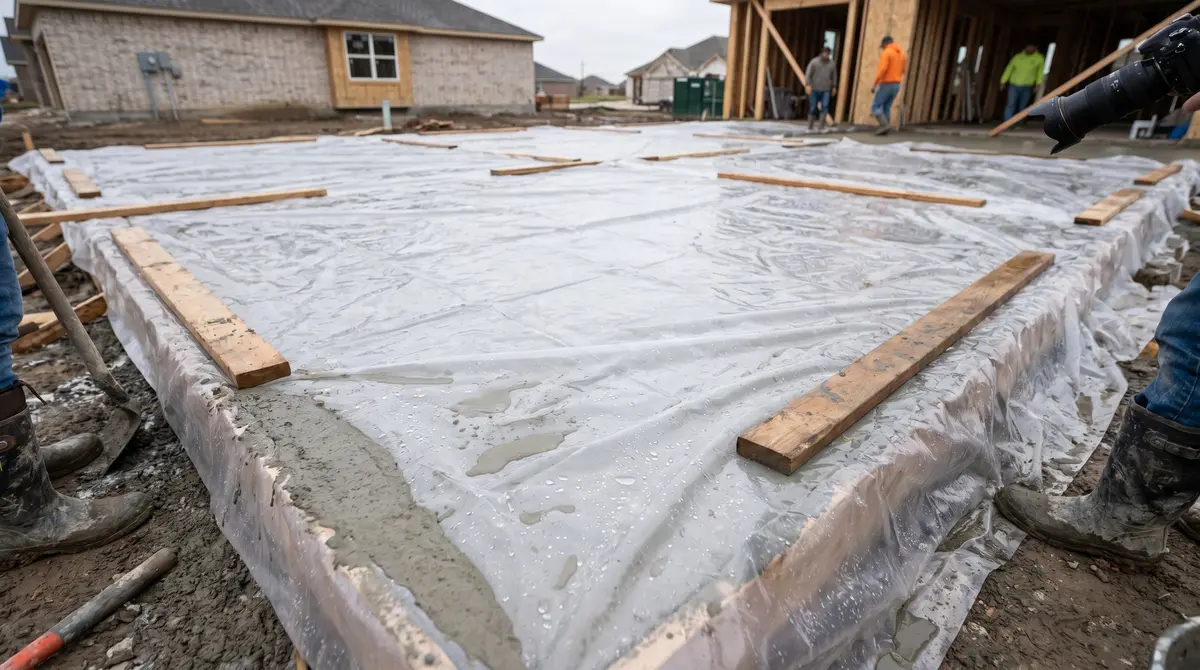
Milestones to confirm for a concrete project
Time alone does not prove strength or readiness for use. Confirm the following milestones from the specification, product instructions and project professional.
| Milestone | Evidence to use | Do not assume |
|---|---|---|
| Initial protection | Weather and curing plan | A fixed number of hours suits every mix |
| Form removal | Specified requirement and adequate strength | Forms may always come off after one day |
| Foot or vehicle traffic | Required in-place strength or project instruction | Every slab is ready after 2 or 7 days |
| 28-day test age | Specified test result | Curing or strength gain necessarily ends |
Temperature, mixture, member geometry and curing conditions can move every milestone.
Curing is hydration, not just drying
Curing is not concrete drying out. It is a chemical reaction called hydration, where portland cement and water bond and harden into a solid crystal structure. That reaction needs water to continue, which is why letting concrete dry too fast actually weakens it.
If the surface loses moisture before hydration is well along, the chemical process stalls and you end up with weaker, dustier, more crack prone concrete. This is why proper curing focuses on keeping moisture in the slab, not on speeding up evaporation.
The amount of concrete you mix or order also depends on getting the volume right before you ever worry about curing. You can size the pour first in the concrete calculator, which returns cubic yards and bag counts for your dimensions.
Why the 70 percent in 7 days shortcut is limited
Seventy percent at seven days is a rough educational shortcut, not a loading test or universal curing rule. Different mixtures and temperatures develop strength at different rates.
Vehicle access should follow the required in-place strength or written project instruction. Do not infer readiness by multiplying a nominal 28-day PSI by 70 percent.
The concrete mix ratio guide also explains why nominal ingredient proportions cannot predict strength.
How to cure concrete the right way
Follow the curing method and duration in the project specification or product instructions. NRMCA CIP 11 describes water curing, moisture-retaining covers and membrane-forming compounds, with selection affected by the surface and subsequent treatments.
| Method family | Purpose | Confirm |
|---|---|---|
| Water curing | Maintain moisture | Start time, duration and temperature |
| Moisture-retaining cover | Limit moisture loss | Material, contact and edge sealing |
| Curing compound | Form a moisture-retaining membrane | Coverage and compatibility with later finishes |
Cold or hot weather can require additional protection.
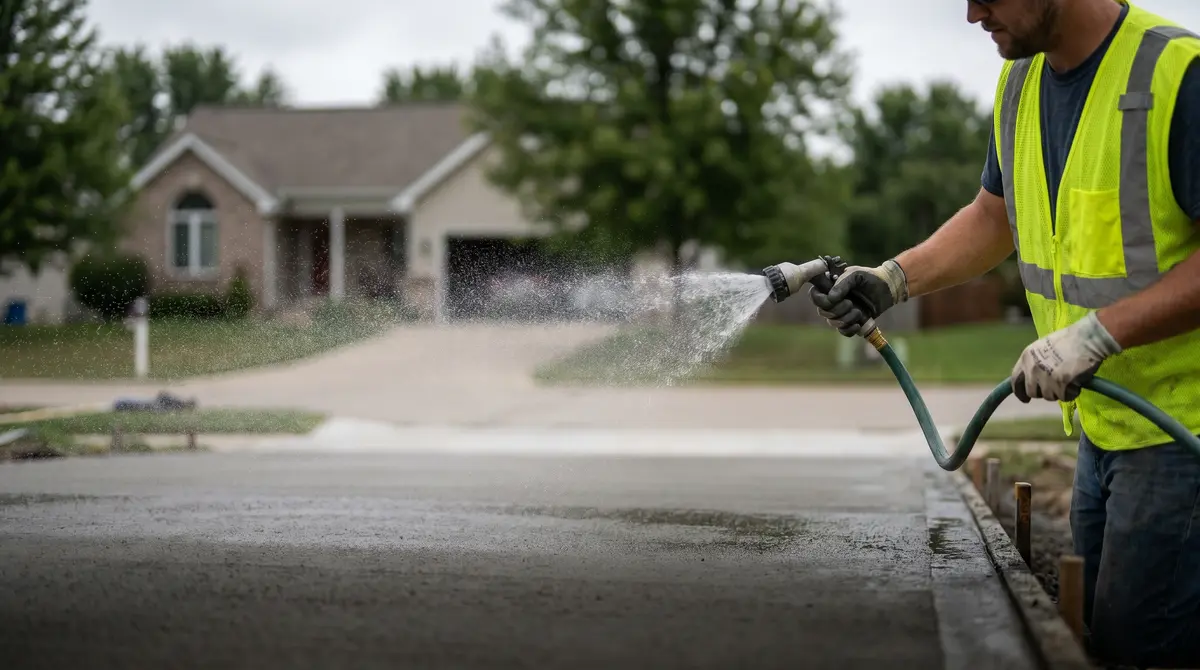
What slows curing down: weather and mix
Temperature, wind, humidity and concrete temperature affect moisture loss and strength development. Use the specified hot- or cold-weather plan rather than a fixed percentage adjustment per temperature change.
Mixture proportions and cementitious materials also affect the strength curve. Confirm required protection and loading from project evidence.
Slab thickness is a separate design input, covered in how thick a concrete slab should be.
Delivery time and curing are separate controls
Ready-mix delivery and discharge limits belong to the purchase specification and current ASTM C94/C94M requirements. They are not curing durations.
Curing begins after placement and finishing under the specified project procedure. Confirm both delivery controls and curing requirements rather than applying an old fixed-time shortcut.
Use the concrete calculator for order quantity, then coordinate delivery and curing with the supplier and project documents.
Frequently asked questions
How long does it take a 4 inch slab of concrete to cure?
What is the 1 2 3 rule for concrete?
How cured is concrete after 3 days?
What is the 90 minute rule for concrete?
Can you speed up concrete curing?
Sources and references
These references and structured source records support the method and material data used on this page.
- American Concrete Institute (institutional site)
- Concrete (Wikipedia)
- NRMCA CIP 11: Curing In-Place Concrete
- FHWA: Guide for Curing Portland Cement Concrete Pavements