How Much Concrete for a 10x10 Slab?
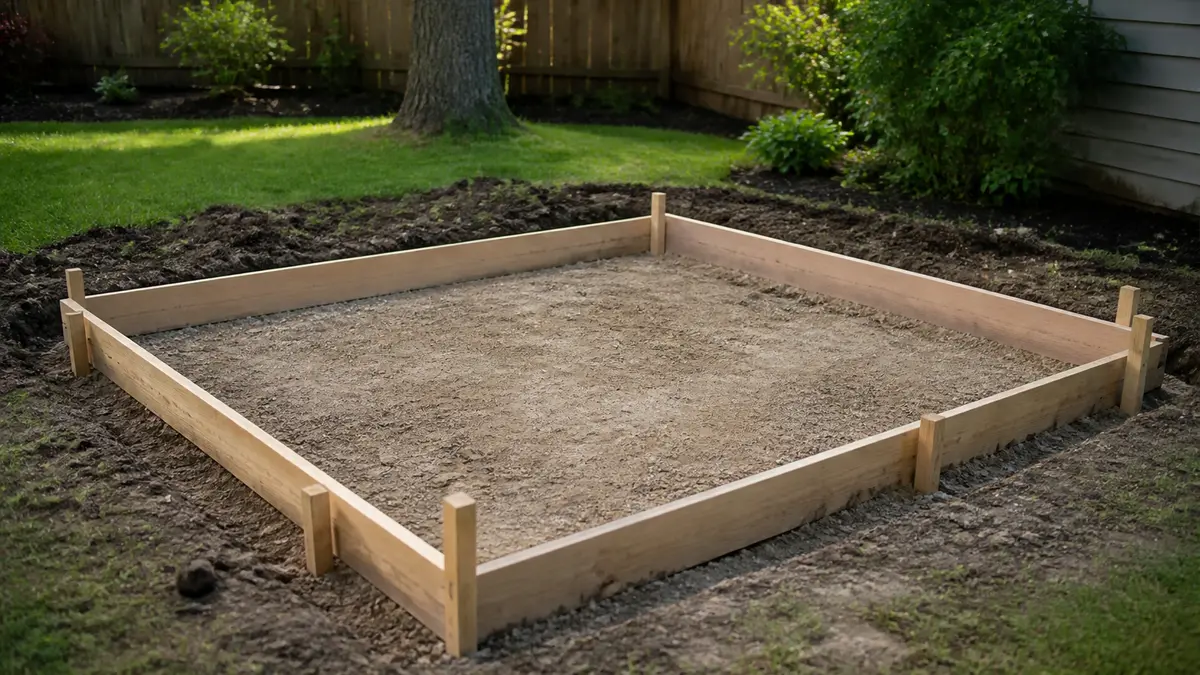
A 10x10 footprint covers 100 square feet, but concrete quantity still depends on the slab thickness specified for the project. At an assumed 4 inches, the geometric volume is 1.23 cubic yards before allowance; adding an illustrative 10% gives 1.36 cubic yards. The table shows the same arithmetic at 5 and 6 inches without treating any thickness as a universal design recommendation.
Key takeaways
- A 10x10 footprint at an assumed 4 inches contains 1.23 cubic yards before allowance, or 1.36 cubic yards with an illustrative 10%.
- Using the same 10% assumption, a 5-inch scenario is about 1.70 cubic yards and a 6-inch scenario about 2.04 cubic yards.
- The slab calculator returns volume, bag counts and optional material cost from the thickness, waste and price entered; it does not select the slab assembly.
- For a 10x10 pour, compare bagged mix and ready-mix using the same calculated volume, product yield, delivery terms, equipment and placement scope.
- Thickness, base, concrete properties, joints and reinforcement must be selected for the loads, support conditions and applicable project requirements before quantities are ordered.
How much concrete for a 10x10 slab at 4 inches
A 10 by 10 foot slab covers 100 square feet. At an assumed 4 inches, 100 times 0.333 feet gives 33.3 cubic feet. Dividing by 27 gives 1.23 cubic yards before allowance.
An illustrative 10% allowance changes that arithmetic to 1.36 cubic yards, about 62 bags if the selected 80 lb product publishes a 0.60-cubic-foot yield. Choose the allowance from the actual project and verify the product data before ordering.
If the footprint or specified thickness differs, the concrete slab calculator repeats the geometry and bag math.
Concrete volume at three assumed thicknesses
Thickness changes volume in direct proportion. The rows below are quantity scenarios for the same 100-square-foot footprint, each using an illustrative 10% allowance. They do not select a slab thickness or reinforcement system.
| Assumed thickness | Cubic yards (+10%) | Cubic meters | 80 lb bags at 0.60 ft3 yield |
|---|---|---|---|
| 4 in scenario | 1.36 | 1.04 | 62 |
| 5 in scenario | 1.70 | 1.30 | 77 |
| 6 in scenario | 2.04 | 1.56 | 92 |
Use the thickness required for the loads, support, concrete, joints and applicable design, then price that calculated quantity.
Bags vs ready-mix for a 10x10 pour
How many bags of concrete do I need for a 10x10 slab
Bag yield changes with bag size. An 80 lb bag yields about 0.60 cubic feet, a 60 lb bag about 0.45 cubic feet, and a 40 lb bag about 0.30 cubic feet, so smaller bags mean more of them for the same volume.
| Bag size | 4 in slab | 5 in slab | 6 in slab |
|---|---|---|---|
| 80 lb | 62 bags | 77 bags | 92 bags |
| 60 lb | 82 bags | 102 bags | 122 bags |
| 40 lb | 122 bags | 153 bags | 183 bags |
Cubic feet = 10 x 10 x (Thickness(in) ÷ 12)Bags = (Cubic feet x 1.10) ÷ bag yield(ft3)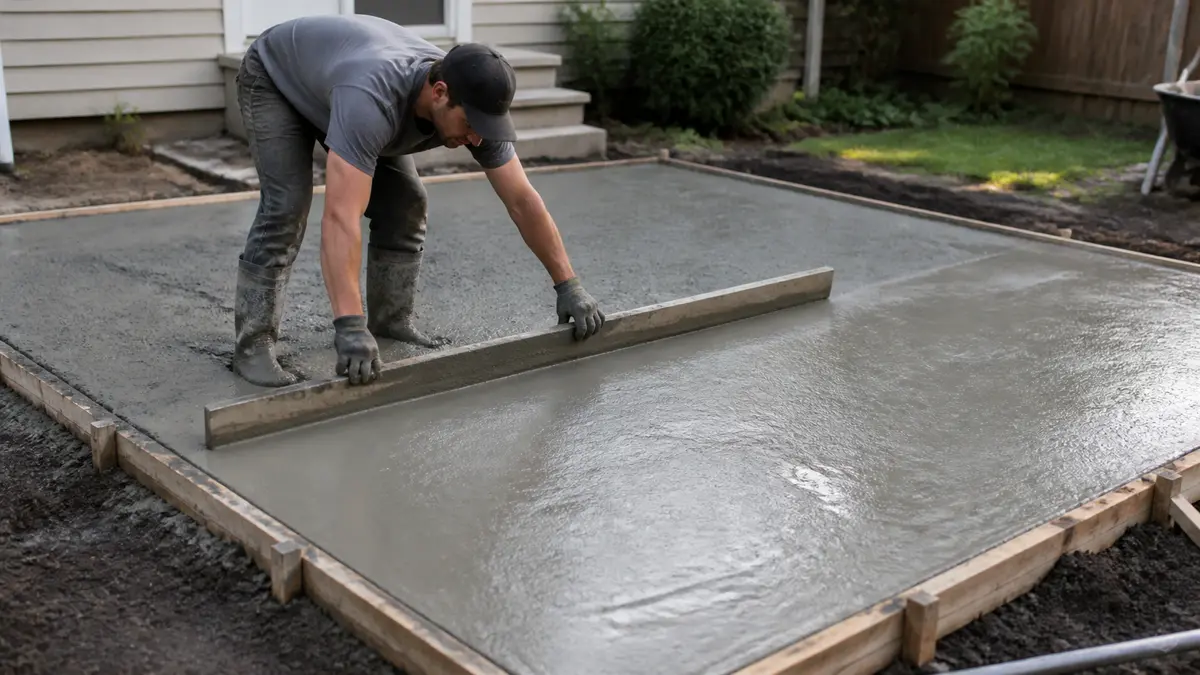
Do you need rebar or gravel under a 10x10 slab
A 10x10 footprint does not determine reinforcement or base construction. Loads, support, concrete properties, joints, drainage, climate and local requirements must be considered together.
If the project specifies reinforcement, enter the scheduled bar size, spacing, cover and laps in the rebar quantity method. Do not derive that schedule from slab area alone.
For a specified aggregate layer, multiply 100 square feet by its compacted depth to calculate volume, then use the supplier's compaction and ordering guidance. The page does not prescribe a universal base depth.
Ordering the right amount without running short
Measure the formed area and use the specified thickness. Apply an allowance that reflects the project rather than assuming 10% is universal, and round whole-bag orders up using the selected product yield.
Keep length and width in feet and convert thickness from inches to feet before multiplying. Supplier minimums, delivery, pumping, placement and unused material are separate ordering considerations.
For the yardage, bag count and optional material subtotal on the final dimensions, use the concrete slab calculator.
Frequently asked questions
How many 80lb bags of concrete do I need for a 10x10 slab?
Do you need rebar for a 10x10 concrete slab?
Do I need gravel under a concrete slab?
How thick should a 10x10 concrete slab be?
How should I compare bags with ready-mix for a 10x10 slab?
Sources and references
These references and structured source records support the method and material data used on this page.
- Concrete (Wikipedia)
- QUIKRETE Concrete Mix 1101 data sheet
- American Concrete Institute (institutional site)
- NRMCA: Ready Mixed Concrete