How Much Does a Paver Walkway Cost?

A paver walkway costs about $12 to $25 per square foot installed in 2026, which puts a typical 4 by 30 foot path (120 sq ft) at roughly $1,440 to $3,000. Premium natural stone or intricate patterns push the price toward $30 to $40 per square foot. Below is the full cost breakdown by size and material, how pavers compare to poured concrete, and a calculator that sizes the job for your exact dimensions.

Key takeaways

  • A paver walkway runs $12 to $25 per sq ft installed on average, with premium stone reaching $30 to $40 per sq ft.
  • A common 4x30 ft walkway (120 sq ft) costs about $1,440 to $3,000; a 3x20 ft path (60 sq ft) runs about $720 to $1,500.
  • Pavers themselves cost $2 to $4 per sq ft, base material adds $1.40 to $2.20 per sq ft, and labor adds $7 to $13 per sq ft.
  • Poured concrete walkways cost less upfront at $6 to $12 per sq ft, but pavers resist cracking better and let you swap a single damaged unit instead of a slab.
  • A well-built walkway typically recoups a large share of its cost at resale, since the National Association of Realtors puts landscape and walkway upgrades among the highest-ROI curb appeal projects.
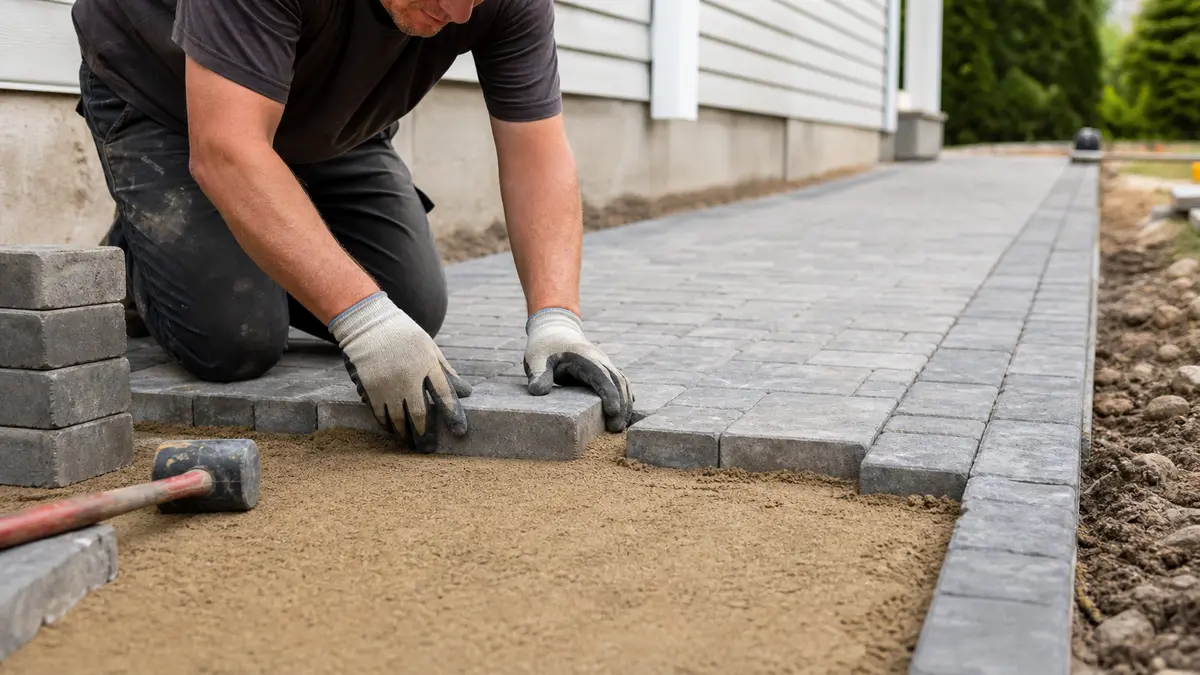
A mason laying interlocking concrete pavers on a sand-leveled walkway base beside a home
Paver Calculator
Enter your walkway length and width to get the paver count, base material and total cost.
Open the calculator →

Paver walkway cost per square foot in 2026

Most homeowners pay $12 to $25 per square foot installed for a standard concrete or clay brick paver walkway in 2026, and jobs with detailed patterns, borders or natural stone can reach $30 to $40 per square foot. Narrow paths often land at the higher end of the range because setup, edging and cutting time do not shrink much even when the footprint does.

That price covers excavation, a compacted gravel and sand base, the pavers themselves, edge restraints, and joint sand. It does not usually include grading a slope, removing an old walkway, or adding lighting.

Total cost = Length(ft) x Width(ft) x Price per sq ft

To skip the manual math and get bags, base tonnage and a cost estimate for your exact layout, plug your dimensions into the paver calculator.

Cost by walkway size

Width matters as much as length. A single-file path is usually 2 to 3 feet wide, while a walkway meant for two people side by side needs 4 to 5 feet.

Walkway sizeArea (sq ft)Cost range ($12 to $25/sq ft)
3 x 20 ft60$720 to $1,500
4 x 30 ft120$1,440 to $3,000
4 x 40 ft160$1,920 to $4,000
5 x 50 ft250$3,000 to $6,250

For a bigger installation, like a full 1,000 sq ft paver project spanning a walkway and connected patio, expect a total closer to $12,000 to $30,000 at the same per-square-foot rates, with some savings on delivery once the order is large enough. If the job includes a patio, the paver patio cost guide breaks down that portion separately.

What drives the price: materials, labor and base

The pavers themselves typically cost $2 to $4 per square foot, though premium natural stone can run $10 to $15 per square foot. Base material, the compacted gravel and bedding sand underneath, adds another $1.40 to $2.20 per square foot and is not optional: skip it and the walkway heaves and settles within a year or two.

Labor is the biggest line item at $7 to $13 per square foot, since every paver is set, leveled and cut by hand rather than poured in one pass. A two-person crew installs roughly 100 square feet a day, so a 120 sq ft walkway is typically a one to two day job.

Edge restraints run $5 to $18 per linear foot and are what keep the border pavers from creeping outward over time. Optional sealing afterward costs $2 to $4 per square foot and helps hold joint sand in place and resist staining. Knowing how many pavers the layout needs before you order also avoids costly overbuys; see how many pavers you need for the per-square-foot count by paver size.

Is a paver walkway cheaper than concrete?

No, a poured concrete walkway is cheaper upfront. Standard concrete runs $6 to $12 per square foot installed, versus $12 to $25 for pavers, mainly because concrete is poured and finished in hours while pavers are laid unit by unit over a prepared base.

The gap narrows over the life of the walkway. Concrete slabs crack as the ground shifts and require full-panel replacement, while a cracked or stained paver can be pulled and swapped individually for a few dollars. Pavers also flex slightly with freeze-thaw cycles instead of fracturing outright, which matters in colder climates.

If you are weighing the two for a bigger surface like a driveway or patio slab, the concrete calculator gives you the yardage and bag count to compare against a paver quote line by line.

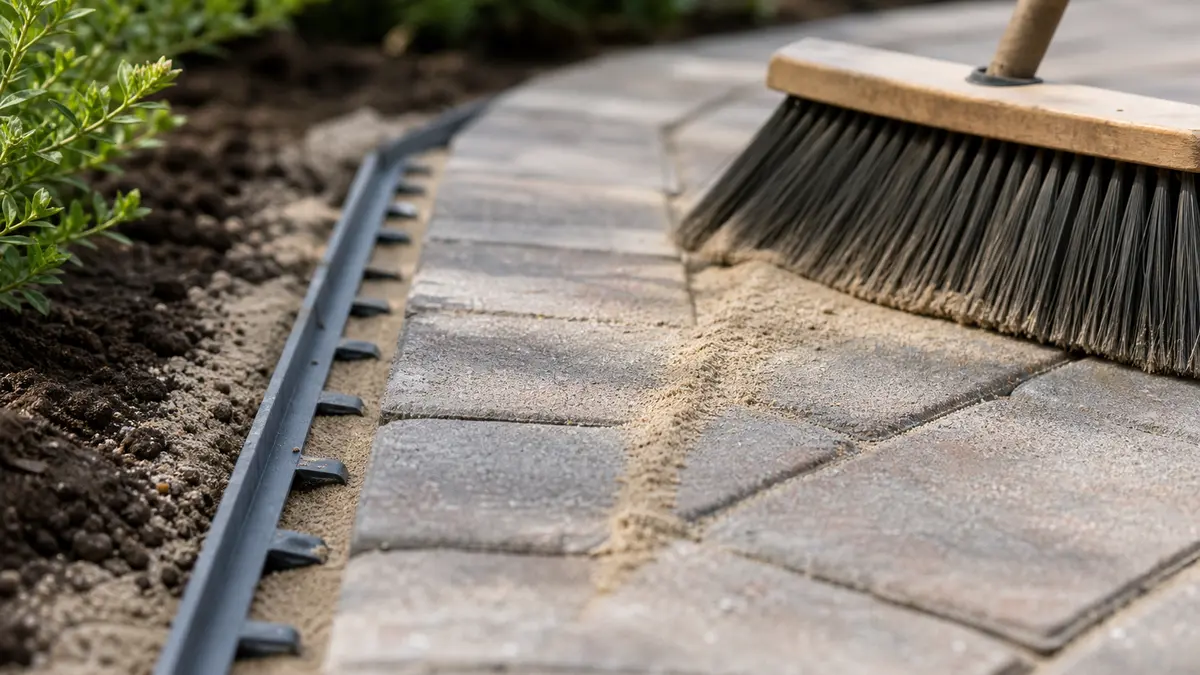
Close-up of paver edging restraint and joint sand being swept into a finished garden walkway

Do paver walkways add value to a home?

Yes, a paver walkway generally adds resale value, and it is one of the better-returning curb appeal upgrades. The National Association of Realtors reports that adding a walkway with basic planting recoups more than 80% of its cost, and a broader landscape refresh can recoup close to 100%.

The exact return depends on your market. In neighborhoods where a defined front walkway is the norm, the ROI is smaller because you are matching, not exceeding, expectations. In areas where most homes still have a bare concrete strip or dirt path, a well-laid paver walkway stands out more and tends to influence buyer impressions the most in the first few seconds of a showing.

How to keep the cost down

Stick to standard concrete pavers instead of natural stone or clay brick, since the material alone can be 3 to 5 times more expensive per square foot. Standard interlocking concrete pavers deliver most of the same durability at a fraction of the cost.

Keep the width practical rather than oversized: a 3-foot single-file path is enough for most side or garden walkways, while 4 feet is the minimum for a front walkway meant to feel welcoming for two people. Every extra foot of width scales the cost directly.

Finally, get the base right the first time. Skimping on gravel depth to save a few hundred dollars is the most common reason paver walkways need costly re-leveling within 2 to 3 years. Run your dimensions through the paver calculator first so your quote and your material order match.

Cost estimate, not a quote. The prices here are ballpark figures for planning only. Real costs vary by region, supplier, season, site access and project size. Always get written quotes from local contractors before you set a budget.

Frequently asked questions

Is a paver walkway cheaper than concrete?
No. Poured concrete costs $6 to $12 per square foot installed, while a paver walkway costs $12 to $25 per square foot, mainly because each paver is set and leveled individually instead of poured in one continuous slab.
Do paver walkways add value to a home?
Yes. The National Association of Realtors reports that adding a walkway with basic landscaping recoups more than 80% of its cost at resale, making it one of the higher-return curb appeal projects.
How much does 1000 sq ft of pavers cost?
At the standard $12 to $25 per square foot installed rate, 1,000 square feet of pavers costs roughly $12,000 to $25,000, or up to $30,000 to $50,000 with premium materials, detailed patterns, or difficult site access.
How much should a 20x20 paver patio cost?
A 20x20 foot paver patio (400 square feet) typically costs $4,800 to $12,000 installed, or $12 to $30 per square foot, with the higher end reflecting premium pavers, borders, or complex patterns.
How wide should a paver walkway be?
A single-file walkway should be at least 2 to 3 feet wide, while a main front walkway meant for two people side by side needs 4 to 5 feet to feel comfortable and welcoming.

References

Related