What Size Rebar for a Driveway?
Driveway rebar size and spacing are structural design inputs. Vehicle loads, slab section, support, joints, concrete and steel properties, exposure and local requirements all matter. The calculator can count and weigh bars after size and spacing are specified; it does not choose an adequate reinforcement schedule.
Key takeaways
- ASTM A615 identifies #3 as 3/8 inch nominal diameter and #4 as 1/2 inch.
- Bar size, grade, spacing, cover, laps and local strengthening must come from the approved design.
- A use label such as residential or heavy duty does not establish one universal grid.
- Enter the specified schedule in the calculator to obtain bar count, length and nominal weight.
- Do not use a diameter-to-thickness rule of thumb as a structural design.
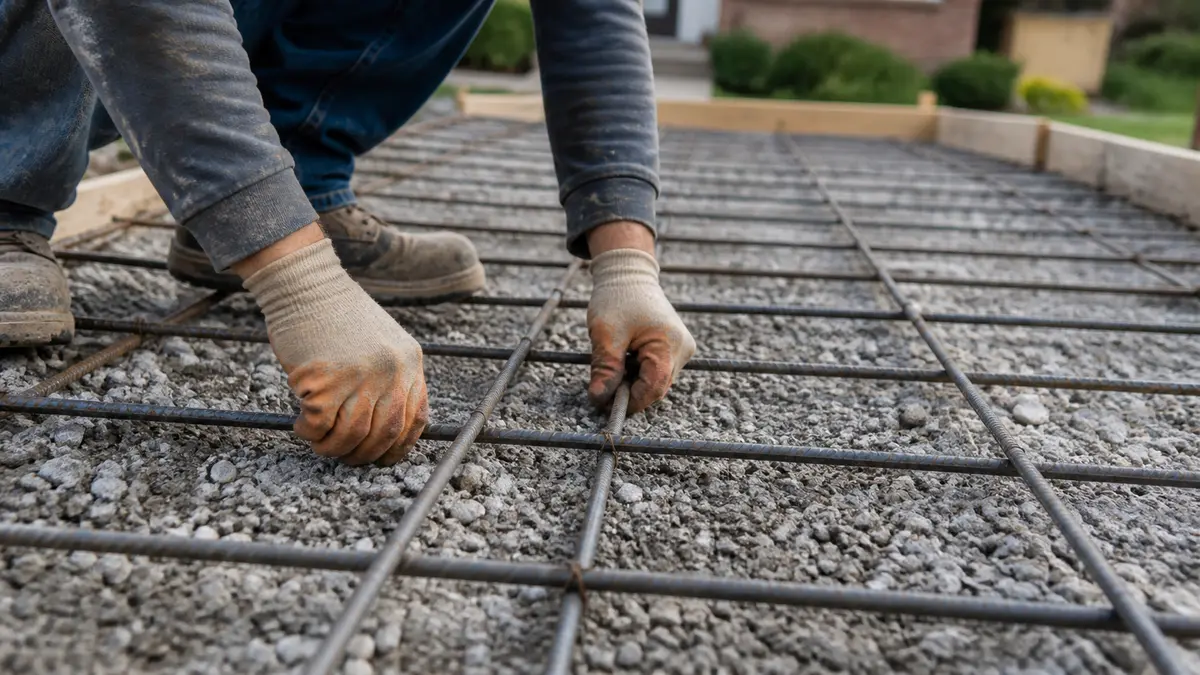
#3 vs #4 rebar for a driveway
#3 and #4 identify nominal diameters, not project suitability. Under ASTM A615, #3 is 3/8 inch and #4 is 1/2 inch; the larger bar also has a larger nominal cross-sectional area and weight.
Select bar size and grade from the approved reinforcement schedule. Then use the rebar calculator to get total length, stock-piece count and nominal weight.
Rebar spacing and grid pattern for a driveway
Spacing is measured on center. A regular two-way grid may be counted from the slab dimensions, but approved details can also include edge bars, dowels, thickened areas, openings or separate zones.
Use the spacing and layout on the project documents. The calculator performs the takeoff from those inputs and does not confirm structural adequacy.
How to calculate the rebar you need
Once bar size, spacing, cover and layout are known, count the bars required in each direction and multiply by their run lengths. Laps, anchorage, edge distances and stock-length cuts must follow the project details rather than a universal percentage.
See how much rebar do I need, or enter the specified inputs in the rebar calculator for quantity and nominal weight.
Rebar size chart and cost by bar number
Rebar sizes are numbered by eighths of an inch in diameter under ASTM A615, the US standard for deformed steel bar. A #3 bar is 3/8 inch (3 x 1/8), a #4 bar is 1/2 inch (4 x 1/8), and a #5 bar is 5/8 inch, used mainly in footings and foundations rather than driveway slabs.
For the complete reference across all common bar numbers and their metric equivalents, see the rebar size chart. Grade 60 rebar, the standard grade for residential work, has a minimum yield strength of 60,000 PSI regardless of diameter.
Steel prices swing with the commodity market, so budget in a range rather than a fixed number. For current per-foot and per-ton pricing, see how much does rebar cost.
Rebar placement and cover in a driveway slab
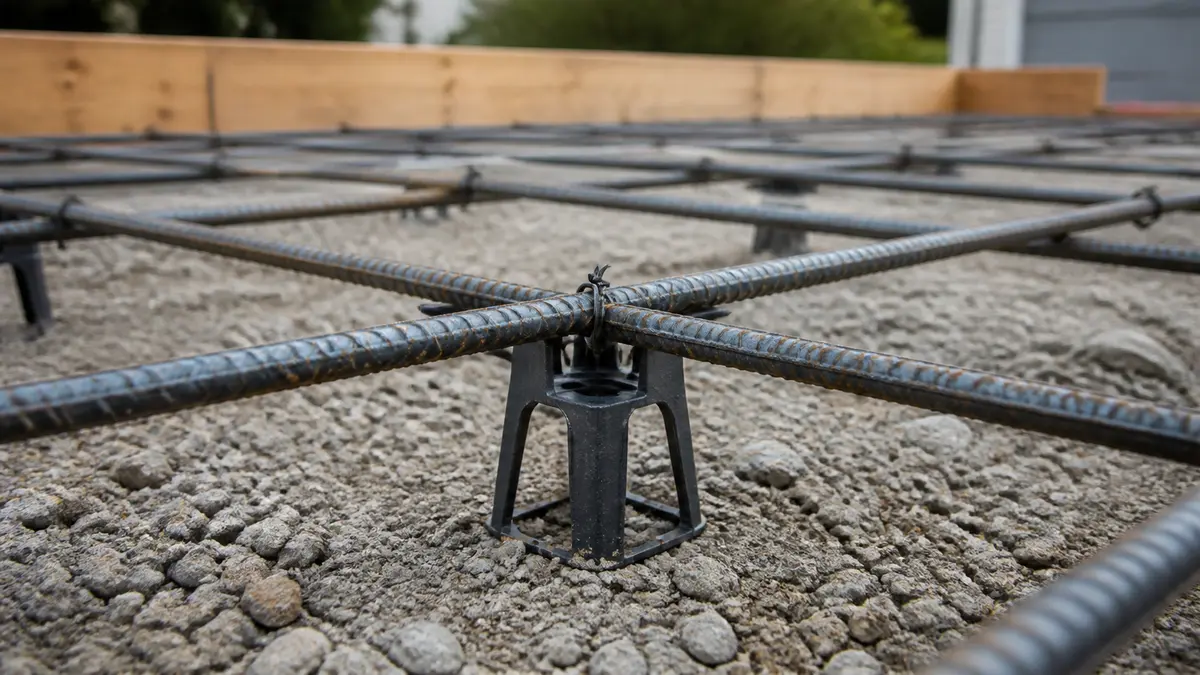
Use the cover, support, lap and edge details on the approved drawings. Chairs or other specified supports must hold reinforcement in position during concrete placement.
Do not substitute welded wire reinforcement, fibres or a different bar grid without design approval.
Frequently asked questions
Is 3/8 rebar good for a driveway?
Is 4 inches of concrete thick enough for a driveway?
How far apart should rebar be for a driveway?
Should you put rebar in a concrete driveway?
Sources and references
These references and structured source records support the method and material data used on this page.